Parenting

Insights and inspirations about parenting.

What does “Good Job” mean anyway?

Handing out praise like “Good job!” is easy and quick and a feel-good moment. But what does that statement really mean when said to a child?

The effort was good?

The outcome was good?

They are a good kid?

Does doing good equate with being good? To a child, they may internalize that they are only good when they out-perform others or reach an unrealistic standard set by the adult. That’s a sad, conditional type of acceptance.

Praise is using a value judgement or what we think of the child, not what the child is thinking of himself. “I’m so proud of you. Way to go!” is focusing on the adult’s feelings, how they esteem the child, not how he esteems himself. It removes the opportunity for the child to assess his or her own worth and effort. 

It’s not a bad thing to use praise sparingly, and in the right moment, but better yet, parents can use both praise and self reflection to reinforce self concept through external and internal reward systems. With really young children, we use praise almost exclusively because the toddler needs immediate reinforcement and feedback. For example, when learning to walk, we praise each step and encourage getting back up after a fall. We are the mirror to child’s world. 

Being a Mirror vs. Self Reflection

As children grow, however, parents need to step back and use praise, encouragement, and self-reflection. Especially as children become pre-teens and teens, intrinsic motivation becomes important since they will be making decisions on their own, away from their parents most of the time. Encouragement uses self reflection. Rather than a being the mirror (in early parenting), the parent holds up the mirror for the older child to look in and reflect in words and feelings what they see and how they feel. 

If your child comes to you with school grades, parents will often praise, “Wow, all A’s. Good job” without taking the time to ask the child how he or she feels about the grades, or more importantly, the effort they put into earning the grades. An encouraging parent will stop and ask instead, “Look at these grades. How do you feel about them?” Kids may have worked super hard for some B’s and need to acknowledge for themselves that they are really proud. 

Encouragement means we take the time to notice the effort along the way rather than only waiting until the end to give high fives. It’s much more involved parenting and helping the child to recognize her or his worth that is independent from us.

So is praise bad?

No! Just consider the added dimension of encouragement in building self esteem and internal motivation. Encouragement has lasting value because it is sourced from within. It’s authentic and individual. It causes parents to stop more often to notice the good progress and character traits like determination and team work. Not everyone can kick the winning soccer goal or be voted Student Body President, or gets all A’s. But everyone has capacity to build character traits that endure after the applause ends. So point out along the way what you see your child doing such as having good sportsmanship or determination. And when they are first to cross the finish line, that’s great, too. 

Here is an article to guide a parent into developing their child’s intrinsic worth and internal motivation for doing right.

Breaking Down the Task

Parents often commiserate that asking a child to do a chore is like asking them to assemble an IKEA desk out of the box. They hurl themselves on the floor crying, “I can’t do it!” They put up such a fuss, the parent finally throws their hands in the air, and lets the child win. It’s self preservation for both parent and child. The child gets out of doing the job and the parent doesn’t have to deal with the hurricane of emotions.

In this brief article, it talks about breaking down big tasks in point #5. A messy room can be really overwhelming to a child when he doesn’t know where to start. This could be the reason why a child will have meltdowns when asked to do something. Rather than, “Clean up your room,” explore how to build confidence and resilience by showing them how to eat an “elephant” in small, manageable bites. Start with, “After you have put your dirty clothes in the hamper, let me know.” The parent could even model it by rolling up a clothing item into a ball and shooting it into the laundry basket like basketball. They could tell the child to count how many shots they get in the first time and when they are done, come tell them. The child is intrinsically rewarded by their own work/play. Then, when the clothes are done, they could ask the child what the next step is. If they can’t come up with anything, the parent can direct them to a possible next step (put just the stuffed animals in their container, etc.). The idea is to not let the child “get away” with doing nothing because they are dysregulated, and the parent is frustrated. The child needs opportunities to see smaller steps within a big task. A clean up chart would be a good idea to detail the steps in this case. And after each is completed, the parent can say, “You did it,” give a High Five, or ask for self reflection (intrinsic reward).

“How did you do that?”

“How does it feel to have your room a little cleaner?”

“How about that! Does it feel good inside to know you did something that seemed hard at first?”

Praise is lovely, but fleeting. As your child grows, try to use more internal motivation and self reflection to see themselves as source of power and capability. Good parents know they’ve done their job if they work themselves out of a job by the time their teen or young adult is ready to live on their own. They aren’t needed every day to validate that their child is good…or capable…or resilient. They have learned it for themselves already.

Less Anxiety, More Joy

This podcast interview talked about playing the “long game” in parenting with more joy and less anxiety. After being interviewed, I wrote down the points in more detail below. I hope either version is helpful to you.

My thoughts about parenting came to the surface after watching “Inside Out 2” recently with my daughter who is a mom of three young children. At the climatic stress point of the movie, there is this key message delivered by the character “Joy”:

“I don’t know how to stop Anxiety. Maybe we can’t. Maybe this is what happens when you grow up. You feel less Joy.”

Riley is a teen now, and struggling with new emotions. Life doesn’t have the simplicity of childhood and the basic emotions have evolved to welcome new ones.

It get it. I like that the movie shows the complexity of growing up and how the array of emotions are not to be misunderstood, but embraced for what they teach us. In other words, we add more emotions as we age, and feeling those emotions add to the landscape of mature emotional intelligence. We shouldn’t shun anxiety or any emotion. But they shouldn’t hijack Joy in the overall picture of our lives.

That statement by the character “Joy” seemed to send a central message to the audience that “as you get older, you have less Joy and more Anxiety.” That can certainly seem reasonable, especially in the role of mother. Raising children is a lot of endless hard work, sleepless nights, and anxiety over the welfare of their souls, health, and happiness for now and their future. But I was bothered by that statement of fact because it gives the impression that growing older is full of dread and unhappiness. I don’t believe that is what life is for.

My daughter disagreed with me. We called my other daughter who is a new mom and she whole-heartedly took “Joy’s” side. I can see why. I’ve been there too. And believe me, I still have worries over my adult children, their spouses, and our precious grandchildren.

So I’ve been thinking about my experience as a mother and an adult for decades. While I see both sides, I don’t believe that joy diminishes. We are not doomed to such a gloomy forecast. In fact, we all acknowledge the joke that grandparenting is way better than parents (all the love and fun and none of the sleepless nights) so it’s true that at some point in our later adulthood, we gain wisdom, perspective, and more peace in relationships, or joy. More deep, mature and lasting joy than we had as a child or young married person. I feel a thousand times more love and appreciation for my husband and children after going through so many life experiences together.

In fact, older adults shouldn’t have the same amount or kind of anxiety we had as younger people. Anxiety decreases with the increase of joy, or at least it takes on a new identity in our lives. Anxiety takes on more a focused purpose in what matters in life but with a healthy amount of long-term perspective. If things aren’t going well right now, we know that it will “all work out in the end.” It reminds me of the insightful book, “Don’t sweat the small stuff…and it’s all small stuff.” This is the kind of maturity older people I know have. They walk life with calm, more patience, and unconditional love.

My thoughts today are what I did as a mom while raising my kids, so it wasn’t “less joy, more anxiety.” There are certainly times when I did this better than others, but I can think of many things I did to help me increase my joy while reducing my anxiety overall.

· Keep learning and growing. I remember when I lived in Chicago as a young mom, I was alone at home all day during the week with no car, and few to no neighborhood friends. I joined a book club out of desperation to talk with other adults and get out of the tiny apartment. I didn’t consider myself a “reader” before that, and I don’t believe I really enjoyed reading a lot before that time. In my A.P. English class my senior year in high school, I didn’t even finish one of the books we had to read for the test! (well, in my defense, it was “Wuthering Heights”, a dry, gothic, boring book by many standards). Anyway, I started reading books in earnest and found I really liked it! Reading took me out of the day-to-day moments of drudgery and elevated me to visit new places, challenge my mind to think deeply, step into the minds of characters that taught me many profound lessons in life, and impacted me in untold ways. I was never much into history in my earlier years (back in high school again, I actually figured out a way to substitute the required History class for something easier! You can see I wasn’t much of a scholar in high school—super average intelligence and ambition). But now, after reading some amazing historical novels and nonfiction about history, I am hooked! When I learn about other people and times past, I am always forcefully reminded that my life is amazing. I wouldn’t want to be living at any other time in any other place. I am overwhelmed with gratitude for what I have and that translates into my being a better mom, wife, and person. Gratitude = Joy. Now that there are audio books, it’s easy to listen to good literature throughout the day so that mundane chores are not the focus. Books are just one of endless ways to keep growing and learning.

· Cultivate good friends. My husband and I began a monthly dinner group when we were first married, and those relationships have stayed with us forever. I have nourished friends by reaching out to those who would be good, stable, healthy people in my life. Get together in person, rather than defaulting to virtual, if possible, which is not as real or helpful. I take out friends to lunch on their birthday. I gain new friends through community service. I started a playgroup with other mothers and kept it going for the next three children during their preschool years. If you are a mom, do whatever is necessary to have a support system of healthy women that will bless you with less anxiety over things that don’t matter and bring you an increase of joy.

· Ground your spiritual self.  There is a body of literature, research based, giving us evidence that tapping into a higher power and grounding ourselves with that relationship is so affirming. This is the theme of C.S. Lewis’ book, “Surprised by Joy.” I think there’s many aspects in daily worship, study, and prayer that brings us joy. One is that we aren’t burdened by being in charge all the time. I can lean on someone who is infinitely merciful and intelligent and loves my kids too. I’m more in tune with the divine in me and the divine worth of my children. I can surrender my anxiety to Him. It’s the “Jesus take the wheel” type of approach (if you’re into country music). When I think of eternal, heavenly perspectives, the earthly stuff sorts of melts away and doesn’t matter as much. It’s similar to the “5×5 Rule.” Here’s how it works:

  1. When faced with a problem, ask yourself if it will matter in five years.
  2. If the answer is no, give yourself five minutes to acknowledge the issue, process your feelings, or take action.
  3. Then, consciously decide to move on.

That brings me joy.

· Find hobbies and interests. Besides being a mom 24/7, remember you are also a person. Don’t get so drowned in motherhood that you forget who you are. That person existed before marriage and should continue to develop after. This applies to fathers as well. Men who are breadwinners can get consumed by their worldly professional identity. You are more than only a mom or dad. Take time to out to be you. Do what you love. Create the things that you find joyful. You’ll discover interests along the journey of life so keep yourself open to them. But everything in its season. You don’t need to have it all, all right now. Pace yourself.

Doing hobbies together with your partner strengthens your marriage. I kept a secret desire to be a beekeeper until I finally brought it up to my husband about 20 years into our marriage. Let’s just say he wasn’t buzzing with excitement about it at first. After taking some classes and getting a mentor, we jumped into that hobby together. We were even interviewed by a journalist in the Wall Street Journal who wrote about the benefits of finding shared interests as adult companions, not just sharing the interests of raising children together. It enriches our relationship and makes us more interesting parents.

· Nurture your marriage. This goes along with my previous point. Children come through us for a short time and are gone all too soon to live their own lives. What doesn’t change and through it all is our own marriage which should not suffer from the demands of parenthood. Parenting is for a season; marriage is for life. Take time out for dating and time together throughout your life because it will return to the two of you again once the children are gone. Marriage is the tree from which we grow fruit, or our children. The degree of joy you will feel in those later years will depend on how strong and loving is that relationship, or how you have nurtured the tree. Too many marriages are devoid of joy because the parents put all their time and energy into their kids and starved each other of the love that was needed to grow.

· Take care of your health. If you aren’t happy overall, it may be linked to physical, emotional, or mental health. If you are wrapped up in anxiety and cannot see the purpose of your daily drudgery, you need to attend to your health. Do what is necessary to exercise (even a 30-minute walk around the block each day without kids), eat healthier (diet makes a huge difference in how resilient or depressed we feel), and get the rest needed. I know more than anyone that adequate sleep and rest can be a joke as a mom. I did not function well when I was running on lack of sleep. I know how that is. We are at the mercy of children’s sleep schedules. But there are still ways for self-preservation. Figure out what that looks like for you and try out different things. Going into nature is one of the best anti depressants there is. See a doctor if you need medicine for mental or physical health. Don’t give up and keep searching for the right answers for you.

· Don’t compare and envy. You might have heard the saying, “Comparison is the thief of joy.” I’m grateful I was raised in a non-social media era so I didn’t have to see fake, staged, and exaggerated lives of others. I was happy to be who I was and content with my life. I still am. I don’t want more, more, more that I see everywhere because from what I’ve learned, the unhappier and stressed out it makes people. I’ve intentionally chosen to live more simply because it makes more room for joy, peace, and contentment.

Parents have the task of managing how to protect their life from influences in this modern, social media era that would bring them down and crowd out peace. Not only is it a time waster, but causes anxiety, depression, and false envy.

This also relates to comparing yourself now to what you want to become. I would never want a parent to look at my list and think of all the things you aren’t doing and make yourself feel bad about that. Believe me, I have not done all these things perfectly right all the time. I could make this a separate point, but I’ll add here that a “Gratitude Journal” has been proven to be a powerful tool in reminding us of the little but beautiful things we already have and are. Each day is a gift with many small moments of wonder and goodness. Making a short list of what good happens each day, or week, and you will focus less on what you aren’t doing, or the problems with your kids/spouse, and remind you of all that is going right in your small corner of the world. Bonus points: share your list with your family at breakfast or dinnertime to verbalize your gratitude for them and for life. You’ll see wonderful things happen.

· Serve others. There is so much research behind this one. Lifting someone else releases good feelings, or a natural “helper’s high”. This happens when the brain’s reward center is activated, releasing endorphins, dopamine, and serotonin. A very simple thing can make a big difference. Smile at the parent in the grocery line who has small children and let them go in front of you, or someone who is elderly, or chat it up with those in line. Take a meal to a sick neighbor or invite over a new family to dinner who has moved into your neighborhood. Serve in the community if you have time. Large or small, it all adds up.

So the point of this list is to pass down my wisdom and experience and perspective, for what it’s worth. If you find anything valuable that you want to integrate more, do it in small steps, do it in the best season of your life, and find more joy, less anxiety over time.

Photo credit to Google Images

“Lad’s Night”

Parents, is it possible to take your child out on a regular date night? Many parents, some of the busiest I know, make this practice a priority. I did this with my kids on their birthdays, and other special occasions, but I wish I would have done it more often, and on ordinary days too. I truly do. Take it from someone who wishes she could go back and re-do a few parenting decisions.

You don’t need to spend a wad of money doing some fancy thing like mani/pedis or renting a boat. It can be as simple as a walk around the block. Anything to let each child know that for 30 minutes (or more) they are your whole world and you are there to listen and have fun together.

The sweet boy “Jacob” in this photo calls his weekly Friday dates with his dad, “Lad’s night.” In this video he recounts for his mom what they did. Their “man chat” is priceless and apparently, off limits to inquiring minds. It’s a reminder that it’s the small and simple things that light up a child’s eyes. Here’s what they did:

Went on a little walk and “chattin’ the whole entire time” (aka “man chat”)

Got burgers and fries, drove to the airport, and watched planes take off and land while they ate

More “man chat”

Dad got out of the car on their drive home to get a horse off the road (a highlight for this kid)

Watched a movie for 1 hour and ate sweets

Played Minecraft together

Had more “man chat”

So I figure the total cost of this “Lad’s Night” was the price of a burger and fries (and a few sweets while watching the movie at home) but the memories, talking, and connection is priceless. I hope this video inspires you to add a little more man chat in your life.

Are We Using “I” Messages Correctly?

“I” Statements are a simple formula that promises peace, conflict-free homes, and to get what we want. Not so fast! Are they really that effective? Is that really the point? Do we even understand how to use them correctly? When do they work and when do they mess us up? Keep reading to find out the hidden pitfalls of “I” Statements.

We’ve all been taught to use an “I” Statement from self-help books or Communications 101. “I want you to be more kind to your sister.” And the child just complies like you’ve waved a magic wand over her head, right? Wrong.

“I need you to come home from work earlier to help with the kids every night.” I started with the word “I”, so why didn’t I get my wish fulfilled?

When there is no conflict, an “I” Statement is just fine to express what is needed: “I need you to help me unload the car.” The partner or child who is ready and willing will respond easily to this request. However, what about when there is a conflict? What about a non-compliant child or a spouse who sees things differently? How is an “I” statement intended to be used in these situations?

Take a look at these statements:

Statement 1 “I feel you are not listening to me when we discuss finances.”

What is the intent and motivation behind this statement?

Putting blame on the other, assuming we read their minds.

What reaction might it produce?

Response: “What do you mean? I am here right now and listening. You always blame me for everything going wrong with money? What about your reckless spending habits?”

Statement 2 “I want you to do your homework right now.”

What is the intent and motivation behind this statement?

Control and power

What reaction might it produce?

Response: “Well, I don’t want to. And you can’t make me!”

Statement 3 “I wish you weren’t so difficult and dismissive about fixing up the house.”

What is the intent and motivation behind this statement?

Negative labeling

What reaction might it produce?

Response: “I work all day, every day to keep a roof over our heads. You’re never appreciate anything I do.”

All these “I” statements are not self-reflective but putting oneself in a position of blame and control over the other. If there is a conflict, we cannot use “I” statements to wave our wishes over another person’s head and expect they will obey.

Likely, they will likely become defensive instead.

Just because we start a sentence with “I” doesn’t mean we can demand and expect compliance from the other person. The tension will escalate. Examine your motives before saying an “I” Statement during a disagreement. Is it to seek to understand or to get what you want? If it’s to get what you want, then no, don’t use it.

Rather than a tool, it becomes a weapon.

“I” statements, rather, are to express our needs, wants, and feeling about ourselves, not anyone else. They are offered with humility and sincerity to seek understanding when the other person has a difference of opinion.

The “You” statement that follows is for the Listener to restate what they heard. They would state what feelings, ideas, wants, the person said.

This approach is similar to the “Speaker-Listener Technique” taught in the book, “Fighting For Your Marriage.”

Speaker: “I feel so tired at the end of the week and want a special night out with you. I would like to take turns planning our date night.”

Listener: “What I heard you say is that you’re feeling tired at the end of every week and want to take turns planning a date night away from the kids.”

The “I” Statement person will confirm whether they were heard and understood correctly. If not, they state it again and the listener reflects what they heard. The important thing is to have no agenda for “winning” or getting your way. Just to be understood.

From Boston University we learn, “Ultimately, I-messages help create more opportunities for the resolution of conflict by creating more opportunities for constructive dialogue about the true sources of conflict.” Ideally, the “I” and “You” statements are to discover underlying issues: power, caring, recognition, commitment, integrity and acceptance. Once we can identify these needs in our statements, the real power of connection and understanding begins. Being understood sometimes is all we need, and we’ll be okay if the issue doesn’t resolve the way we had hoped.

Then the other person takes a turn and says their “I” statement that reflects how they feel about the issue, only stating their own needs. The “You” statement follows by the new Listener.

“I really don’t like planning dates. I am just not creative enough, but I do want to show you that I care.”

These two steps are crucial for seeking understanding in conflicted situations. There is no way to effectively solve a problem unless we seek to understand, without criticism, without agenda, without blame or power involved. Set aside your desire to fix or change the other person. The battle is not with them; rather, the two of you are a team to tackle a problem together.

The “I” Statement is followed by a “You” Statement and then a “We” Statement. The “We” compromise part may naturally happen after this back and forth, or the two people may need to think about it for awhile, to consider the other person’s point of view. Maybe later that night, or a few days or a week later, you will both have time to consider the validity of the other person’s view.

Compromise is not about 50/50: I get half my way if you get half your way. If that were the case, if one partner wanted Cherrywood cabinets and the other wanted Pine, they’d meet somewhere in the middle and get Oak…and both hate their kitchen cabinets. Rather, it is working as a team to find creative solutions and new perspectives to see a problem, and working together to get an answer.

No magic wand.

No fairy dust.

No easy answers, either.

Just plain and simple “I” and “You” talking and listening sincerely, without wanting to win.

References:

Markman, H. J., Stanley, S. M., & Blumberg, S. L. (2010). Fighting for your marriage: A deluxe

revised edition of the classic best seller for enhancing marriage and preventing divorce. San Fransico, CA: Jossey-Bass.

Office of the Boston University Ombuds Francine Montemurro, Boston University Ombuds,

chrome-extension://efaidnbmnnnibpcajpcglclefindmkaj/https://www.bumc.bu.edu/facdev-medicine/files/2011/08/I-messages-handout.pdf

A PhD in Parenting

In my job as a university professor, I hang out with a lot of smart people.

Experts in their fields.

PhDs can be fascinating to work even while they might be intimidating to some.

The thing is they are really, really good in their areas of study whether than be science, math, music, or biology. It doesn’t mean they know much about other disciplines. However, there is one profession that requires a person to be an expert in pretty much everything.

Parenting.

Think about it. What knowledge and aptitude does it take to be a parent? The profession of parenting requires a comprehensive list of skills. You need a degree in…well…everything! As you think about each degree listed below, consider how it plays into the role of parenting and family life:

Computer Science

Psychology

Health Sciences

Technology

Child (and Human) Development

Fashion/Clothing and Textiles

Media

Biology/Sexuality

Demography

Sociology

Education

Science

Landscape and Horticulture

Event Planning

Nutrition and Culinary Arts

Communication/Conflict Resolution

Business/Finance

Organizational Behavior

History

Genealogy

Law

Linguistics

E.M.T. with a bit of Nursing on the side

Political Science

Civics

Economics

Debate

Leadership

Did you think of any other areas a parent needs to learn about and teach to their children? If we stop to think about it, we are really amazing!

When was the last time you heard someone respond to the question, “What do you do for a living?” with “I am a parent!” just like they would proudly say, “I am a Marine Biologist!” or “I am a Mechanical Engineer!”?

Unfortunately, I usually see the respondent look down and say apologetically, “I am just a mom.”

Stop with the “just” already! We are professionals! We know so much about everything and are enrolled in the most comprehensive “PhD” program in the world.

Parenting: the hardest profession in the world

Parents should be earning their own PhD and “walk” with cap and gown on the day their kids graduate form high school. A PhD should stand for “Parents Have Dominion.”

Because we really do rule the world. You don’t need to be the smartest person in the room to figure that out.

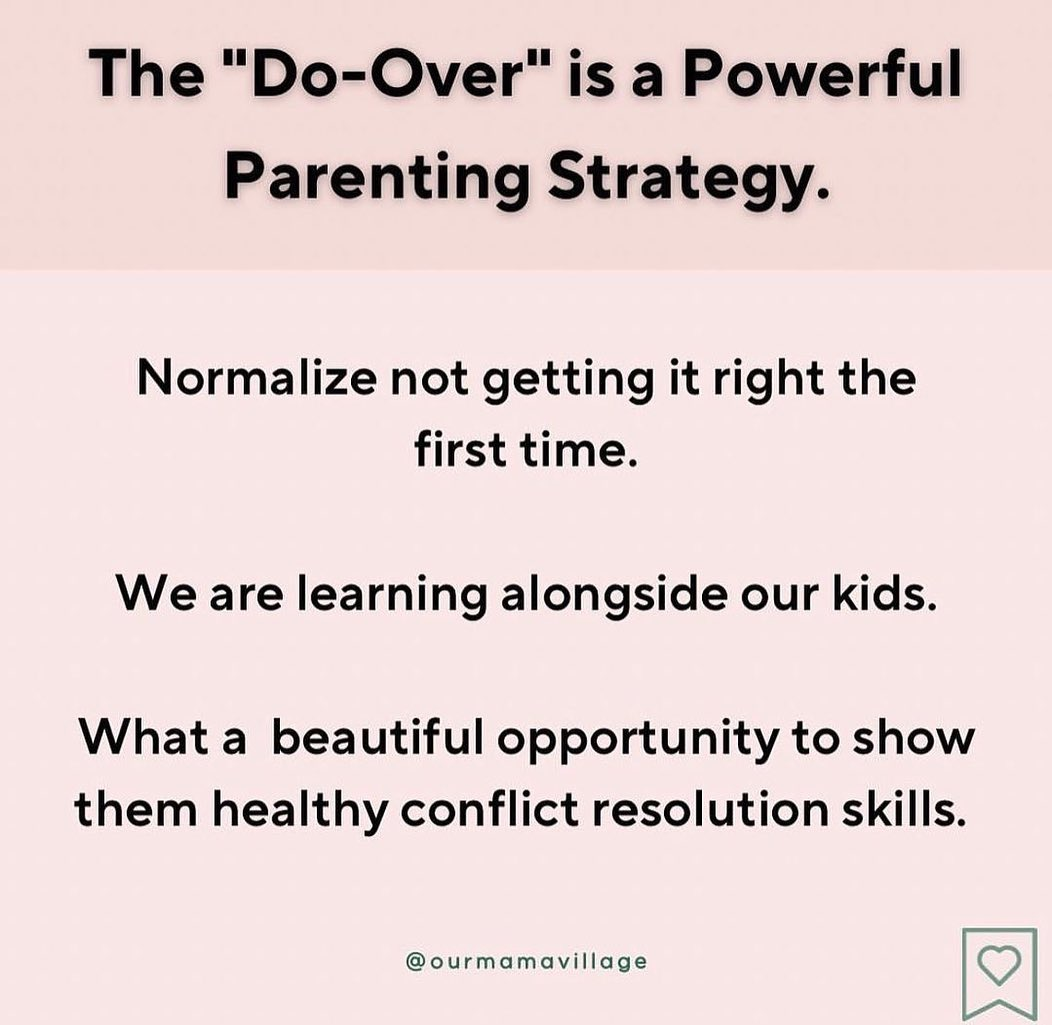
The “Do-Over” Strategy

I was once in a movie. Not saying which one since it didn’t star a Hollywood A-list cast and was pretty cheesy. My 5 seconds of fame, you could say.

Anyway, back to the movie. I learned how many times the same scene is filmed over, and over…and over.

From this angle. From that.

With a different perspective.

With different clothing and props.

Different emotion or words.

I now get how tedious acting in films can be. The director will keep going until he/she gets just the right takes. Only the best, Oscar-worthy acting will do. They edit them later so the viewer can see the same scene from many points of view.

If we can do that in film-making, why can’t we do it in life? Don’t we want our worst moments edited out, to end up on the cutting room floor? Maybe they’ll make the “bloopers” extra scenes to laugh about later. But for now, when we act out really terribly with our spouses or kids, can’t we give each other a “do over”?

Time out.

Take Two.

The same analogy could be said for a “rewind” button. We use it all the time on our remote control.

Here’s an idea: the next time you say or do something you regret, immediately pull out your cellphone, pretend it’s a remote control, and push an imaginary “rewind” button. Tell the other person, you are truly sorry, and want to rewind that scene. Ask permission to have a “re-do” or “do over.” They’ll probably be so stunned or amused, they won’t say no.

Then set up the scene for them with a NEW ending. Say or do the thing you should have the first time.

It’s one of the most amazing, refreshing relationship skills I know of.

Here’s some reminders of how to do this. Talk this strategy over today with those you love (and have hurt) and commit to using it from now on.

Credit given to ourmamavillage for these memes

Does Good Parenting=Good Teens?

That’s a really good question. In other words, does great parenting turn out great kids? Does doing our best guarantee the best results? Or is it all a crap shoot?

Here’s the bad news: Good parent does not always=good teens.

But here’s the good news. The following 3 points are ALL true and can guide us through the difficult times.

1. “Turn out great” is relative. A sassy, mean 10 year old you think is the devil incarnate may mellow out and be and easy adult. A rebellious teen may get their act together later in life (just needed a detour first) and become a fabulous parent themselves. If your child goes through a rough patch, hold on, love them, be firm but flexible, and chances are they will figure things out eventually. People generally do. Some just take longer than others.

It’s a trial to go through for sure, as a parent, but hang on until you get to the other side. Don’t ruin the relationship now just because the teen is acting like a terrorist. They may just be testing us to see, “Do you really love me despite my self loathing and discouragement?” They need us more than ever when they are acting out.

Wear it proudly. Say it often.

2. Raising children responsibly DOES increase the odds that the child will respond well. They will be less prone to rebellion, helplessness, addiction, or truancy. Stack the odds in your favor by being a good parent the best you can. We can make mistakes, but that’s a good thing. Owning our mistakes, apologizing to our kids, and making improvements shows them how to get through their own mistakes.

3. Remember that it’s often our own attitude that makes the difference. Do you love your teen, acne and all? Can you love them beyond anything else, and be especially kind during these years when the world is so unkind? Do you cherish them (eyes light up when they enter the room) and tell them they are welcome home every day and you love them? Or are you constantly annoyed and angry at them? They are SO perceptive and know if you care or not. If they don’t feel you care, they won’t care about being good. 

Overly strict parents=Sneaky Teens

In a parenting class I teach, a student reflected on questions I posed. Note how her parents’ response built on the trust they already had and kept communication open. She explains about the positive effect on her level of confidence and personal responsibility.

What is an example of how your parents responded to conflict during your teen years?

My parents were very authoritative* The best example of this was a night I was late for my curfew. I was out bowling with some friends in high school and knew that I was not going to make it home in time for my 11:30 curfew. Knowing this, I called my parents at about 11:15 and explained the situation. They simply asked who I was with and if I had a ride and let me come home after we finished our last round of bowling. I stayed with my friends and made it back home by 12. My parents explained to me the next day that because I was a responsible kid, making good choices, and called them to give them a heads up, they were more than happy to forgo their strict curfew for one night. 

How did that affect your relationship at the time?

This situation was very beneficial to our relationship at the time. It showed the mutual trust in all of our relationships.

How does it continue to affect your current relationship?

This was the first time that the relationship I have with my parents was ever tested. Due to the mature relationship we built from the beginning, it has been very easy for me to continue to talk to, trust, and want my parents in my life. This one incident was the beginning of many more opportunities for us to communicate and trust each other. We continue to do so today.

How has it affected who you are, your competencies, self-esteem, and socio-emotional maturity?

Having my parents trust me like this helped me to be more mature in all of my decisions in the future. It was a great boost of self esteem that my parents trusted me and my friends to be responsible. I was able to continue that maturity level all throughout high school. While other kids were sneaking out and hiding things from their parents, I knew that I would be much better off being open and honest from the beginning. I hope to continue this style of parenting when I am a parent one day. 

*An “authoritative” parent is one that is loving, responsive, sets boundaries, has reasonable expectations, and supports their child’s not-so-perfect efforts.

Don’t eat your young, eat WITH your young

So let’s not pass along the “just wait until your child is a teen” (with eye rolling) warning to each other. What a terrible way to set us up for fearing these years. They aren’t to be endured, but to be enjoyed. Having just finished raising my 5th and final teen, I call honestly say they were amazing years. Adolescents are funny, kind, smart, and in desperate need of their parent’s attention and listening ear.

Our attitude matters. Rather than “eat our young” we need to sit down at eat with our young. Talk. Listen. Laugh. And have a long-term perspective that they will outgrow these years and you will outlive them. And you can look back on those fleeting moments with wonder and say, “Yes, that was all good.”

Real Parents-Real Advice

In a university parenting class I teach, students interview their parents and ask them a variety of questions about what it was like to raise their children.

If we could have brought in these parents to class and lined them up in front, they would represent decades of experience and a rich “lessons learned” dialogue. I wish we could, but in place of that, I took some of what advice they shared and will anonymously excerpt below what they said. There’s so much outstanding advice they shared that we can all absorb, and if we do, we’d be better people and parents.

They summed up all they learned in a few sentences and they are GOLD.

Take note of how many times the word “love” was used and and the context spoken. Look for other repeated themes that indicate it’s important to a lot of parents looking back on their lives. 

“Everybody’s different and every parent will do it a little differently. But if you decide to have kids, recognize the responsibility that it is. A good parent only punishes out of love. Make sure you do all you do with your kids from a place of love.”

“We all just keep learning. We learn first to be parents to little kids, then teenagers, then adults… you’re never a pro at it when you start a new stage.” My mom added, “and we’ve made mistakes at every stage.” My dad’s advice was “don’t sweat the small stuff.”

“Everyone has bad days and good days. Sometimes you’ll feel really patient and others you won’t have any patience left. Don’t be too hard on yourself.” My mom said, “If you say it, do it. If you have an expectation, expect it.”

“It’s a hundred million times worth every single effort that I put into being a mom, and it is so joyful. I would not trade it for anything.” There have always been ups and downs, but there are things he has learned as a parent that would not have been possible any other way. My mom said, “ Just because you’re a parent doesn’t mean you’re perfect now. Give yourself grace and make sure you yourself are taken care of.”

“Have fun and enjoy your children.” It’s important to enjoy the time you have with them because one day they will grow up and you’ll wonder where the time went.

“Love. Show love to your kids and they will be ok. Love verbally by saying it, physically with hugs and kisses, and love in action. Show them by loving their mom. I believe in and love you very much. You will be a great parent. “

“Show them all the love you can muster and more. The world is a scary place, but knowing you love them and that there is always a place for them at home is the best thing you can do for them.”

“Don’t be too hard on yourself and don’t be too hard on your kids. You aren’t going to do it right, the most important thing is that you do it.”

“You are never going to be ready or prepared. If you wait to be ready to be a parent you’ll wait forever. It stretches you more than anything you ever experience, but also will bring you more joy than anything you’ll ever experience.”

“I would encourage you to enjoy every single second of every age and never wish a stage away. I enjoyed every stage of every one of my children and I would encourage you to do that same thing.”

“Start a journal during the pregnancy of each  child, and to continue that journal throughout their life.  Write everything down because you think that you will remember it, but you won’t.” 

“Never yell at them and show them unconditional love. He said yelling does not get you anywhere, and is a lot more hurtful than helpful for both the parent and child. He also said to let your kids know that mistakes happen and mistakes are okay. My mom said her best advice would be to show them love at all times.”

Make sure that you and your spouse are in agreement on how certain things should be, you don’t want to have somebody that’s “Well we’ll just let it go this time. Well, no, we need to do this.” Be consistent, work together with your spouse.

She also talked about how as a parent, mistakes are going to be made and it’s important to forgive yourself and learn from the experiences and be conscious of what is happening. It is okay to tell a child that you made a mistake and are wrong and from that, kids will be able to recognize and learn to apologize and that it is okay to be wrong. With admitting wrong, children will learn they can be vulnerable and how not to be stubborn and proud.

“DO IT!” My mom said, “You aren’t going to know the best days until you are out of them, so enjoy every moment and just know that everything is going to be O.K.”  My dad said, “Always remember that they are each their own individual person.  It is so easy to make them feel small and insignificant, so don’t be too blunt or hard on them.  Your job is to support, provide guidance, and protect them.  Always make sure they know they are loved.  Just breathe and relax and know it will work out.  What is significant now won’t be significant later.”

“Each child is an individual with individual wants, needs, abilities and goals.. Although families are a group dynamic, each child needs and deserves specific care and nurturing. As the child grows into a teen and then a young adult and then an adult, the parent’s role changes to allow the child to make more and then all of life’s determinations.  A parent becomes more of an advisory than an instructor. 

“Don’t beat yourself up if children don’t always choose what you would want them to choose. Enjoy each stage, because it will pass quicker than you think. Diversify yourself outside of being a parent. Don’t lose yourself in becoming a parent. Keep your own identity.”

Mom’s advice is to not worry about control and work on fixing the power struggle between herself and her kids. Validate the child’s opinions. Their feelings are valid even if they are different from what I may think they should be. She would also focus on less fear-based parenting, but rather parent her children with hope. Let them experience life, and let them feel how they are feeling.

Take it one minute at a time
– Make sure you are super united with your husband, teenagers will destroy your marriage if you let them. Be united!
– Pray with kids, don’t lose your temper
– Hug them several times a day, tell them you love them every day
– Do activities with your kids, no phones, just quality time with siblings.
– Don’t entertain them to death, then they can’t interact with each other. Go boating, hiking, camping
– Religion is so important! Believe in something bigger than yourself, have hope!!
– Don’t over indulge kids, don’t buy their love, don’t just be their buddy, be their parent
– Eat dinner together with your family (or at least a meal)
– Your spouse is #1, their needs come before the kids. Prioritize your relationship with
them cause they will be there for you after the kids are gone.

“I would tell people the thing I learned is don’t be afraid to ask for help from other adults or professionals, read books about it. I also think that families are really important and that extended families are really important and to be involved with them.”

In Every Moment a Seed

The Night Before My Daughter’s 13th Birthday
by Rosemerry Wahtola Trommer
If I could do it all again,
I would—every blooming bit of it.
Every bout of pink eye,
every snotty nose, every
late night waking, every
single reading of Good Night Moon,
every fairy house, every
drive to every ballet class,
every singalong to the entire
soundtrack of Hamilton,
every wobble and stumble
and blunder and lapse
to arrive at this very moment
when we lie on her bed
in the dark and talk about
this miracle, this astonishing
life, and watch dumb videos
and curl into each other.
In every moment, a seed.
It surprises me now,
how beautiful the field.