Two Spoonfuls of Parenting Books

No matter your parenting needs, I’ve got you covered. Here are two books that approach parenting slightly differently. Look under the “Publications” menu or click on each book for more details and how to order.

d175c-cover
Inspirational and Insightful.
This book examines the lives of scriptural parents like Adam and Eve and what they can teach us by their examples. Truly, the scriptures are the Perfect Parenting Manual! 
Keep-it-Real-Grab-a-Plunger_9781462116324
Fun, friendly and informative.
  This book addresses a variety of topics from talking with your teen, creating memories around the table or bedtime, and how to stop yelling and start listening  (plunger not included). Book trailer here.


Having a conversation with myself 50 years ago (part 4)

Church Etiquette

When you have a child was is older than about 3 years old, don’t let them bring pencils, paperwork, etc to draw on in church. It really annoys the people in front and in back. They should never have to ever be drawing in their life at church. When you have a baby or a small child, you usually have little baby books and crackers. Then, when they get older, but not old enough to get a full, complete understanding of the talks, they should have book that have stories of Jesus and what He did on the Earth, etc. If you do have them draw, then all they think church is is fun and games and don’t pay attention. They never really take it seriously. Then, when you want them to now draw and to start listening, they will throw a temper tantrum.

I have to admit, I totally missed the mark on this. I must have watched a lot of disruptive kids in church who were coloring and distracting me in order to come up with this harsh criticism. I’m sorry to say that I was naive and judge-y in my young years. It reminds me of a quote that was something like, “I was a great parents before I had kids.” In other words, in my head, this probably sounded great. But in reality, the execution of wrangling kids in church becomes a survival of the fitness and exercise in desperation. As a mom, I now wouldn’t prohibit parents from resorting to anything to keep their children coming to church and not strangling each other in the meeting. I’d bribe them with Fruit Chews, sparkling markers and coloring books, and toys (although I do draw the line with toys that make noises). Heck, I’d bring a clown circus if that would keep them in their seats.

But I get the thing about wanting them to learn about Jesus over the pulpit, week after week. That’s a sweet sentiment. I agree that kids have a huge capacity to absorb the spirit and feel testimonies shared. I’m grateful my parents brought me to church, week after week, and for many of those years, that was twice each Sunday! This was before the block meeting schedule and required more back and forth. It was definitely a day we devoted to worship and staying in our Sunday dress. I have good memories of those years.

_________________________________________________________________________________________

What Would Jesus Do?

Another thing to make the house pleasant is to hang a picture of Jesus in the living room or family room. Then, always imagine that this is really Him in real life and He is watching and listening to everything you are saying and doing. Then, you will always be reminded to do the right thing He would want you to do. When you hold Family Home Evening, start out with and end with family prayer. Kneel down in a circle and hold hands. It will bring you closer together as a family. Be sure to hold family prayer daily. Your children will look back and remember those times with a good feeling inside.

I’m impressed that I was way ahead of the WWJD (What Would Jesus Do?) world-wide trend. I didn’t have a picture of Jesus hanging up in our living room, but I had a few small statues of Christ in the house. We also had a picture of the SLC temple and a few scriptures hanging up in the living and family room: “As for me and my house, we will serve the Lord” and “Fear not, for I have redeemed you; I have called you by name; you are mine.”  We had family prayer every day, although not usually kneeling and holding hands, and as I look back, I do have good feelings inside and I hope my kids do too, and practice these in their families.

_______________________________________________________________________________________________

Final Parenting Advice from an 11-Year-Old

If you have a job or something you want your child to do, just say, “I want you to do this_________and I’m telling you once and once is only all I need to tell you. If you don’t do it now, then you will have to do something extra.” Be sure that if they don’t mind you, that they do an extra job. If you teach your children at an early age to mind you, then later, you won’t have to keep calling them and calling them. For example, if you are ready to eat and some child is outside, call out and say, “Dinner is ready” and if they don’t come, then they don’t get any. If they come 15 minutes later or longer, stick to what you said and don’t let them have that meal. It is so important that you teach them as soon as they know what you are talking about. If they learn very early, then for the rest of your life, you can be blessed with children that do what you want them to do when they are asked. Keep applying this forever. Then, when they know how much you want them to respond right away to the chore request, you don’t keep reminding them. Ask them to clean a room (or something like that) right away. if you come back 5 minutes later and they haven’t started, say, “Okay, no supper for you” and stick to what you said. Don’t let them con you out of it. Then the next time you ask them to do something, they know what to expect if they don’t do it right away.

_________________________________________________________________________________________

I was also way ahead of the “Love and Logic” parenting book method. I appreciate the intent of what I’m trying to do here: show the effect of immediate consequences of reward or punishment so a parent doesn’t nag and nag and become ineffective with empty requests and threats. After raising five children, I also appreciate that it’s not so cut-and-dry. In theory, rewards and consequences should guide our parenting practices. In application, there is space for real life with real people. But I do agree that children should know what is expected and feel supported in contributing to family life. It teaches them that the real world will expect the same and the home is where we prepare our children to succeed out there.

Having a conversation with myself 50 years ago (part 3)

Parenting Advice from an 11-year-old

I will continue transcribing excerpts from my journal, below in blue. To sum up this topic of communication and trust, I wrote:

If one of your kids does something bad and another one tells you about it, don’t say, “Okay I’ll talk to him later.” Because parents get busy and distracted and they forget and the child might never get corrected. It’s very important to teach your kids now because we are just borrowing them from our Heavenly Father to prove that we can teach kids the right way. And they will turn out good or bad from what we teach them. Remember that now you may have jobs and classes and other things to do, but what you will have in heaven is your children and nothing else. So they will be what you spend your time with. The jobs will be forgotten. It is better to establish a good relationship with your kids by going on trips, picnics, camping, skiing, etc. so they know that home is a wonderful place where they can be loved.
Whenever something happens that shouldn’t (like there is a broken plate on the kitchen floor), and you ask everyone who did it and someone speaks up right away to say they did it, don’t get mad. In that situation there is no reason to be angry. In the first place, your child didn’t mean to do it. In the second place, he or she didn’t lie or wait until later to say it. Now if they did speak up right away, just have them clean up the dish. But if they don’t say it right away or lie and you find out later that it was that person, you can get mad. But it would be best if you wouldn’t be mad and just talk it over with the child and ask why he or she lied and see if they can do better the next time. If you do it this way, the other people in the family will see that each time they do something bad and are honest, it will be easier. If someone does lie, but later they come back to you and say they did it, don’t get mad because they are repenting. It took a lot of courage to tell you that and getting mad at them will just make it harder to tell you so. They might not even tell you the next time.

I’m touched by my younger self. I don’t remember writing most of this journal at 11-years-old and I’m impressed with how perceptive I was about human behavior, psychology, and parenting. I find it amazing that 50 years later, I now study, research, write about, and teach these subjects for a profession. I’ve written and published two parenting books that I suppose, had their genesis in these journal entries when I was still a child. I love the true parenting strategy of not alienating our children by getting mad after they made a mistake. I actually teach why and how to do this in a university class. It’s so important-but hard to do! The other thing I am touched by is how I lecture myself about keeping an eternal perspective. All the worldly stuff will not matter in heaven. We keep our family and our memories and experiences after we die and that’s about it. I already understood the principle of focusing on what matters most. I want to tell my 11-year-old self: You are amazing. You are so right.

Having a conversation with myself 50 years ago (part 2)

This continues my reflection on the journal entries I made as an 11-year-old. I will type out excerpts about all the goals I had for myself as a parent and respond how I did to my younger self. (I’ve corrected punctuation and spelling)

______________________________________________________________________________________________

Did You Think To Pray?

Another thing I want to remember to do as a mom is to always teach your children to pray. Even if you say, “And be sure to say your prayers” to my kids. You’re not there to witness them saying their prayers so it is up to them to do it by themselves. My mom would often say that to do but I wouldn’t bother. Make sure EVERY NIGHT to gather as a family to pray. In a few years it will be normal to them to pray. You will NEVER make it to the Celestial Kingdom if you don’t pray. NEVER. Start to teach them when they are young. It is a very, very hard thing to do.

That bit about “not making it to the Celestial Kingdom” was a result of a conversation I remember vividly with my mom. I hadn’t been praying, and the thought struck me that there might be some eternal consequences for that. I remember asking my mom around that age, “Will I make it to the Celestial Kingdom if I never pray?” That’s a tricky question and I admire my mom for taking it seriously. Her simple answer was, “No,” which was a life changing moment for me. From that moment on, I began saying my personal prayers each night. I’m grateful for my mom’s boldness and sensitivity to my pivotal question.

To answer my strict orders to my future self, I hope I did okay teaching my kids to pray. I remember having family prayers regularly, especially around family meals, and kneeling with each child by their bedside to hear their personal prayers. At some point, when they were not little kids anymore, I gave them the privacy of personal prayers. I can only hope and pray now that they have continued and are teaching their own children how to talk every day with their Heavenly Father.

___________________________________________________________________________________________

Clothes Make the Woman

Clothes are the next topic of importance. Keep yourself slim and wear neat clothes. That’s what I notice in older women: their hair, what shape their body is in, their clothes and shoes. Being beautiful is very important.
Buying really neat clothes for your children is VERY important. Cute little dresses for young girls and little overalls and football shirts for the boys. When I was in 5th and 6th grade, having neat clothes was the most important thing people knew you by. Unmatching tops and pants, hand-me-downs, high-bottom pants (which aren’t in style right now) and old clothes are really sick.
Shoes are just as important as anything. Right now to have Adidas, Pumas, Nike’s, and really good $30 shoes are the “in” thing. I don’t have them because mom and dad say that my feet will grow too fast for good shoes. I don’t really blame them either so good $17 shoes which resemble the good brands and what I want are finally what I’m going to get. I’m really thankful for them.

Back to the future. I’m surprised to read how materialistic I was. I honestly did not remember caring so much about fashion and judging others so strictly. To my 11-year-old self: I will report back that I didn’t do all you wanted. I try to stay fit and wear neat (as in “clean”) clothes but they aren’t the most fashionable most of the time. My kids often wore nice hand-me-downs or thrifted clothes and I’m not apologetic about that either. It’s good to stay humble and not spend a ton of money chasing after fashion. I didn’t want to raise high-maintenance girls or materialistic boys so I intentionally kept their wardrobe moderate and modest. I’m grateful to report all five kids turned out to be awesome adults!

__________________________________________________________________________________________

Cheaters, Liars, and Shoplifters

Tell your kids this and remember it yourself: no matter what you do – if you cheat, lie, or fight, it may not matter here on earth. A little cheating will get you through a test or get you candy from the cupboard if you lie about taking it. It will just be counted against you in heaven. Every day, anything you do, no matter if it is punching your brother or sister because you got mad to relieve your tension or get revenge will be counted against you. ANYTHING you do may not have consequences here. If you are tempted to take a candy bar from the store and do, what will it do? It will quench your taste buds and maybe lead you into more and greater bad things you will do. But just that little thing that doesn’t do much will be counted against you.

Earth is a test and you doing either one thing or another to affect your final grade. Here’s an exaggerated example: a guy who never cheated but was stupid and didn’t get high grades but studies hard and later didn’t get a good job and dies of starvation will be blessed in heaven. Why do people do little wrong things when they know it’s wrong? It might content you here but you will sit back later and mourn over it and practically die of a broken heart and say, “Why didn’t I do right?” Think of this dinky little time we have here on earth and think of all those never-ending days we will have in heaven to regret or be thankful for what we did here. Think of this poem by David O. McKay:

“Day by day, hour by hour, we are building the kind of person we are going to be forever.”

I’m really impressed with my eternal perspective and moral judgement, especially after reading my superficial ideas about clothing. Many of the strong opinions I held in my journal are irrelevant and frankly, impractical, but here is an entry that is worth gold. I’m grateful to that 11-year-old self for having the strength to see right from wrong and fortitude to express truth. I agree with her and have tried to live these principles and teach them to my children. I’m grateful for my parents, church leaders, and anyone else who shaped these eternal truths in my mind and helped me cement them while I was young to build a foundation of values that have guided my life.

Having a conversation with myself 50 years ago (part 1)

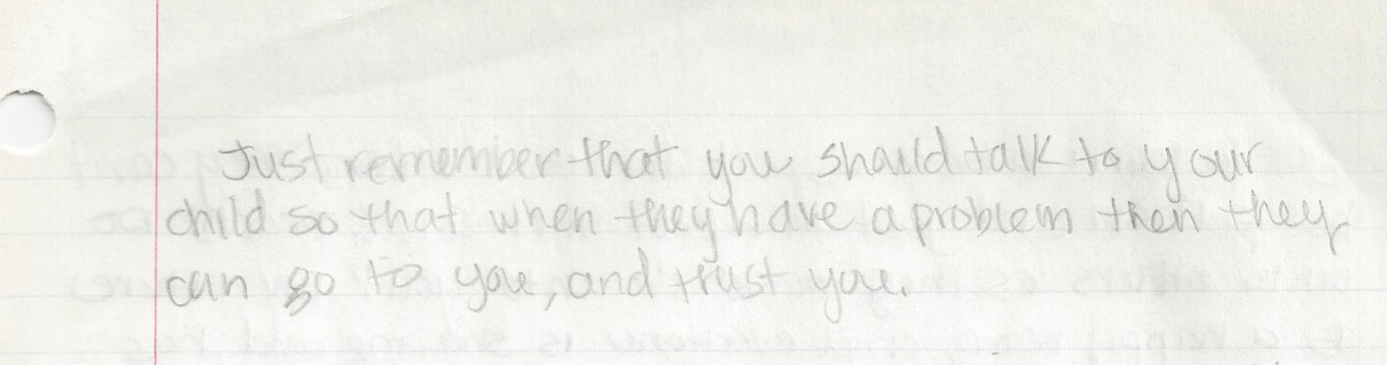
I began writing a journal at 11 years old. I know this because I have proof. Not only is my handwriting adorable, I am charmed that I wanted to have a conversation with my “old” mom self to remind me of what it was like to be 11 years old, 50 years ago today.

I also find it adorable that my very next thought was about my future husband – who is was and where he lived. Little did I know that in a few months, he would be moving from Hawaii to live in my same town and see me at church at the drinking fountain. This 11-year-old boy would know in that moment that I would someday be his wife. So he more than wondered about his future wife. He knew it would be me.

These looseleaf notebook papers are quite precious to me now but since they are written in pencil and deteriorating, I thought I’d pull out quotes to preserve them and report back to my 11-year-old self. I had some pretty strong opinions and told myself a thing or two about what I should do as a mom! Not all my ideas were practical but I admire how determined I was.

So here goes. I’ll insert quotes and then have a conversation with myself 50 years ago.

_______________________________________________________________________________________

The Pre-Teen Swimming Suit Angst

It’s spring vacation this week and we’re going to the coast. We shopped around for a swimming suit today because the one we ordered I didn’t like. Mom and dad did, of course, they like anything that’s dumb sometimes. It had tank top shoulder straps and was one piece and looked stupid. This is what mom and dad always do in a case like this. It’s two more days until time to leave and mom says, “You will just have to wear the one we ordered because we don’t have enough time to shop for one. I’ve been looking for swimming suits for months and haven’t found one and I doubt you will find one today” (Dad was going downtown and I wanted to go with him to look). So I finally got to go with him and we looked at all the good stores that had swimming suits (three) except one of them which was Fred Meyer. But before we got there, we (dad and I) sat down in the car and he says, “Mom has looked at Fred Meyer lots of times and there wasn’t any there so we think the one you have now is good material, will last a long time, looks modest, and makes you look older. The two choices you have is to wear the one you have or don’t go swimming.” Now here comes the good part. Dad says, “Mom would have a bad trip if I didn’t go swimming” and knowing mom and dad, I’d get into lots of trouble if I don’t go swimming since they paid for the nice hotel. He says I have two choices when I really have one. That’s to wear that retarded swimming suit. But dad said if it would make me feel better, we could go to Fred Meyer. I found a cute swimming suit. I don’t want to be like that when I grow up.

First, can I just say “kudos” to my dad for taking me downtown to shop after my mom had exhausted her resources. He had better things to do than drive around an angsty, grumpy, pre-teen in a small town with very limited retail options. I am embarrassed at how harsh I was on my parents and opinionated I was on nearly every topic. It’s true, dad really only gave me one viable choice with a guilt trip served on the side, but I can’t think of much I’d do differently with such limited options and short deadline. It must have been exhausting to raise finicky me. The fact is, dad did take me to that last store and we did find an acceptable swimming suit and he did buy it for his very undeserving daughter. He kept his patience in this frustrating situation. He could have turned around and gone home with me sulking in the backseat.

So to 11-year-old me: I’m sorry. I was probably “that” parent too. I sure hope so. To my dad: I’m even sorrier. You gave me more than I deserved.

_______________________________________________________________________________________

Food, Glorious, Food

I always say things like when I grow up, I’ll have better lunches than we have now. When I wake up and try to find a civilized breakfast, nothing is there. Mom always says, “I’ll love to come and visit you when you have a family because you’ll be living like rich people, but I hope you marry for love.” Really, I do want to change a lot of things when I grow up. I’ll write as much as I can think of. When I grow up, I can see how much it compares.
To start out, FOOD…definitely better breakfasts. I hardly have any now. Bacon, eggs, sausages. And for cold cereal (I don’t know if these will be on the market when I’m older): Trix, Fruit Loops, anything with sweet things in it. Mom always says she doesn’t buy cereal like that because it isn’t good for us and costs too much. But I hope I have enough money from what my husband earns to buy things like that. At least I want breakfasts with bacon, eggs, toast, sausages, oranges and pancakes, juice, WHOLE milk, no powdered milk. I despise powdered milk. I also love frozen grape juice but mom says that costs too much too. I want these things too: Pop-Tarts (in case they don’t have them in the future they are sorta triangular things with icing on top with blueberry, cherry, or strawberry filling). And anything from Hostess. Good things like that.

I can hardly type this out without falling down laughing. Where do I begin with a reasonable reply to my 11-year-old self? How wise my mom was to respond to my irascible temperament with a smile and even response of “I look forward to coming to your house when you are a mom.” She knew how volatile were my opinions and it wasn’t worth engaging in an argument. She took the higher road. And to be fair: I have no idea what I was talking about having no “civilized” food in the house for breakfast. I make it sound like we were raised by wolves. Let me assure you, we were not. What a Drama Queen I was!

Now did I do what I felt so passionately about when I became a mom? How does it compare?

Well, I did buy cold cereal, but my own children can attest that it rarely involved the sugary kind. Sorry, no Trix or Fruit Loops on the regular shopping list. We sometimes had pancakes, eggs, sausage, and juice, but those are Saturday or Sunday morning special times. We didn’t have whole milk but we didn’t have powdered milk, either. Somewhere in between. I rarely bought anything from Hostess and can count on one hand the number of times I bought Pop-Tarts (yes, we still have those villainously diabetes-inducing things 50 years later). Pretty much I’m on par with my mom. And proud of it. In fact, just a few years ago, I wrote this poem:

In Praise of the Pop Tart

I remember cursing my mother

for serving oatmeal and stale toast

for breakfast. A small tsunami

in the blender of powdered milk

to wash it down.

When I’m a mom, I’ll buy Pop Tarts

to show my kids how much I love them.

Breakfast wrapped silver cellophane

just like the Jetsons on TV.

Two rectangles to a bag, a bonus of indulgence.

Icing on top. Jam inside. Oh, you were

rosy cheeked and freshly painted

with sprinkles masquerading as nutrition.

It’s not like the toaster didn’t know

how to open its sweet tooth

and heat my desires. I’ll fit in, then.

One for now, one for lunch so

friends will drip with envy.  How much

I still want that—the fake, the bangled

evidence of belonging.  A little heat

in my hand. The red crisp lips

curled in a knowing smile.

Yes, I could indulge my secret belief in you. 

So it goes from mother to child,

our blood thickened with

tinseled desires packaged for resale.

I could tell you this, today, as I stir

lumps out of oatmeal on the stove,

if you wish to unwrap happiness

before school, but it would

crumble like false friends,

turn to ash in your mouth.

_______________________________________________________________________________________

For Love or Money?

I wish I will marry someone rich so I don’t have to worry about my problems. But like whenever I get into a discussion with mom about what I want when I grow up, she always ends up saying a lecture about “marry for love and not for money.” I WILL mom, unless I’m really crazy when I’m older. Marriage is the most important thing in my life. It decides what I will be doing for the rest of my life. It decides how I will raise my kids, how my house will be like, who I will be spending the rest of my life with. It will decide a lot of things. I want to get a great big house with big rooms and lots of rich furniture in it. But there is one problem: I HATE to clean. Another thing I have to figure out is that I don’t want to spoil my children and give them neat stuff but want them to be grateful, kind, sweet little angels.

To myself 50 years ago: I found the right balance and made the best decisions. I don’t own a big house with big rooms and lots of rich furniture. It’s easier to clean and I don’t stress about keeping up with all the nicest, most expensive designs. I can assure my 11-year-old self that I wasn’t crazy when I became older. I didn’t spoil my children and they are the most kind, sweet little angels. Most importantly, I did marry for love. He’s the love of my life. I am the richest woman in the world.

Parent Triggers and Human Choices

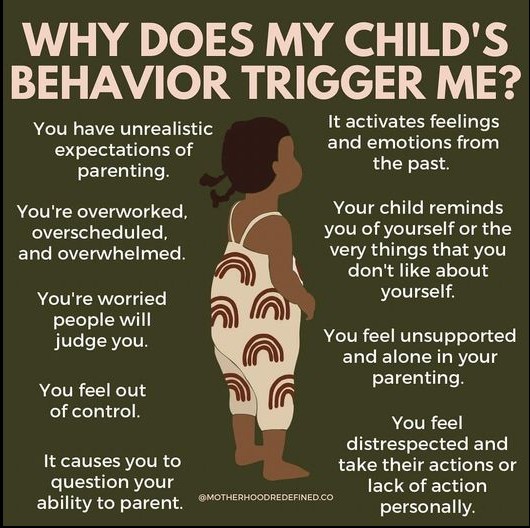
Why do we get so annoyed, irritated, or downright angry in reaction our children’s mistake, squabbles, and personal assaults? We call this “pushing our buttons.” When someone pushes a button, say with a vending machine, the machine has no choice but to give the user what it wants. But if you think about it…

We are not machines. Or robots.

But we do have invisible buttons. We often call them “triggers.” Unlike a machine, we are humans and can choose to give the user what they want…or not. We can choose to react…or not.

“It’s often not what your child has actually done, but what you feel about what they’ve done that can tip you into a strong emotional reaction.”

Motherhood Redefined

This idea goes along with one of my favorite quotes. It’s by Viktor E. Frankl who suffered unbelievable pain and inhumanity in WWII concentration camps. He had every reason to turn bitter and vindictive. He had many opportunities to react in rage or revenge. He did not. In fact, he remarked that in the worst place on earth, he saw some of the best of human nature. He realized that the Nazis could take everything from a man but his own dignity and ability to choose.

In his book, “Man Search for Meaning,” he made this profound observation about “triggers”:

What sets us apart as humans from robots or any other life form is that sacred “space.” In that space is our power to choose our response.

When a child talks back disrespectfully (stimulus), we can honor what happens next by pausing (the space) and saying, “I’ll wait for you to say that again using respectful words.” And then stay quiet (response).

When a child breaks a rule (stimulus), we can stop and consider our response (the space). If there is already a consequence you’ve both agreed on, you can say, “I love you and want to honor the agreement of X as the consequence.” If there isn’t a consequence and you are triggered, take a moment to breathe, step away for a minute, or take a walk (the space). When you are ready, you might say something like, “Let’s think about what would be an appropriate consequence so you can fix it, learn how to do better, and learn from your mistake.” (response).

That space.

Everything that follows depends upon it.

Therein lies our (and our children’s) growth and freedom.

What does “Good Job” mean anyway?

Handing out praise like “Good job!” is easy and quick and a feel-good moment. But what does that statement really mean when said to a child?

The effort was good?

The outcome was good?

They are a good kid?

Does doing good equate with being good? To a child, they may internalize that they are only good when they out-perform others or reach an unrealistic standard set by the adult. That’s a sad, conditional type of acceptance.

Praise is using a value judgement or what we think of the child, not what the child is thinking of himself. “I’m so proud of you. Way to go!” is focusing on the adult’s feelings, how they esteem the child, not how he esteems himself. It removes the opportunity for the child to assess his or her own worth and effort. 

It’s not a bad thing to use praise sparingly, and in the right moment, but better yet, parents can use both praise and self reflection to reinforce self concept through external and internal reward systems. With really young children, we use praise almost exclusively because the toddler needs immediate reinforcement and feedback. For example, when learning to walk, we praise each step and encourage getting back up after a fall. We are the mirror to child’s world. 

Being a Mirror vs. Self Reflection

As children grow, however, parents need to step back and use praise, encouragement, and self-reflection. Especially as children become pre-teens and teens, intrinsic motivation becomes important since they will be making decisions on their own, away from their parents most of the time. Encouragement uses self reflection. Rather than a being the mirror (in early parenting), the parent holds up the mirror for the older child to look in and reflect in words and feelings what they see and how they feel. 

If your child comes to you with school grades, parents will often praise, “Wow, all A’s. Good job” without taking the time to ask the child how he or she feels about the grades, or more importantly, the effort they put into earning the grades. An encouraging parent will stop and ask instead, “Look at these grades. How do you feel about them?” Kids may have worked super hard for some B’s and need to acknowledge for themselves that they are really proud. 

Encouragement means we take the time to notice the effort along the way rather than only waiting until the end to give high fives. It’s much more involved parenting and helping the child to recognize her or his worth that is independent from us.

So is praise bad?

No! Just consider the added dimension of encouragement in building self esteem and internal motivation. Encouragement has lasting value because it is sourced from within. It’s authentic and individual. It causes parents to stop more often to notice the good progress and character traits like determination and team work. Not everyone can kick the winning soccer goal or be voted Student Body President, or gets all A’s. But everyone has capacity to build character traits that endure after the applause ends. So point out along the way what you see your child doing such as having good sportsmanship or determination. And when they are first to cross the finish line, that’s great, too. 

Here is an article to guide a parent into developing their child’s intrinsic worth and internal motivation for doing right.

Breaking Down the Task

Parents often commiserate that asking a child to do a chore is like asking them to assemble an IKEA desk out of the box. They hurl themselves on the floor crying, “I can’t do it!” They put up such a fuss, the parent finally throws their hands in the air, and lets the child win. It’s self preservation for both parent and child. The child gets out of doing the job and the parent doesn’t have to deal with the hurricane of emotions.

In this brief article, it talks about breaking down big tasks in point #5. A messy room can be really overwhelming to a child when he doesn’t know where to start. This could be the reason why a child will have meltdowns when asked to do something. Rather than, “Clean up your room,” explore how to build confidence and resilience by showing them how to eat an “elephant” in small, manageable bites. Start with, “After you have put your dirty clothes in the hamper, let me know.” The parent could even model it by rolling up a clothing item into a ball and shooting it into the laundry basket like basketball. They could tell the child to count how many shots they get in the first time and when they are done, come tell them. The child is intrinsically rewarded by their own work/play. Then, when the clothes are done, they could ask the child what the next step is. If they can’t come up with anything, the parent can direct them to a possible next step (put just the stuffed animals in their container, etc.). The idea is to not let the child “get away” with doing nothing because they are dysregulated, and the parent is frustrated. The child needs opportunities to see smaller steps within a big task. A clean up chart would be a good idea to detail the steps in this case. And after each is completed, the parent can say, “You did it,” give a High Five, or ask for self reflection (intrinsic reward).

“How did you do that?”

“How does it feel to have your room a little cleaner?”

“How about that! Does it feel good inside to know you did something that seemed hard at first?”

Praise is lovely, but fleeting. As your child grows, try to use more internal motivation and self reflection to see themselves as source of power and capability. Good parents know they’ve done their job if they work themselves out of a job by the time their teen or young adult is ready to live on their own. They aren’t needed every day to validate that their child is good…or capable…or resilient. They have learned it for themselves already.

Less Anxiety, More Joy

This podcast interview talked about playing the “long game” in parenting with more joy and less anxiety. After being interviewed, I wrote down the points in more detail below. I hope either version is helpful to you.

My thoughts about parenting came to the surface after watching “Inside Out 2” recently with my daughter who is a mom of three young children. At the climatic stress point of the movie, there is this key message delivered by the character “Joy”:

“I don’t know how to stop Anxiety. Maybe we can’t. Maybe this is what happens when you grow up. You feel less Joy.”

Riley is a teen now, and struggling with new emotions. Life doesn’t have the simplicity of childhood and the basic emotions have evolved to welcome new ones.

It get it. I like that the movie shows the complexity of growing up and how the array of emotions are not to be misunderstood, but embraced for what they teach us. In other words, we add more emotions as we age, and feeling those emotions add to the landscape of mature emotional intelligence. We shouldn’t shun anxiety or any emotion. But they shouldn’t hijack Joy in the overall picture of our lives.

That statement by the character “Joy” seemed to send a central message to the audience that “as you get older, you have less Joy and more Anxiety.” That can certainly seem reasonable, especially in the role of mother. Raising children is a lot of endless hard work, sleepless nights, and anxiety over the welfare of their souls, health, and happiness for now and their future. But I was bothered by that statement of fact because it gives the impression that growing older is full of dread and unhappiness. I don’t believe that is what life is for.

My daughter disagreed with me. We called my other daughter who is a new mom and she whole-heartedly took “Joy’s” side. I can see why. I’ve been there too. And believe me, I still have worries over my adult children, their spouses, and our precious grandchildren.

So I’ve been thinking about my experience as a mother and an adult for decades. While I see both sides, I don’t believe that joy diminishes. We are not doomed to such a gloomy forecast. In fact, we all acknowledge the joke that grandparenting is way better than parents (all the love and fun and none of the sleepless nights) so it’s true that at some point in our later adulthood, we gain wisdom, perspective, and more peace in relationships, or joy. More deep, mature and lasting joy than we had as a child or young married person. I feel a thousand times more love and appreciation for my husband and children after going through so many life experiences together.

In fact, older adults shouldn’t have the same amount or kind of anxiety we had as younger people. Anxiety decreases with the increase of joy, or at least it takes on a new identity in our lives. Anxiety takes on more a focused purpose in what matters in life but with a healthy amount of long-term perspective. If things aren’t going well right now, we know that it will “all work out in the end.” It reminds me of the insightful book, “Don’t sweat the small stuff…and it’s all small stuff.” This is the kind of maturity older people I know have. They walk life with calm, more patience, and unconditional love.

My thoughts today are what I did as a mom while raising my kids, so it wasn’t “less joy, more anxiety.” There are certainly times when I did this better than others, but I can think of many things I did to help me increase my joy while reducing my anxiety overall.

· Keep learning and growing. I remember when I lived in Chicago as a young mom, I was alone at home all day during the week with no car, and few to no neighborhood friends. I joined a book club out of desperation to talk with other adults and get out of the tiny apartment. I didn’t consider myself a “reader” before that, and I don’t believe I really enjoyed reading a lot before that time. In my A.P. English class my senior year in high school, I didn’t even finish one of the books we had to read for the test! (well, in my defense, it was “Wuthering Heights”, a dry, gothic, boring book by many standards). Anyway, I started reading books in earnest and found I really liked it! Reading took me out of the day-to-day moments of drudgery and elevated me to visit new places, challenge my mind to think deeply, step into the minds of characters that taught me many profound lessons in life, and impacted me in untold ways. I was never much into history in my earlier years (back in high school again, I actually figured out a way to substitute the required History class for something easier! You can see I wasn’t much of a scholar in high school—super average intelligence and ambition). But now, after reading some amazing historical novels and nonfiction about history, I am hooked! When I learn about other people and times past, I am always forcefully reminded that my life is amazing. I wouldn’t want to be living at any other time in any other place. I am overwhelmed with gratitude for what I have and that translates into my being a better mom, wife, and person. Gratitude = Joy. Now that there are audio books, it’s easy to listen to good literature throughout the day so that mundane chores are not the focus. Books are just one of endless ways to keep growing and learning.

· Cultivate good friends. My husband and I began a monthly dinner group when we were first married, and those relationships have stayed with us forever. I have nourished friends by reaching out to those who would be good, stable, healthy people in my life. Get together in person, rather than defaulting to virtual, if possible, which is not as real or helpful. I take out friends to lunch on their birthday. I gain new friends through community service. I started a playgroup with other mothers and kept it going for the next three children during their preschool years. If you are a mom, do whatever is necessary to have a support system of healthy women that will bless you with less anxiety over things that don’t matter and bring you an increase of joy.

· Ground your spiritual self.  There is a body of literature, research based, giving us evidence that tapping into a higher power and grounding ourselves with that relationship is so affirming. This is the theme of C.S. Lewis’ book, “Surprised by Joy.” I think there’s many aspects in daily worship, study, and prayer that brings us joy. One is that we aren’t burdened by being in charge all the time. I can lean on someone who is infinitely merciful and intelligent and loves my kids too. I’m more in tune with the divine in me and the divine worth of my children. I can surrender my anxiety to Him. It’s the “Jesus take the wheel” type of approach (if you’re into country music). When I think of eternal, heavenly perspectives, the earthly stuff sorts of melts away and doesn’t matter as much. It’s similar to the “5×5 Rule.” Here’s how it works:

  1. When faced with a problem, ask yourself if it will matter in five years.
  2. If the answer is no, give yourself five minutes to acknowledge the issue, process your feelings, or take action.
  3. Then, consciously decide to move on.

That brings me joy.

· Find hobbies and interests. Besides being a mom 24/7, remember you are also a person. Don’t get so drowned in motherhood that you forget who you are. That person existed before marriage and should continue to develop after. This applies to fathers as well. Men who are breadwinners can get consumed by their worldly professional identity. You are more than only a mom or dad. Take time to out to be you. Do what you love. Create the things that you find joyful. You’ll discover interests along the journey of life so keep yourself open to them. But everything in its season. You don’t need to have it all, all right now. Pace yourself.

Doing hobbies together with your partner strengthens your marriage. I kept a secret desire to be a beekeeper until I finally brought it up to my husband about 20 years into our marriage. Let’s just say he wasn’t buzzing with excitement about it at first. After taking some classes and getting a mentor, we jumped into that hobby together. We were even interviewed by a journalist in the Wall Street Journal who wrote about the benefits of finding shared interests as adult companions, not just sharing the interests of raising children together. It enriches our relationship and makes us more interesting parents.

· Nurture your marriage. This goes along with my previous point. Children come through us for a short time and are gone all too soon to live their own lives. What doesn’t change and through it all is our own marriage which should not suffer from the demands of parenthood. Parenting is for a season; marriage is for life. Take time out for dating and time together throughout your life because it will return to the two of you again once the children are gone. Marriage is the tree from which we grow fruit, or our children. The degree of joy you will feel in those later years will depend on how strong and loving is that relationship, or how you have nurtured the tree. Too many marriages are devoid of joy because the parents put all their time and energy into their kids and starved each other of the love that was needed to grow.

· Take care of your health. If you aren’t happy overall, it may be linked to physical, emotional, or mental health. If you are wrapped up in anxiety and cannot see the purpose of your daily drudgery, you need to attend to your health. Do what is necessary to exercise (even a 30-minute walk around the block each day without kids), eat healthier (diet makes a huge difference in how resilient or depressed we feel), and get the rest needed. I know more than anyone that adequate sleep and rest can be a joke as a mom. I did not function well when I was running on lack of sleep. I know how that is. We are at the mercy of children’s sleep schedules. But there are still ways for self-preservation. Figure out what that looks like for you and try out different things. Going into nature is one of the best anti depressants there is. See a doctor if you need medicine for mental or physical health. Don’t give up and keep searching for the right answers for you.

· Don’t compare and envy. You might have heard the saying, “Comparison is the thief of joy.” I’m grateful I was raised in a non-social media era so I didn’t have to see fake, staged, and exaggerated lives of others. I was happy to be who I was and content with my life. I still am. I don’t want more, more, more that I see everywhere because from what I’ve learned, the unhappier and stressed out it makes people. I’ve intentionally chosen to live more simply because it makes more room for joy, peace, and contentment.

Parents have the task of managing how to protect their life from influences in this modern, social media era that would bring them down and crowd out peace. Not only is it a time waster, but causes anxiety, depression, and false envy.

This also relates to comparing yourself now to what you want to become. I would never want a parent to look at my list and think of all the things you aren’t doing and make yourself feel bad about that. Believe me, I have not done all these things perfectly right all the time. I could make this a separate point, but I’ll add here that a “Gratitude Journal” has been proven to be a powerful tool in reminding us of the little but beautiful things we already have and are. Each day is a gift with many small moments of wonder and goodness. Making a short list of what good happens each day, or week, and you will focus less on what you aren’t doing, or the problems with your kids/spouse, and remind you of all that is going right in your small corner of the world. Bonus points: share your list with your family at breakfast or dinnertime to verbalize your gratitude for them and for life. You’ll see wonderful things happen.

· Serve others. There is so much research behind this one. Lifting someone else releases good feelings, or a natural “helper’s high”. This happens when the brain’s reward center is activated, releasing endorphins, dopamine, and serotonin. A very simple thing can make a big difference. Smile at the parent in the grocery line who has small children and let them go in front of you, or someone who is elderly, or chat it up with those in line. Take a meal to a sick neighbor or invite over a new family to dinner who has moved into your neighborhood. Serve in the community if you have time. Large or small, it all adds up.

So the point of this list is to pass down my wisdom and experience and perspective, for what it’s worth. If you find anything valuable that you want to integrate more, do it in small steps, do it in the best season of your life, and find more joy, less anxiety over time.

Photo credit to Google Images
“Lad’s Night”

Parents, is it possible to take your child out on a regular date night? Many parents, some of the busiest I know, make this practice a priority. I did this with my kids on their birthdays, and other special occasions, but I wish I would have done it more often, and on ordinary days too. I truly do. Take it from someone who wishes she could go back and re-do a few parenting decisions.

You don’t need to spend a wad of money doing some fancy thing like mani/pedis or renting a boat. It can be as simple as a walk around the block. Anything to let each child know that for 30 minutes (or more) they are your whole world and you are there to listen and have fun together.

The sweet boy “Jacob” in this photo calls his weekly Friday dates with his dad, “Lad’s night.” In this video he recounts for his mom what they did. Their “man chat” is priceless and apparently, off limits to inquiring minds. It’s a reminder that it’s the small and simple things that light up a child’s eyes. Here’s what they did:

Went on a little walk and “chattin’ the whole entire time” (aka “man chat”)

Got burgers and fries, drove to the airport, and watched planes take off and land while they ate

More “man chat”

Dad got out of the car on their drive home to get a horse off the road (a highlight for this kid)

Watched a movie for 1 hour and ate sweets

Played Minecraft together

Had more “man chat”

So I figure the total cost of this “Lad’s Night” was the price of a burger and fries (and a few sweets while watching the movie at home) but the memories, talking, and connection is priceless. I hope this video inspires you to add a little more man chat in your life.

Teens Say the Darndest Things

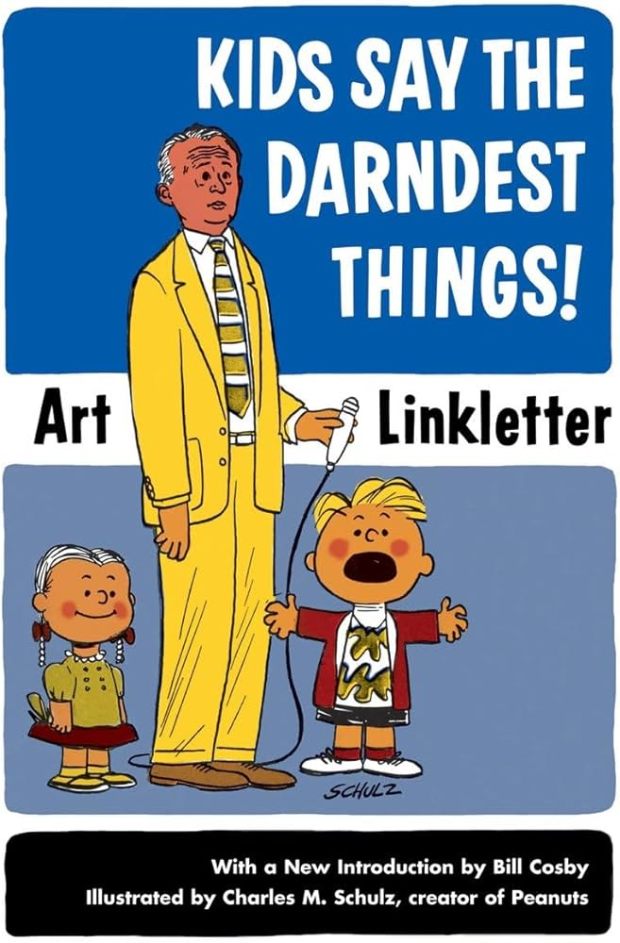
Back in the day when the world was only in black and white, there was a 1960s television show called, “Kids say the darndest things.” Ark Linkletter was the host who would interview adorably precocious kids who said all kinds of hilarious things. Bill Cosby revived it later in the 90s. It was based on young kids who didn’t quite get things right and tickled us with their innocent inaccuracies.

Well, I’m here to tell you that kids sometimes never grow up. Teenagers can be just as naive and ridiculously funny (with an emphasis on “ridiculous”). Which can also be scary because these are the same adolescents who are supposedly preparing to launch into adulthood in a few years…or seconds. Some of them will be leaving home and trying to survive in the real-world jungle on their own without being eaten by the realities of navigating ATM machines, grocery carts, or the post office for the first time.

The following are ACTUAL quotes from just-such-Innocents AKA teenagers. I’ll leave it to you to decide if we want these kids to vote, cook our fast-food burgers, procreate, and become mayor some day.

“Do we have a zip code?”

“Do guys have ovaries?”

“Can I use a Christmas stamp to mail something in July?”

(As mom is going through menopause) 13-year-old said, “Yeah, it’s hot out today. I bet you’re really sweating because of your dementia.”

(a text): Happy Mother’s Day. Did you move my charger?

Mom sent her teen to the grocery story with a list. Self check out asked how many cilantro he was buying. He counted each stem and the total came out to $60 for one bunch of cilantro.

Teenager said he couldn’t read the letter from his grandfather because it was in Spanish. Cursive…it was in cursive.

Teenager daughter’s car broke down. She got hysterical “cuz all the emojis came on.”

“Where is the elbow grease?”

Freshman in college was horrified the cafeteria was serving whale. Turned out to be “okra” not “orca.”

Teenager was upset after receiving his first paycheck because they took out some for a FICA guy and he didn’t tell them that they could!

Teen texts mom from Subway: “What do I usually order?”

Son needed mom to order a croissant for his date to the dance (corsage).

Teen asks mom when her social security card expires. Mom says, “When you die.”

Teen was making a delivery and called the customer for the gate code to get into the community. The teen on the other end of the phone said, “hashtag 137”

Teen fills out blood type: “Good.”

Son fills out a job application and asks dad, “Have I ever been convicted of a felony?”

“What time zone am I in?

“How do I make half a sandwich? What am I supposed to do with the other piece of bread?”

13-year-old son went in for an eye exam. The nurse asked him to cover his right eye and read the 6th line. He just stood there. She asked him to go ahead and read the 6th line. Finally, after a few minutes of an awkward silence, the nurse said, “Honey, can’t you see the line?” He replied, “Of course I can see it. I just can’t pronounce that word.”

20-year-old daughter asked her parents who would be her guardian if both her parents died. “Um, you’re an adult. You are you own guardian.”

At the opening for a teenager’s new bank account:

Bank employee: Can I get your social?

Teen: (proceeds to give her IG handle)

“Is euthanasia a country or a continent?”

Mom was waiting for some cancer biopsy test results and her son called to ask, “So what’s the result of your autopsy?”

“What happens when all the miles run out on the car?”

Son forgot his tube of face cleanser and had no idea how to use a bar of soap. “Do I wet it? Do I wet my hands first? Or do I wet my face first? I don’t understand what is happening here.”

From the recent eclipse:

“If I look at the sun too long it will damage my urethra.”

“Can I watch in a t-shirt or do I have to be completely covered?”

“I’ve been staring at the sun all week to get my eyes ready.”

“How many days is it going to be dark for?”

Well, folks. These are the real kids walking around in our neighborhoods with sharp scissors and making decisions behind the wheel of cars. I hope we can do better turning teens into functioning adults. I wouldn’t want to run into one of them in a dark alley without their bottle of face cleanser. Who knows what crazy thing they might do.

Source: the leighton show

Are We Using “I” Messages Correctly?

“I” Statements are a simple formula that promises peace, conflict-free homes, and to get what we want. Not so fast! Are they really that effective? Is that really the point? Do we even understand how to use them correctly? When do they work and when do they mess us up? Keep reading to find out the hidden pitfalls of “I” Statements.

We’ve all been taught to use an “I” Statement from self-help books or Communications 101. “I want you to be more kind to your sister.” And the child just complies like you’ve waved a magic wand over her head, right? Wrong.

“I need you to come home from work earlier to help with the kids every night.” I started with the word “I”, so why didn’t I get my wish fulfilled?

When there is no conflict, an “I” Statement is just fine to express what is needed: “I need you to help me unload the car.” The partner or child who is ready and willing will respond easily to this request. However, what about when there is a conflict? What about a non-compliant child or a spouse who sees things differently? How is an “I” statement intended to be used in these situations?

Take a look at these statements:

Statement 1 “I feel you are not listening to me when we discuss finances.”

What is the intent and motivation behind this statement?

Putting blame on the other, assuming we read their minds.

What reaction might it produce?

Response: “What do you mean? I am here right now and listening. You always blame me for everything going wrong with money? What about your reckless spending habits?”

Statement 2 “I want you to do your homework right now.”

What is the intent and motivation behind this statement?

Control and power

What reaction might it produce?

Response: “Well, I don’t want to. And you can’t make me!”

Statement 3 “I wish you weren’t so difficult and dismissive about fixing up the house.”

What is the intent and motivation behind this statement?

Negative labeling

What reaction might it produce?

Response: “I work all day, every day to keep a roof over our heads. You’re never appreciate anything I do.”

All these “I” statements are not self-reflective but putting oneself in a position of blame and control over the other. If there is a conflict, we cannot use “I” statements to wave our wishes over another person’s head and expect they will obey.

Likely, they will likely become defensive instead.

Just because we start a sentence with “I” doesn’t mean we can demand and expect compliance from the other person. The tension will escalate. Examine your motives before saying an “I” Statement during a disagreement. Is it to seek to understand or to get what you want? If it’s to get what you want, then no, don’t use it.

Rather than a tool, it becomes a weapon.

“I” statements, rather, are to express our needs, wants, and feeling about ourselves, not anyone else. They are offered with humility and sincerity to seek understanding when the other person has a difference of opinion.

The “You” statement that follows is for the Listener to restate what they heard. They would state what feelings, ideas, wants, the person said.

This approach is similar to the “Speaker-Listener Technique” taught in the book, “Fighting For Your Marriage.”

Speaker: “I feel so tired at the end of the week and want a special night out with you. I would like to take turns planning our date night.”

Listener: “What I heard you say is that you’re feeling tired at the end of every week and want to take turns planning a date night away from the kids.”

The “I” Statement person will confirm whether they were heard and understood correctly. If not, they state it again and the listener reflects what they heard. The important thing is to have no agenda for “winning” or getting your way. Just to be understood.

From Boston University we learn, “Ultimately, I-messages help create more opportunities for the resolution of conflict by creating more opportunities for constructive dialogue about the true sources of conflict.” Ideally, the “I” and “You” statements are to discover underlying issues: power, caring, recognition, commitment, integrity and acceptance. Once we can identify these needs in our statements, the real power of connection and understanding begins. Being understood sometimes is all we need, and we’ll be okay if the issue doesn’t resolve the way we had hoped.

Then the other person takes a turn and says their “I” statement that reflects how they feel about the issue, only stating their own needs. The “You” statement follows by the new Listener.

“I really don’t like planning dates. I am just not creative enough, but I do want to show you that I care.”

These two steps are crucial for seeking understanding in conflicted situations. There is no way to effectively solve a problem unless we seek to understand, without criticism, without agenda, without blame or power involved. Set aside your desire to fix or change the other person. The battle is not with them; rather, the two of you are a team to tackle a problem together.

The “I” Statement is followed by a “You” Statement and then a “We” Statement. The “We” compromise part may naturally happen after this back and forth, or the two people may need to think about it for awhile, to consider the other person’s point of view. Maybe later that night, or a few days or a week later, you will both have time to consider the validity of the other person’s view.

Compromise is not about 50/50: I get half my way if you get half your way. If that were the case, if one partner wanted Cherrywood cabinets and the other wanted Pine, they’d meet somewhere in the middle and get Oak…and both hate their kitchen cabinets. Rather, it is working as a team to find creative solutions and new perspectives to see a problem, and working together to get an answer.

No magic wand.

No fairy dust.

No easy answers, either.

Just plain and simple “I” and “You” talking and listening sincerely, without wanting to win.

References:

Markman, H. J., Stanley, S. M., & Blumberg, S. L. (2010). Fighting for your marriage: A deluxe

revised edition of the classic best seller for enhancing marriage and preventing divorce. San Fransico, CA: Jossey-Bass.

Office of the Boston University Ombuds Francine Montemurro, Boston University Ombuds,

chrome-extension://efaidnbmnnnibpcajpcglclefindmkaj/https://www.bumc.bu.edu/facdev-medicine/files/2011/08/I-messages-handout.pdf