This is priceless. I’m trying to be sympathetic and not laugh, but it’s impossible.
This is priceless. I’m trying to be sympathetic and not laugh, but it’s impossible.
A toddler playing quietly in the other room
Any leftovers in the frig you want saved if you have a teenager
A teenager who says they’ll be home “by midnight”
Filtering devices on the computer
Spreads of fashion magazines models
A child who says, “Everyone else’s mom lets them do it.”
Photos on Facebook or Instagram of everyone on vacation but me, all having the time of their lives
Movie ratings
A teenager with a new driver’s license
“Pinkie” promises
A recipe or picture of a beautiful dessert that looks easy to make
A weight loss program
Instructions to assemble [fill in the blank] in 4 different languages
A nurse who says to your toddler, “This shot won’t hurt a bit.”
A child who says, “Sure, I cleaned my room.”
Pictures of mothers with young children, both wearing white

Is that even possible?
It seems that kids are turning to electronics 24/7 for summer vacation. Television and other handheld devices are more inviting than ever. They are an easy way to keep kids occupied while we work from home, or just want peace and quiet. And they’re easier to clean up than Play Doh.
Sure, gaming is fun and TV has some educational programming, but many parents want more than that for their kids. Aren’t they supposed to learn how to play with others? Socialize? Problem solve (other than how to shoot angry birds to kill virtual pigs)? Engage in creativity and sports? We have this intuitive sense that gaming and TV are like Twinkies: great for a treat, but not for a steady diet. Sadly, many kids are becoming sugar junkies on technology.
The featured photo for this post is a spinner for kids to use for balance in their lives. It could be used for summer or the whole year. Whether or not you are turned on by this “spin” on the Fidget Spinner craze, I’d like to suggest five ideas for more play and less TV this summer.
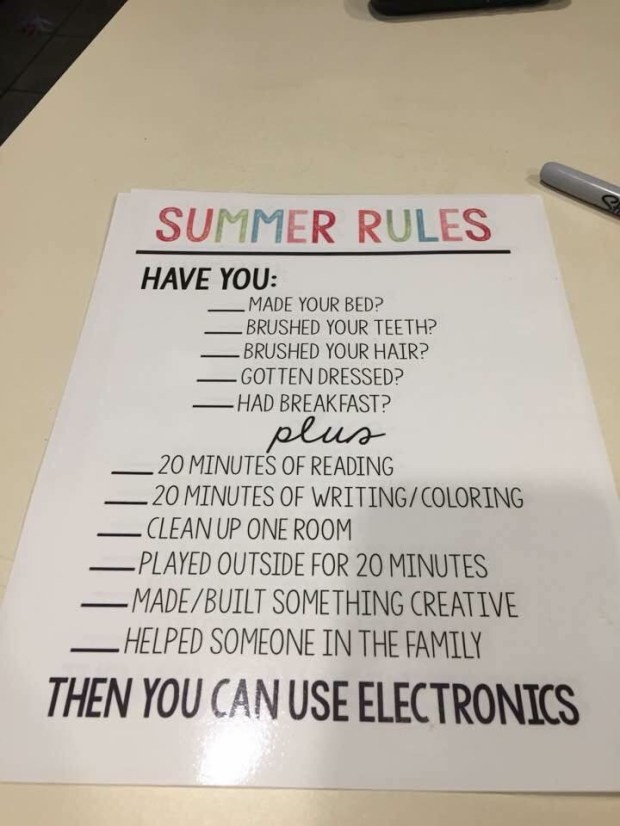 This may scream,”Too much structure!” because you would rather let your kids do their own thing. It’s summer, after all, right? I read a lot of negative comments that were posted about this idea. Stuff like, “Hey I played computer games 24/7 when I was a kid. Now I’m a computer programmer. I don’t think playing with cardboard boxes would have got me where I am today.” I would respectfully respond that working with computers successfully is one small part of a person’s overall well being and ability to have a fulfilling life and relationship with others.
If you aren’t convinced, search the internet for plenty of stories and tips where parents did the unthinkable: unplugged their kids from TV and/or electronics. Here is one such testimonial, among others that will give you the inspiration and willpower to do was is best (but not always easiest at first!).

What is infertility, you ask?
The dictionary would tell you that it is simply being unable to conceive within a year of actively trying or being able to carry a baby to full term. But it’s far more than that. And it’s far more than just an inconvenience. It’s a disease of the reproductive system that affects 1 in 8 couples. And like any other disease, it is frustrating. It is gut-wrenching. And it is depressing. It’s like a grave that keeps following you around day after day as it swallows your hope and buries more and more of your dreams with the tears you just shed.
It is desperately longing to be pregnant. Wanting to know what it feels like to have a life growing inside of you. A life that has your eyes and his smile. A life that you created in love.
It is walking down the baby aisles and touching the onsies, picking up the booties, and wondering when. And asking why.
It’s loving a child you have never met. And missing them fiercely every day.
It’s emptiness as you walk by the bedroom that should be a nursery. It’s loneliness as your house is absent from the pitter patters of tiny feet in the morning or giggles from bath time at night.
It’s frustration that leads to desperation as you try every vitamin recommended, test suggested, treatment procedure offered, medicine given, and diet instructed.
It is feeling unworthy. Because maybe your faith is too weak. Your prayers are not enough. Or your past too damning.
It is trying to understand why prostitutes, drug addicts and those who abuse their children are given such blessings. But you? You seem to have to fight and work and struggle beyond your strength and exhaust all of your resources to receive.
It’s a constant war between your body and your soul. A war that you must fight to win daily and a war that is exhausting, yet you battle on.
It is trying to remain hopeful, yet realistic. And failing to find the balance.
It’s hearing the words, “I’m sorry, but there is no heartbeat.”
Or expecting to walk out of the hospital with a birth certificate, but instead it’s a death certificate.
THAT IS INFERTILITY.
It’s more than just an inconvenience.
It’s more than just the inability to conceive.
It’s dream shattering. Soul crushing. And heartbreaking.
And that is what 1 in 8 couples deal with on a daily basis. Couples that could be your friends, neighbors, or family members. So please keep them in your prayers because the prayer you pray for them today, could be the one that makes a difference in their lives tomorrow.
I know, I’m lucky. I have two married daughters who live on my same street. One is 4 houses down; the other is a hop, skip, and a jump away from our house. They’re both renting so I know it’s not permanent, but I’m relishing this brief time they are so close and pop in often for a chat or a bite to eat.
Like clockwork, my oldest brings over our grandson around dinnertime. It’s like Christmas every day at 6:00 p.m.
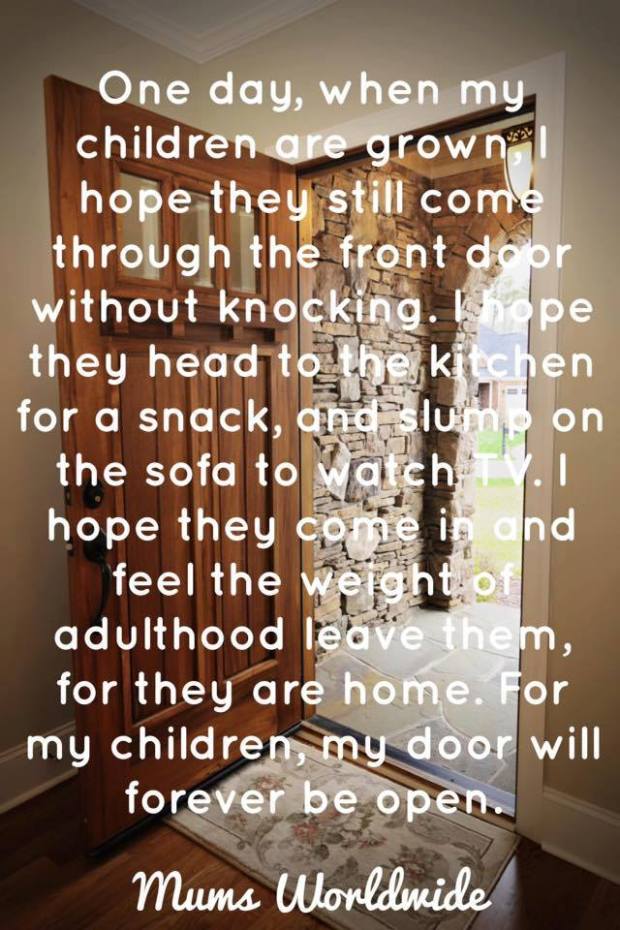
A few days ago, it was early in the morning when heard the *crunch crunch* of someone eating cold cereal in my kitchen. My husband was in bed, still asleep, so I called out to our son. No answer. I got up and found my newly-married daughter there. It tickled me. So does this meme:
Two of the greatest times of brain and body development (or “plasticity” as psychologists call it) is early childhood and adolescence. Think about the incredible physical changes and growth from birth to 5 years old and during the teen years. Even though we can’t see it, similar rapid cognitive development is happening in the first five years.
If you ever said to your teen, “How could you be so stupid!”…let’s just clarify. They aren’t stupid. They just don’t have fully developed brains to make really mature decision. The brain is not fully developed until about 25 years old. Because the brain develops back to front and core to outside, the last part to develop is the front, called the pre-frontal cortex. Executive function controls that region where reasoning, moral development, and planning takes place.
Teens do impulsive things. They can use poor judgment and reasoning. To top it off, they are going through stages of moral development. The “Heinz’s dilemma” is a frequently used example in many ethics classes. One well-known version of the dilemma, used in Lawrence Kohlberg’s stages of moral development, is stated as follows:
A woman was near death. There was one drug that the doctors thought might save her. It was a form of radium that a druggist in the same town had recently discovered. The drug was expensive to make, but the druggist was charging ten times what the drug cost him to produce. He paid $200 for the radium and charged $2,000 for a small dose of the drug. The sick woman’s husband, Heinz, went to everyone he knew to borrow the money, but he could only get together about $1,000 which is half of what it cost. He told the druggist that his wife was dying and asked him to sell it cheaper or let him pay later. But the druggist said: “No, I discovered the drug and I’m going to make money from it.” So Heinz got desperate and broke into the man’s laboratory to steal the drug for his wife. Should Heinz have broken into the laboratory to steal the drug for his wife? Why or why not
Kolberg was most interested in the reasons the teenagers gave for their answer. The “why or why nots” gave a window into the formation of the adolescent’s value system. The stages he outlined are simply put:
Some youth who have reached the highest levels of moral development may feel passionate about their moral code and may choose to participate in activities that demonstrate their moral convictions.
As intriguing as the moral dilemma scenario is in Kolberg’s study, there are other, more playful ways to ask your teenager questions that gets him talking about his thinking. Here’s a fun exercise to see where your teenager is on the stages of moral development. Play this “Would you rather…” game together, each answering the questions and examining your rationale. No one is wrong and no judgments should be made. You can start with making up easier choices for younger children, like “Would you rather be a cat or a dog?” and then use these during different years of adolescence to see if their reasoning matures.
Would you rather…
Save the life of a starving African child you’ve never met
OR become a Jedi, get the Force and a light saber?
Change your last name to Hitler
OR never eat candy again?
Have no Internet
OR no cell phone?
Live in a world with no problems
OR live in a world where you RULE
Win the lottery of 20 million dollars
OR amputate your right arm if it cured cancer?
Have the superpower of flying
OR reading everyone’s mind?
Know the date of your death
OR the cause of your death?
Have all the time in the world (endless supply)
OR endless supply of money but only 10 years to live?
Be the smartest person in the world
OR be the most handsome person in the world?
Have a piercing
OR a tattoo?
Be able to talk to all animals
OR speak all languages?
Never have your mind get old (but body does)
OR never have your body get old (but mind does)?
Be able to go back in history and stop 9-11
OR stop the Holocaust?
Have mermaids be real
OR unicorns be real?
Have a Pinocchio nose when you lie
OR never get to shower again ?
Be a genius that no one likes
OR be an idiot that everyone loves?



Why do you think a man will agree to play sports with the possibility of getting hurt? Why do people march willingly into battle, even in the face of the enemy?
These are examples of conflicts that contain something that protects us and gives us confidence in the face of uncertainty.
Rules.
In sports, there are understood rules. There is a referee to keep players protected. If someone gets a little too heated and loses his head, the referee will call a foul, or a technical. In war, there are rules of engagement that give structure to an otherwise hostile event.
So it is with couples who fight. If they become out of control and unpredictable, their fighting is unproductive, even destructive. However, if couples established agree-upon rules, the conflict can be resolved much easier because both parties feel safe.
These are some rules that couples can sit down and adopt before the conflict arises. If followed, they change “fighting” to a constructive discussion that leads to mutual understanding.
If you create a list of rules of engagement, both parties will be more likely to feel fairness, a shared amount of power, and safety when disagreeing. It may be easy to agree to the list when you’re both calm, but when emotions start to rule over reason, one of both may resort to hostility again. In that case, it’s very important that you also discuss what will happen in the heat of the moment. One of your can form a “T” with your hands, to indicate a “foul” or “technical” to remind the offending party that they broke a rule. Or just reaching over and gently touching the other person’s hand and saying, “Honey, remember we agreed not to call names” is a kind reminder.


 A Spoonful of Parenting