Primary Lesson Helps

Sunbeam Lesson #14 "Adam and Eve Were Created in Heavenly Father's Image"

***Note: Please read the post called “10 Lesson Helps” found under “Primary Lesson Listings” before reviewing any of my Sunbeam lesson plan ideas.

“If you teach little children, you know that it can be a challenge to teach them the gospel. But little children want and need to hear gospel truths. They will respond to your efforts to present warm, varied, and enthusiastic gospel lessons” Teaching, No Greater Call, p. 7.

Materials needed: Primary Visual Aids cutouts (sun, moon, stars, animals, plants and flowers), picture 1-33 of Adam and Eve; colorful chalk and eraser or whiteboard, colorful dry erase markers and eraser.

Put all the cut out pictures on the floor or table face down in front of the students.

What are some of the things that Jesus created for the earth? (get answers from each child).

Have each child come forward and turn over a picture and tell what it is. After naming it, have everyone say together, “Jesus created ____________” Everything on the earth was made for us to use and enjoy. Everything is a part of Heavenly Father’s plan.

Sing “My Heavenly Father Loves Me” (Children’s Songbook, p. 228)

Whenever I hear the song of a bird (hand cupped to ear)

Or look at the blue, blue sky, (hand raised above eyes)

Whenever I feel the rain on my face (fingers tapping on face)

Or the wind as it rushes by (motion hands across in front of body)

Whenever I touch a velvet rose (finger touch)

Or walk by a lilac tree, (walk in place)

I’m glad that I live in this beautiful world (arms in a big circle)

Heavenly Father created for me. (hug self)

Repeat the song and then ask them to do all the actions while they sing it.

What is missing on the earth? We have the moon, sun, stars, animals, insects and trees and flowers. What else is an important part of Heavenly Father’s plan? Show picture 1-33. Explain that after all the other things were created, Adam and Eve were created to live on earth and take care of everything. They were the first man and woman. They had bodies like Heavenly Father’s body.

What was the first man’s name? What was the first woman’s name?

Feel your arm. What does it feel like? Did Adam and Eve have arms like ours?

Feel your face. What does it feel like? Did Adam and Eve have a face like ours?

Repeat with a few other body parts.

Sing “I Wiggle” Children’s Songbook, p. 271.

Repeat the song with other body parts.

Adam and Eve had children after they left the Garden of Eden. Having children and families was very important and I am very grateful they did so we could come to earth.  You and I were born to a mom and dad so we could be happy and obedient to God’s commandments. 

I am going to draw a picture and you tell me which of God’s creations it is. Repeat until they have had plenty of examples. When you draw a person, be sure to emphasize that Adam and Eve were the last and best of God’s creations. They were His children. We are all His children.

Sing “I Am a Child of God” (Children’s Songbook, p. 2).

Let children draw pictures of things on earth that they love.


Lesson #15 "The Sabbath Day is a Day of Worship"

***Note: Please read the post called “10 Lesson Helps” found under “Primary Lesson Listings” before reviewing any of my Sunbeam lesson plan ideas.

“A skilled teacher doesn’t think, ‘What shall I do in class today?’ but asks, ‘What will my students do in class today?’; not, ‘What will I teach today?’ but rather, ‘How will I help my students discover what they need to know?’” Teaching, No Greater Call, p. 61.

Materials needed: a soft ball or toy, picture 1-35

Show picture of Israelites (1-35) and tell the story of collecting manna and how they kept the Sabbath Day Holy. Collecting manna was like going to the store to get food. We don’t do that on Sunday. Sunday is a special day and it has a special name called “The Sabbath Day.” Can you say, “Sabbath Day”? (Repeat until all can say it). It means it is Heavenly Father’s day that we keep holy.

Sit in a circle and toss a soft ball or toy to each child. When they catch it, they tell something they can do on Sunday. Give them ideas if they need.

Let’s sing a song about the days of the week. We’ll walk in a circle and act these out while we sing.

(sing to the Tune “Here We Go ‘Round the Mulberry Bush”)

“This is the way we eat our breakfast…so early in Monday morning.” Repeat with other actions. Each time, end with the next day of the week. On Sunday say, “This is the way we go to church…so early Sunday morning” (walk slowly with arms folded).

We also show Heavenly Father and Jesus that we love them by getting clean and putting on our nicest clothes when we come to church. Comment about each child and what they are wearing. Point out things like, “Jonathon has on a very  nice vest. It is very clean and has blue and green on it. I think he saves it for his Sunday best.” or “Maria has on special Sunday shoes and white tights. She is wearing a pretty blue dress with pleats at the bottom. Her hair is clean and combed into a ponytail and has a yellow bow in it.” After you have said something nice about each child, tell them how much Heavenly Father is pleased that they got ready in their best clean clothing and clean bodies to come to His house.

Sing “Mary Wore Her Red Dress” (personalizing it to each child)

“Mary wore her red dress, red dress, red dress,                                                          Mary wore her red dress to church today.”

Repeat each verse with each child’s name and clothing.

Each child takes off one shoe and puts it in the middle of the floor. Pick up each shoe and pretend it can talk. Say things like:

“Hi. I’m Timothy’s shoe. I live in his closet with his other shoes. He has tennis shoes and snow boots and sandals for the summer. I sit there and wait for every Sunday when he picks me to wear to church.”

“Hi. I’m Angel’s shoes. I am very beautiful. Can you see how I am black with flowers on the top? She never wears me to go outside to play because I am very special. She wants to keep me clean. I only go on her feet on Sundays.”

“I belong to Daniel. He likes me very much. Do you know how I can tell? He takes very good care of me. He doesn’t splash in the mud or water but walks very slowly and carefully when he wears me. He only puts me on when it’s Sunday. I am his “Reverent Shoes.” He thinks about Jesus and walks very slowly when I am on his feet. I remind him to use his inside walking feet and not to run.”

After highlighting each shoe, put them all back and have each child come up and pick a shoe out of the pile. Have them give it to the owner it matches.

We are in Heavenly Father’s house.  We keep it clean.  We don’t put trash on floor or run in the halls.  We walk reverently and take care of everything because it is a special place.  Let’s practice walking quietly down the halls with our quiet shoes and check to see if the floors are all clean.  If we see any litter, be sure to pick it up and throw it in the trash.

Back in class: How did you feel when you were walking reverently and showing respect for Heavenly Father and Jesus? Bear your testimony about the Sabbath Day and how we can feel when we keep it holy. It is a day when we can worship God and feel close to Him to feel His love for us.

The most important thing we do on the Sabbath is come to church to take the sacrament.  It is the most special thing we do. Explain purpose of sacrament. How do we sit while we are in sacrament meeting. Why do we sit quietly? (wait for answers). We sit quietly to show our love for Heavenly Father and Jesus and feel their Spirit.

Make up a story about a girl who is trying to be reverent, but her sister keeps bugging her. Can she think about Jesus when her sister is bothering her?

What would you do? 

Tell different scenarios about having someone ask them to do something wrong on the Sabbath.  After each one, ask What would you do? Toss the ball to the person who will answer the question.


Sunbeam Lesson #13 "I Am Thankful for Birds and Insects"

***Note: Please read the post called “10 Lesson Helps” found under “Primary Lesson Listings” before reviewing any of my Sunbeam lesson plan ideas.

“Children need and appreciate rules and limits. Work with the children you teach to establish a few simple, clear rules (no more than three or four). This will help them govern themselves. Explain that following the rules helps everyone enjoy learning together. Also discuss what will happen when rules are broken. You may want to decide together on a signal for restoring order, such as the teaching standing with folded arms.” Teaching, No Greater Call, pp. 80, 81.

Materials needed: cheese and crackers (or just crackers), pictures of insects (if possible), 5 pictures of the stages of caterpillar-to-butterfly metamorphosis (print off from any internet site with simple graphics), toilet roll tubes (2 per each child taped together with a string tied in a loop to each one), dress ups for “Elijah” (perhaps a scarf and tie to wrap around the head), color markers and/or stickers, Gospel art pictures 1-31 and 1-32.

Show picture 1-31, asking the children what they see. Tell them the man in the picture is prophet named Elijah. The black birds are called “ravens.” Notice what is in their mouths and how he is looking at them with his hand out. Tell story of Elijah being fed by the ravens. God has power over everything on earth and created all the animals.  So He can make the animals on Noah’s ark to be friends and He can tell the birds to get food to feed Elijah. All the animals obey Heavenly  Father. We should too.

Show picture 1-32, asking the children what they see in this picture. What is in this picture that is the same as Elijah and the ravens? Point out that these white birds are called “seagulls.” The people in the picture are pioneers. Tell the story of the pioneers and the crickets and seagulls. How did the seagulls save the pioneers? Did these birds also obey God? Should we be like these birds and obey Heavenly Father? Why?

Dress us one student as the prophet Elijah. Tell the story again and have him hide in a “cave” (under the table). Other children can be the “birds.” Give them “bread and meat” (crackers and cheese) to fly over and feed Elijah. Take turns.

Sing a song about birds:

Five little birds. Five little birds. (hold up 5 fingers)

Five little birdies sitting on a fence. (put wrist with fingers [5 birds] spread out on top of other arm held out horizontally [the fence])

Oh no! One has flown a-way. (Hold up one finger and put it behind back)

Isn’t that a shame! 

4 Little Birdies…(Keep going until there are no birds left)

No little birds. No little birds.

No little birdies sitting on a fence.

Oh look! One of them has re-turned. (Bring one finger out from behind back)

Let us all re-joice! Yeah!!!!! (clap)

One little bird….(Keep going until they are all returned).

Heavenly Father also created insects.  What is an insect? They are another name for a “bug.” They crawl on the ground or fly in the air. What is your favorite insect? (Allow discussion). If you have pictures of insects, show them and discuss their names and what they do. Be sure you are positive in nature about insects. If you show signs of fear or are “grossed out,” the children will read your negative messages and body language.

I’m going to give you a clue to a special insect. Listen and then guess what it is:

It used to be a caterpillar.

It has two beautiful wings.

It likes to rest on flowers.

Show the pictures of metamorphosis. Discuss the life cycle of a butterfly. Put the pictures on the floor in random order. Invite the children to come and sit on the floor. Have children put the pictures in order. Mix them up again and repeat.

Sitting in a circle on the floor, show the children how to make a “butterfly” with their hands: hands side by side, palms down, cross thumbs and lock together and flap extended hands for the “wings.” One child makes the butterfly hands as they walk around the outside of the circle of children, and have it land on a person’s shoulder at the end of the song. Everyone sings while they go around the circle:

One Little Butterfly (sing to tune “One Little Elephant”)

One little butterfly flew far away

On a very bright sunny day

It flew into the sky so blue

And when it was tired it landed on you!

(Take turns until everyone has had a chance to be the butterfly.)

There are many people who love Heavenly Father’s creations and want to go into nature to look at them. There are bird watchers and insect collectors. We will make pretend binoculars like bird watchers use. Binoculars help you to see things that are far away. 

Give each child their “binoculars” and let them color with markers and/or put on stickers. Show them how to put the string around their neck to keep them on. They look though the two tubes to see birds and insects close up. If the weather is nice, you can go outside an look for insects and birds. If it is not, you can tape up pictures around the room and let them go around and see them through their binoculars.

Bear your testimony of how birds and insects are part of God’s beautiful creations. Tell them to notice different kinds of birds and insects the following week and thank Heavenly Father for them in their prayers this week.

Sunbeam Lesson #45 "The Resurrection of Jesus Christ" (Easter Lesson)

***Note: Please read the post called “10 Lesson Helps” found under “Primary Lesson Listings” before reviewing any of my Sunbeam lesson plan ideas.

“Elder M. Russell Ballard said, ‘Clearly, those of us who have been entrusted with precious children have been given a sacred, noble stewardship, for we are the ones God has appointed to encircle today’s children with love and the fire of faith and an understanding of who they are.’ The Savior’s example sets a pattern for us as we teach, care for and influence children.” Teaching, No Greater Call, p. 108

Materials needed: Gospel Art Kit pictures (see below), glove or mitten, a twig with new buds or blossoms (if possible), blanket, a bag of microwavable popcorn.

Have children gather on a blanket on the floor sitting in a semi circle. Put 5 pictures on the floor in front of them (1-16 “The Nativity”; 1-17 “Boy Jesus Teaching at the Temple”; 1-59 The Crucifixion”; 1-73 “Burial of Jesus”; 1-74 “Jesus Shows His Wounds”). What is the name of the same person who is in every picture? Point to Christ in each picture and say, “Jesus.” Go back and describe the event in each picture. Name the other people in the picture and what Jesus is doing with them and their relationship to Him. Tell how this is a story of Jesus’ life, from His birth to death.

First, He was born. Then, He grew up and learned about the gospel and taught many people. Then, He was crucified and suffered for us because He loves us. After that, He died and many people were sad. But then, His spirit came back from heaven to be with His body. He was alive again. We call that “resurrected.” Can you say “resurrected” with me? He was the first person to be resurrected. Because He died and lived again, we will too. When we die, we will be resurrected too. We will never die again. That makes me very happy.

I’m going to mix up these pictures. Let’s see if you can put them in order. What happened first in Jesus’ life? (Call up children and have them put them in order). After you have done this a few times, ask, Which picture shows Jesus when He was resurrected? He has marks on his hands to remind us where He got hurt when He was crucified. I have a song I’d like to sing about that. (Stand and sing):

“Did Jesus Really Live Again” 3rd verse only

And there where nail prints in His hands (point to palms of hands)

And a spear wound in His side (point to side)

Did Jesus really live again (extend hands in front with elbows bent and palms up)

After He had died?

Oh yes, and so shall I (nod, and then point to self)

(Children’s Songbook, p. 64)

Repeat the song, inserting each child’s name at the end (“Oh yes, and so shall Gregory”).

Sit back down. Have you known anyone who has died? Explain that when people die, their spirit is still alive. Someday they will be resurrected, which means their body and spirit will come together again like Jesus’ did. While we are living, our spirit is inside our body, and it makes our body alive. It’s like my hand when I put it in a glove or mitten. (Demonstrate). When they come together, the glove can move around. But when I take the glove off, it is like when our body dies and our spirit leaves. The body (glove) can’t move anymore. When we are resurrected, our spirit comes back into our body (put hand back inside glove) and it comes alive. It will never die again. I am thankful to Jesus for resurrecting and giving that gift to all of us.

Pass the glove to each child and let them put it on and make it move.

Jesus died and resurrected in the Springtime. Spring reminds us of living again. The flowers push up from the ground and blossom on trees. Baby animals are born (show picture 1-23). The trees grow leaves. I have a twig that shows buds (or blossoms) that are starting to grow. Pass around the twig and talk about how it has new life on it to remind us that Jesus gives everything new life (or show picture 1-22). These blossoms look a little like popcorn. We sing a song about that:

Sing “Popcorn Popping” (Children’s Songbook, p. 242).

Take the children to the kitchen and pop a bag of microwaveable popcorn. Take it outside and eat it while you look for signs of Spring.

Sunbeam Lesson #12 "I Am Thankful for Animals"

***Note: Please read the post called “10 Lesson Helps” found under “Primary Lesson Listings” before reviewing any of my Sunbeam lesson plan ideas.

“In addition to using a variety of methods from lesson to lesson, you should teach each lesson with variety. Children with their natural curiosity, respond especially well to a variety of learning activities–usually between five and seven per lesson…Choose methods that support and reinforce the main purpose of the lesson. They should be true to fact and life and emphasize truth, goodness, and beauty. Do not choose methods merely to amuse or take up time [gimmicks].” (Teaching, No Greater Call, p. 89).

Materials to bring: food items (see activity below), pictures 1-29 and 1-30, dress up costumes, a long sock for each child, pictures of animals, stuffed animals.

Review the song, “The Wise Man and the Foolish Man” (Children’s Songbook, p. 281).

There was once a man who was very wise. His name was Noah. He was like the wise man in this song, but instead of building a house, he built a boat called an “ark.” Let’s sing the song this way:

Noah built a very strong ark (repeat)

And the rains came tumbling down…etc.

…and the ark on the water was safe.

Tell the story of Noah and the ark from Genesis 6: 5-8:19. Show picture 1-29, Building the Ark and 1-30, Noah and the Ark with Animals.

How was Noah and his family blessed for obeying Jesus? He was very wise. We can be wise, too, when we obey Jesus and Heavenly Father.

Point to animals in the second picture and ask the children what are the names of each animal.

“Noah and the Ark” (sing to “The Farmer and the Dell”)                                                   Noah and the Ark

Noah and the Ark

Heigh-ho! The derry-o

Noah and the Ark.

 (Show pictures of animals and sing about each one)

Noah feeds the (bears)

Noah feeds the (bears)

Heigh-ho! The derry-o

Noah feeds the (bears)

Continue with monkeys, giraffes, dogs, etc.

Let’s all pretend to be an elephant on Noah’s ark. What does an elephant look like? (as you discuss, you can draw one on the board). I’ve brought a sock to put on one of our arms. Let’s pretend it is the elephant’s long trunk.

Swing the arm covered in a sock back and forth while saying,
Elly the Elephant goes this way and that

She’s so very big and so very fat

She sways her trunk from side to side

She takes the children on a fun ride.

An elephant is a wild animal. What are other wild animals that live in a jungle or desert? Have any of you seen them in a zoo? Some animals are tame, and that means they can live in our house and be a pet. Do any of you have a pet? What kind? What is their name? How do you take care of it?

Play “Animal Animal, Who Are You?”  (whisper an animal in their ear and they act it out for others to guess or they can draw out an animal cracker and pretend to be that animal). Before they act it out, all the children chant and clap, “Animal, animal, who are you?”

Display items: egg, cheese or an empty carton of milk or yogurt, a wool sweater, a can of meat like tunafish. Have the children identify each item and then tell them they each come from an animal. Heavenly Father blessed animals to give us food and clothing.  Draw (show a picture or say the name of) an animal and have the children match the food or clothing product to the animal. Ask the children to comment on what they like about eating these foods. Remind them how we are healthy when we eat good foods that obey the Word of Wisdom. If desired, you can pass out portions of the food (cheese or tunafish on crackers) to eat.

Put on costumes to be Noah and family.  Make a “boat” with the chairs.  Each child will take a stuffed animal to put on the ark (if available). Tell the story as they act it out. Repeat and take turns being different characters.

Tape pictures of animals around the walls. Sing the first part of “Noah and the Ark.” Children walk around until the song ends and then stand in front of one of the pictures.  Say a child’s name and they tell what animal it is.  Repeat.

If the weather is good, have the children line up outside on one end of the yard. Tell them you will say a name of an animal and they have to act like that animal to get to the other side of the yard. Have them go back and forth pretending to be different animals.

Extension Ideas. These are based on what materials and resources available to you.  I’ve given several to choose from:

1. Make an animal collage.  Bring in pictures cut out from magazines and let the children choose which ones they want to glue on their paper. Write animals names on it. If you have child-sized scissors, it would be a good fine-motor exercise to allow them to practice cutting pages from the magazine.

2. Animal shapes. Bring in playdough and let the children make animals. Teach them how to make the basic shapes of rolling out a “snake” or a “ball” or a “pancake” and how to put these together to make a body of an animal.

3. Animal Puzzles. Take larger pictures of animals (from a magazine or calendar, for example) and cut them in half. Mix them up and let the children put the puzzle pieces together.

End with testimony: When Noah and his family obeyed God, they and the animals were saved from the flood. We can be saved too when we obey the prophet and Heavenly Father. The Word of Wisdom is a commandment that blesses us to be healthy. Heavenly Father made animals to make our earth beautiful and to bless us so we can take care of them and they can give us good food in return.


Sunbeam Lesson#11 "I Am Thankful For Fish"

***Note: Please read the post called “10 Lesson Helps” found under “Primary Lesson Listings” before reviewing any of my Sunbeam lesson plan ideas.

“How will those you teach know that you are listening? You can demonstrate that you are listening by displaying an expression of interest. You can look at the speaker rather than at your lesson materials or other things in the room. You can encourage the speaker to complete his or her thoughts without interruption. You can avoid jumping into conversation prematurely  with advice or judgments. When you understand what is being said, you can make comments that show your understanding” (Teaching, No Greater Call, p. 66).

Materials needed: pictures 1-26 and 1-27, goldfish crackers, newspaper fisherman hats, fishing pole with magnet, colored fish with paper clips and a song, question or activity printed on one side.

Pass out  goldfish crackers for the Sunbeam children to snack on while telling Story of Jonah from Jonah 1-3. Be sure to teach that Jonah was sad when he disobeyed Heavenly Father and was happy when he finally obeyed. The big fish obeyed Heavenly Father and swam over to Jonah in the sea to open its big mouth to swallow him and save him from drowning and to spit him out onto the land after 3 days. Heavenly Father used a big fish teach Jonah that lesson and to bless Jonah and the people on his mission.

Teach the action verse:”Slippery Fish”

Slip-pery fish, slip-pery fish, swimming through the wa-ter (make actions for each animal)

Gulp, gulp, gulp. Oh no!  He was eaten by a…

Octo-pus, Octo-pus, swimming through the wa-ter.

Gulp, gulp, gulp.  Oh no! He was eaten by a ….(great white shark…humungous whale)

Now the whale is full!

Where do fish live?  Have you ever seen a real fish? What did it look like?

Show picture of a frog (1-26) and turtle (1-27) and discuss these animals. They live in the water, too, along with the fish.  What other animals live in the water?  Ask how a fish, frog and turtle move and have the children act them out. Play a Freeze game where you say, “Fish” or “Frog” or “Turtle” or “Freeze” and the children have to do that action.

Teach the action verse: (repeat as children desire)

“There was a little turtle”

There was a little turtle, he lived in a box (hands cupped together)

He swam in the water (swim motions), he climbed on the rocks (climbing motions)

He snapped at the mosquito (clap outstretched hands together)

He snapped at the flea, (clap outstretched hands together)

He snapped at the minnow, (clap outstretched hands together)

He snapped at me.  (clap hands together close to face)

He caught the mosquito (cup hands together)

He caught the flea (cup hands together)

He caught the minnow (cup hands together)

But he didn’t catch me! (shake finger).

Sit children back in chairs. Tell the following in your own words: When the people came to listen to Jesus talk, they had to walk for a long time to see him.  They ran out of food and didn’t have any more.  So Jesus made a miracle and took a little bit of bread and  a few fish and blessed them.  His blessing made the fish and bread to feed lots of people and it didn’t run out. They weren’t hungry anymore and they listened longer to his talk.

Why were the people hungry who came to listen to Jesus?

What special miracle did Jesus do to feed them?

What happened after they ate the fish and bread?

Jesus created the earth and all the animals. That is why he can do miracles with fish and bread.

Line up chairs in one or two rows to make seats in a “boat.”  Give each child a newspaper sailor hat.  Sing “Row, Row, Row, Your Boat” and pretend to be rowing. Row and sing fast and slow for variations.

With each child in seats, they can go fishing.  Put fish cut outs on floor and take turns with fishing pole. When they catch a fish, read the instructions. It can either say the name of a Primary song that you all sing together, a review question from the lesson, or an activity for that child to do (jump in place 10 times; smile at everyone in our class, etc.)

Set chairs back in a semi circle. Do the action verse: “Five Little Fishes” (put up five fingers on your hand).

Five little fishes swimming in the sea, swimming and saying, “You can’t catch me!”
Along comes the shark going snap, snap, snap.  Four little fishes comes swimming back. (Repeat until all fish-fingers are gone).

Remind the children that Jesus Christ created the earth and all the animals, including fish, turtles and frogs. When Christ lived on the earth, he used fish many times to teach the people about His power and to bless them. Bear testimony of your love for each child and for your Savior and Heavenly Father.

Extension activity: If you are able to go outside, you can play “Sharks and Minnows.” The children (“minnows”) line up on one side of the field while the “shark” stands in the middle. When you say, “Go,” the children must run across to the other side. The “shark” tags as many “minnows” as s/he can and they turn into shark. Keep going until all children are caught.


Sunbeam Lesson #10 "I Am Thankful for Trees, Plants, and Flowers"

***Note: Please read the post called “10 Lesson Helps” found under “Primary Lesson Listings” before reviewing any of my Sunbeam lesson plan ideas.

“When a homemaker plans a week of dinner menus, she is not likely to decide to prepare identical meals on seven consecutive nights…The gospel can likewise be presented in a number of different ways. No teacher should fall into a monotonous pattern of presenting the same kind of lesson week after week. When you use a variety of learning activities, learners tend to understand gospel principles better and retain more. A carefully selected method can make a principle clearer, more interesting, and more memorable,” Teaching, No Greater Call, p. 89.

Materials needed: fruits and vegetables, knife and cutting board, disposable cups, a tree twig in a sack, chalk or whiteboard and dry erase marker, enough copies of the nature walk graph and pencils for each child, and 6 small items (see end of lesson).

Have a basket of various fruits and vegetables (suggestions: orange, apple, banana, carrot, cucumber, celery, grapes, sugar snap peas). Hold up each food item and ask the students the name of each item. Then talk about how some of these food are fruits and some are vegetables. Both are healthy and good for our bodies. Eating other good foods like grains (rice, wheat and oats) are good, too. Heavenly Father made all these things for our use. He gave us a commandment called, “The Word of Wisdom” that tells us to eat these everyday to be healthy. He said, “All grain is good for the food of man; as also the fruit of the vine; that which yieldeth fruit, whether in the ground or above the ground” (D&C 89:16). (If you’d like, you can show each food item and tell if it grows above the ground or below).

We are going two make to piles of food: one for the fruits and one for the vegetables. (Have children come up one by one and choose one to put in a pile. If they are wrong, just say, “Good guess. That is a fruit/vegetable”) After each one, ask them to rub their tummies and say, “Yum” if they have eaten this food. Tell them how much you love eating it.

All of these things grew from a plant or a tree. We eat things that grow from plants and trees. They started growing because someone planted a seed in the ground. Sometimes we can still find the seed inside the food. Hold up each item with seeds inside and ask them if they know what the seed looks like, if it will be big or small, many or few. Cut it or peal it open and show the children the seed(s) if they are present. Discuss what each fruit or vegetable looks like inside and if they like to eat it. Cut it up if needed and put a sample into a cup to give each child a taste of them.

While they eat, read a book that shows pictures of plants, trees, flowers and nature,  like “Wonders of Nature: A child’s first book about our wonderful world.”  Talk about how God made all these things.

Sing, “My Heavenly Father Loves Me” (Children’s Songbook, p. 228).

Whenever I hear the song of a bird (hand cupped to ear)

Or look at the blue, blue sky, (hand raised above eyes)

Whenever I feel the rain on my face (fingers tapping on face)

Or the wind as it rushes by (motion hands across in front of body)

Whenever I touch a velvet rose (finger touch)

Or walk by a lilac tree,(walk in place)

I’m glad that I live in this beautiful world (arms in a big circle)

Heavenly Father created for me. (hug self)

Repeat the song and then ask them to do all the actions while they sing it.

Pass around a sack with twig in it.  Let children feel and guess what it is.  Take it out and talk about where a stick comes from and why they are important.  We get food from plants. If it is Springtime in your area, you can get a twig with buds or blossoms on it and sing “Popcorn Popping.” (Children’s Songbook, p. 242)

Draw a picture of a tree and tell this story:

“This is a story about a tree.  First, it was a seed.  Then the sun and rain and soil helped it to grow.  When it became a big tree, it helped many people and animals. (Show picture 1-22, Tree in the Spring). In the Spring, a robin gathered twigs and grass a built a nest in the branches.  There she laid her eggs until they hatched.  When the baby birdies were born, they were protected and safe up in the tree in their nest. (Show picture 1-23, Nest with Baby Birds).  The mommy bird could fly away and get worms for them to eat.  When they grew up, the babies learned how to fly from the tree.  In the summer, the tree grew big leaves and the children on the ground got hot from the sun.  They saw that the tree had shade underneath from all the leaves.  So the boys and girls sat under the tree to cool down in the shade.  There were other animal that liked the tree, too.  Squirrels ran up and down the tree and other birds that were flying a long way liked to stop on the branches and rest. In the fall, when the leaves started turning red, yellow and orange and falling down, the tree grew apples. When they were ripe, the people picked the apples to eat them, just like the one we ate today in our class. Many years later, the tree was old and got sick and died. The people cut down the tree and used the wood to make a fire. It warmed them and they were happy as they remembered the tree.”

What were all the ways the tree helped?  Birds, Squirrels, Shade, Apples, Firewood.

We are going to go on a nature hunt to find all the beautiful things Heavenly Father made for us. (Review behavioral expectations if necessary). Give each child a print out of the graph below and a pencil to mark with. Go outside if weather permits and guide the children in looking for these things.  If you cannot go outside, show pictures in a book and have them check it off as they see them.

Trees          trees Yes No
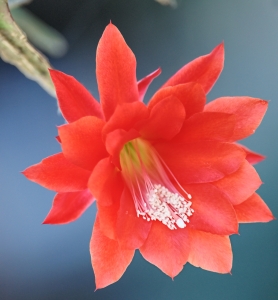
Flowers     water_lily Yes No
Plants and Leaves     leaves_ Yes No
Grass     grass_2 Yes No
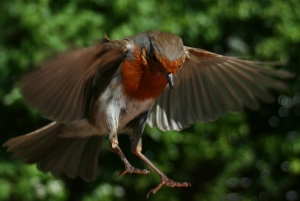
Birds and Insects      _robin_landing Yes No
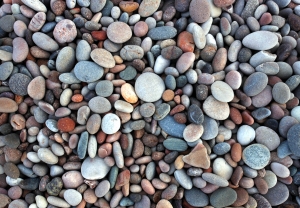
Rocks       _pebble_beach Yes No

Back inside the class, review what you saw and testify of the things God made for us to enjoy. Give each child 6 small items (like Cheerios, pennies, or paper clips).  Play a game of “I Spy.” Give clues like, “I spy an animal that chirps and builds nests in trees. They eat worms and can fly.” The children put the small item on the picture you described on their nature walk graph. Keep playing until they are all covered.

Review for comprehension: Ask students to name some of the things Heavenly Father created for us to eat. Have them act out what a seed does when it is planted (roll their bodies in a ball on the ground). Then slowly start to grow bigger and bigger in the sun and air and pop up through the soil. Pretend to grow some fruit on your “branches” (outstretched arms). Have each child name what kind of fruit tree they are.

Sunbeam Lesson #8 "I Am Thankful for Water."

***Note: Please read the post called “10 Lesson Helps” found under “Primary Lesson Listings” before reviewing any of my Sunbeam lesson plan ideas.

“The Lord has a great work for each of us to do. You may wonder how this can be. You may feel that there is nothing special or superior about you or your ability…The Lord can do remarkable miracles with a person of ordinary ability who is humble, faithful, and diligent in serving the Lord and seeks to improve himself. This is because God is the ultimate source of power” (James E. Faust). Teaching, No Greater Call, p.21

Materials need: Put items in a sack or can:  cup, toothbrush, soap, watering can, (or anything associated with water).  A water bottle and large plastic cups. “Sink and float” items (i.e. pennies, a sponge cut up into pieces, a grape or raisin, a small toy, etc.). Straws. A rain stick if you have one. A picture of a child being baptized and one of the sacrament being passed to the congregation.

Take the children to the bathroom before going to class. Be sure to have them wash their hands. Teach correct hand washing procedures: Turn on the water, lather up with soap on both sides of the hands and in between fingers until they are covered in bubbles, rinse off while you sing the “ABC’s” song. Turn off water and dry hands. While they are washing ask, “How is water helpful in washing your hands?” “What did the water do to the bubbles and the dirt?”  “Why do we wash our hands with soap and water?”

In class: Have a child pull an item out of the sack and say how they would use it.  What else do you need to use it? Repeat with each child and each item.

Each of these things needs water.  We are thankful to Heavenly Father for making water because we need it very much.  

Where does water come from? (get responses:  rain, rivers, lakes, oceans).  Heavenly Father made all these things so we can grow and be healthy.  Everything needs water, not just people.  Plants, flowers, grass, trees too!

Tell the children how there are two very special kinds of water. Show pictures of a boy or girl getting baptized and the sacrament. Explain the importance of water in each picture.  (Be sure that the children are taught appropriately that the water represents-or reminds us of-Jesus’ blood and the water at baptism reminds us that we can be clean when we repent).

Let’s sing a song about different things we do each day with water: (Variation from “Fun to Do” from Children’s Songbook, p. 253).

Brushing our teeth is fun to do…(Variations: Washing our face, washing our clothes, washing the dishes, watering the plants, taking a bath).

Have one child go out. Hide one of items from the sack around the room.  Have the child come back in, find it and tell what we use it for.  Sing the song again about the item they found (i.e “Washing our hands is fun do to…”).  Repeat with each item with different children.

Stand up and sing with actions: (from the Children’s Songbook, p. 241)

Rain is falling all around (hands with fingers wiggling down)

On the housetop (arms up to a peak or triangle)

On the ground (touch the ground)

Rain is falling on my nose (touch nose)

On my head and hands and toes (touch body parts)

If you have the rainstick, tell them that you are going to make a raining sound. Close your eyes.  Can you hear it?  Keep your eyes closed and point to where I am making it rain (do it in different areas of the classroom). Sing the song again while you slowly make the rain sound. Let each child do it and repeat the song.

What would happen if we didn’t have water?  We would all get very thirsty.  All the plants might die. Tell the story about Moses getting water from the rock from Exodus 17:1-6.

Imagine your were one of the Children of Israel in the desert with Moses and it was hot and you didn’t have any water. How would you feel? Give a cup of water to each child to take a drink. How does it make our bodies feel when we drink water? 

Share your testimony about how God made the earth with water so all things could grow. We couldn’t grow without water. Explain how blessed we are that we have clean water and can get it so easily but that we should be careful with it and not waste it.

Extension activity: Fill up the cups with water again and show a tray of the “sink or float” items. Ask the children about each one. Do they think it will sink in the water or stay floating on top. Have them guess at each one. Then hand them each the items, one at a time, and have them experiment. Give each child a straw to blow bubbles in their cup of water.

FYI: If I lived somewhere hot and sunny, we’d go outside and paint the sidewalk with paintbrushes dipped in the water cups. The water makes designs that quickly evaporate and is fun and easy to do. No mess or clean up!

Sunbeam Lesson #8 "I Am Thankful For the Day and the Night."

Sunbeam Lesson #8 “I Am Thankful For the Day and the Night.”

***Note: Please read the post called “10 Lesson Helps” found under “Primary Lesson Listings” before reviewing any of my Sunbeam lesson plan ideas.

“When we study the scriptures regularly and diligently, earnestly seeking guidance from the Spirit, we will be receptive to enlightenment about how to prepare lessons. We will also be prepared to receive and follow promptings from the Spirit while we teach. As we ‘treasure up in [our]minds continually the words of life,…it shall be given [us] in the very hour that portion that shall be meted unto every man'” (D&C 84:85). Teaching, No Greater Call, p. 14

Materials needed: large blanket, flashlight, a children’s scripture picture book, a stick or wand with a star on the end, printed (or drawn) pictures of the moon and sun.

I’m thinking of something special and I’ll give you hints (clues)

It makes us feel warm on the outside

It is big and round and yellow

It is up in the sky

Sometimes it hides behind a cloud or a mountain

It comes up in the morning to make it daytime. (The sun!)

I have a song about the sun. Let’s all stand up and do the actions.  

Oh Mr. Sun, Sun, Mr. Golden Sun, (arms in a circle above head)

Please shine down on me. (open up arms slowly down to sides)

Oh Mr. Sun, Sun, Mr. Golden Sun, (arms in a circle above head)

Hiding behind a tree (hands in front of face)

These little children are asking you (point to self)

To please come out so we can play with you (beckon with hand)

Oh Mr. Sun, Sun, Mr. Golden Sun, (arms in a circle above head)

Please shine down on me. (open up arms slowly down to sides)


Repeat a few times until the children are familiar with it.


Sit back down. Who made the sun? (Heavenly Father).  Why did He create the sun?

It tells us when to wake up in the morning and so we can see outside. 

It makes all the flowers and gardens and trees grow.

(Hold up a picture of a sun).  When the sun shines, we call it “day”

(Hold up the moon).  When the sun goes away and the moon is up in the sky, we call that “night”

When we wake up in the morning, we can do many things while the sun shines.

What can we do in the morning?  (get responses: eat our breakfast, get dressed, play, go to church, clean our house).

Let’s sing a song. We’ll walk in a circle and act these out while we sing. 

(sing to the Tune “Here We Go ‘Round the Mulberry Bush”)

“This is the way we eat our breakfast…so early in Monday morning.” Repeat with other actions. Each time, end with the next day of the week. On Sunday say, “This is the way we go to church…so early Sunday morning.”

Now we are tired.  Let’s pretend it is time to go to sleep. The moon and stars have come out. (Put out a big blanket. Turn out the lights if you can). When I touch you with my “Star” wand, you will lie down on the blanket. Let’s listen to a bedtime story about the sun and the moon. (Tell the story from the scriptures when Jesus was born and the Nephites couldn’t see him because they lived far away. But they knew it happened because Heavenly Father showed a sign in the sky by having the sun stay up for 3 days and the moon didn’t come out to make it night). Be sure to bear testimony that Christ was born and He is the Light of the World. He made the sun, moon and stars so we can remember Him every time we look at the sky.

Why do we go to sleep? (get responses). Before we go to sleep, we always say our prayers. Have all the children kneel down on a blanket with their arms folded. Ask each child if they say their prayers before they go to sleep. Have each child say their own bedtime prayer (help when needed). Sometimes we listen to quiet music when we go to sleep. I’m going to play some beautiful music while you pretend to be sleeping (play some soft Primary songs from the CD or sing some yourself).

Turn the lights back on and have children sit up on the blanket. Let’s see how good you are at knowing what we do during the day (hold up sun picture) and the night (moon picture).  Hold up one or the other and say, “Moon. Go to sleep” and children lie down, or “Sun. Wake up” and have children sit up again. Repeat a few times. Let each child come up and hold the pictures it if they are interested. Tape the moon picture up high on a wall.

When it it night time, our moms or dads tuck us into bed. I hope you all stay in bed and close your eyes and go to sleep. I hope you are not like little monkeys who get out of bed and jump around. Do the fingerplay: “5 Little Monkeys” and repeat as desired.

Who has ever gone camping? (get response). When we camp, we are outside where we can see the moon and stars at night. Heavenly Father and Jesus created them. It is so beautiful. Let’s pretend it’s night outside and it gets dark.  We’ll put our blanket over a table and pretend it is our tent. Let’s get under the blanket and turn on a flashlight. We’ll use the flashlight to see the moon (Shine it on the moon picture up on the wall. Use it to read the children a story from a children’s scripture picture book).

Dismiss children back to their chairs.

When you do good things, you are like a star shining brightly. Other people see you and want to be with you because you are so happy. There is a song that says, “I can do and say happy things each day for I know Heavenly  Father loves me.”  I hope you can shine brightly like a star for others to see.  When I sing this song, will you make “stars” with your hands? (move fingers in and out). I will lead you with my “Star” singing wand. Sing “I Am Like A Star” (Children’s Songbook, p. 163). Let each child come up and “lead” others with the wand.

Review lesson objectives: Who made the sun? Who made the moon? When the sun it out, it is called ________________. When the  moon is out, it is called _________________. Before we go to bed, we say our prayers. This week, I want you to remember to say your prayers and your mom or dad can help you. I will ask you next week if you remembered to say your prayers.

Sunbeam Lesson #7 "The Holy Ghost Helps Me"

***Note: Please read the post called “10 Lesson Helps” found under “Primary Lesson Listings” before reviewing any of my Sunbeam lesson plan ideas.

“Each person you teach is precious in the sight of the Lord, and each person should be precious in your sight as well. Find ways to reach out to each person you teach (see ‘Reaching Out to the One,’ pages 35-36). As those you teach realize that you love them and are concerned about them, they will learn to trust you. They will become more teachable and less likely to cause disruptions (see ‘Love Softens Hearts,’ pages 31-12)” Teaching, No Greater Call, p. 79.

Materials needed: Pictures from the manual resouces, items for the “whisper” activity, the strips of paper and jar, the smile/frown chart to take home.

Begin with the activity song, “Head, Shoulders, Knees and Toes.” Repeat it with different variations: fast, slow, loud, soft. When done, remind the children that we all have different parts to our bodies.

Show picture of Heavenly Father and Jesus. They have a body. Do they have a nose?  Where is your nose?  Do they  have hands?  Where are your hands? (repeat with other parts of body).

We look like our Heavenly Father because he is our Father, just like we have a father and mother in our family on earth.

We are going to talk about another special person who works with Heavenly Father and Jesus.  His name is the “Holy Ghost.” He has other names like the “Holy Spirit” the “Still Small Voice” and the “Comforter.”  He doesn’t have a body, but is a spirit. He is very important because he helps us everyday to do the right things. You will receive the gift of the Holy Ghost as a constant help when you are baptized.

Tell the children you are going to whisper an important message in their ears. After they listen carefully, they are to do what you said. (Here are some ideas: “Hold up your scriptures above your heads” or “Eat this cracker I am putting in your hand” or “Smile at another child in our class”).

Who heard what I said?  You listened and obeyed my instructions that I whispered. My words were very quiet but you sat very still and listened carefully. I told you to….. You had to listen very carefully to my voice to hear it. 

They Holy Ghost whispers very softly to us and we have to listen very carefully.  He mostly whispers to our heart, so we feel what he says.  He doesn’t whisper in our ears like I just did. 

When we do what is right, the Holy Ghost makes us feel happy.  When we do something wrong, the Holy Ghost makes us feel sad. When have you felt happy? (get responses). The Spirit guides us to do what is right. He helps us feel good inside. When we do something wrong, He helps us to feel sad so we can say we are sorry.

Put the following sentences on strips of paper and put inside a jar. Wrap the outside of the jar with a piece of paper and draw a smiley face on one side, a frowny face on another. Seat the children in a circle on the floor.

Here are some things we do. We’ll roll the jar across the floor to a child and they get to reach inside and pull out a piece of. I’ll read it out loud.  I’d like everyone to make a smiling face or a frowning face, and a “thumbs up” if they are good choices or “thumbs down” if they are bad: (after each one, emphasize how the Holy Ghost will help them feel in their hearts either good or bad)

You help your mom clean up your room

You share your toys

You forget to say your prayers

You give your friend a hug when she got hurt

Your mom tells you to brush your teeth but you say, “No!”

You remember to say your prayers

Your dad says to pick up your clothes but you throw them on the floor

You come to church

Share an appropriate experience in your life when you followed or ignored the promptings of the Spirit and how you felt and what were the consequences.

Tell them that you are going to sing a song about the Holy Ghost (“Listen, Listen” Children’s Songbook, p. 107). While you sing, they walk around the room. When you finish, they stop in front of a picture that is posted on the wall (uses pictures that come with the manual that show children doing different things, good and bad).

Ask them to describe what they see in the picture. Are the children following the Holy Ghost or not? Everyone votes thumbs up or down. Repeat a few times. Then see if they can sing part or the whole song with you.

Play the “whisper game”  You whisper something in each child’s ear and they have to do that thing.  We guess what it is (jump up and down, sit on the floor, blink their eyes, hug a friend, clap their hands, etc.). We all do that action together. Variation: they whisper in someone else’s ear.

Share your testimony that listening for the feelings the Holy Ghost gives us will help us to choose the right and be happy.

Extension activity for home: Draw a line down the center of a paper. Put a smiley face over the lefthand column; a frowny face over the righthand column. Write the following instructions: Parents, we learned today in Sunbeams that the Holy Ghost will help us feel happy when we do what is right and sad when we make a wrong choice. This week, help your child identify when they have made a choice. Talk to them about how it made them feel and what were the consequences. Write down the choice in the happy face column or sad face column and discuss the power of the Holy Ghost guiding your life. If they have made a wrong choice, help your child to discuss how they can correct the wrong and make a better choice next time.