PARENTING WITH SPIRITUAL POWER by Julie K. Nelson is an interesting spiritual
book. Told from the Latter Day Saints perspective. While, I am not a Latter Day
Saint (The Church of Jesus Christ of Latter-day Saints) but a Baptist, I found this title very informative,useful and educational. A parenting book based on moral principles. A wonderful idea and much needed in today’s world. I think it is well worth the time to read. Well written. Received for an honest review from the author.
RATING: 4/5
Dinner Table Rewards
If I could offer you a “Magic Wand” to wave over your children that would offer these results, would you take it and use it?
* Less likely to have eating disorders
* Lower risk of smoking, drinking and using marijuana
* Lower incidence of depressive symptoms and suicidal thoughts
* Better grades
* Less likely to have sexually active friends
The “Magic Wand”?
Family Dinners.
Surprised?
Studies confirm that adolescents whose families provide meal frequency as well as a positive mealtime atmosphere are more likely to have healthy eating patterns and less likely to have eating disorders (see “Benefits of the Dinner Table Ritual” New York Times, May 3, 2005).
- A 2004 study of 4,746 children 11-18 years old found that frequent family meals were associated with a lower risk of smoking, drinking and using marijuana; with a lower incidence of depressive symptoms and suicidal thoughts; and with better grades.
- A survey of 12- to 17-year-olds found that teenagers who reported eating two or fewer dinners a week with family members were more than one and a half times as likely to smoke, drink or use illegal substances than were teenagers who had five to seven family dinners.
- “We also noticed that the more often teens had dinner with their parents, the less likely they were to have sexually active friends, less likely girls were to have boyfriends two years older, and the less teens spent with boyfriends or girlfriends.”
- A study found that adolescent girls who reported having more frequent family meals and a positive atmosphere during those meals were less likely to have eating disorders.
Impressive results.
I’ve yet to find research that strongly indicates the when families habitually “graze” in the kitchen, or go foraging nightly for fast food, they have the same results as families who eat together on a regular basis. In fact, it’s often the opposite and regularly eating fast food increases the chances of childhood obesity among other risk factors. Too many families have given up on the tradition of preparing, eating, and cleaning up meals together.
No time, they say.
I absolutely understand that many families have very busy lives and finding time (not to mention, energy) for food preparation is difficult. The purpose of this parenting article is not to debate that or to address how to work a daily home-cooked meal into an overwhelmingly busy schedule. I just want remind ourselves that our short-ranged behaviors and priorities can have serious consequences in the long run. Those who are determined to make improvements will do so.
Small changes can have monumental results. Consider these:
Do you find that you rarely sit down together to eat? Perhaps make it possible to eat once or twice a week together.
Do you find that dinnertime is impossible to bring everyone together? Perhaps plan for breakfasts to offer the benefits of the “dinner table” ritual instead.
Do you find that you only eat together once or twice a week? Perhaps you can increase it to three or four.
Yes, it’s preferable that the meals are home cooked and that vegetables, whole grains and fruits prevail over other non-essential foods. But I’m more concerned with the quality of interaction at that time of day than the food itself if I have to make a choice. Making pancakes and sausage can be a great option, especially for picky eaters and parents who are intimidated by making “gourmet” meals like Chicken Salad Sandwiches (which I am making tonight; only 10 minute prep!). You can add the healthy stuff later as your confidence grows.
Those research study outcomes happened when the kids knew they were needed at home and welcomed at the table. Children will not want to sit down if their chair becomes an instrument of interrogation and torture as they are continually criticized while passing the salt. Parents who do family meals right create a warm, friendly environment as they look each other in the eye across the table, ask questions, listen and laugh together. That means…
Turn off the TV.
Turn off the cell phones and other electronic devices.
Turn on your parenting power to influence your kids for a lifetime of good. It’s magic.
Sunbeam Lesson#11 "I Am Thankful For Fish"
***Note: Please read the post called “10 Lesson Helps” found under “Primary Lesson Listings” before reviewing any of my Sunbeam lesson plan ideas.
“How will those you teach know that you are listening? You can demonstrate that you are listening by displaying an expression of interest. You can look at the speaker rather than at your lesson materials or other things in the room. You can encourage the speaker to complete his or her thoughts without interruption. You can avoid jumping into conversation prematurely with advice or judgments. When you understand what is being said, you can make comments that show your understanding” (Teaching, No Greater Call, p. 66).
Materials needed: pictures 1-26 and 1-27, goldfish crackers, newspaper fisherman hats, fishing pole with magnet, colored fish with paper clips and a song, question or activity printed on one side.
Pass out goldfish crackers for the Sunbeam children to snack on while telling Story of Jonah from Jonah 1-3. Be sure to teach that Jonah was sad when he disobeyed Heavenly Father and was happy when he finally obeyed. The big fish obeyed Heavenly Father and swam over to Jonah in the sea to open its big mouth to swallow him and save him from drowning and to spit him out onto the land after 3 days. Heavenly Father used a big fish teach Jonah that lesson and to bless Jonah and the people on his mission.
Teach the action verse:”Slippery Fish”
Slip-pery fish, slip-pery fish, swimming through the wa-ter (make actions for each animal)
Gulp, gulp, gulp. Oh no! He was eaten by a…
Octo-pus, Octo-pus, swimming through the wa-ter.
Gulp, gulp, gulp. Oh no! He was eaten by a ….(great white shark…humungous whale)
Now the whale is full!
Where do fish live? Have you ever seen a real fish? What did it look like?
Show picture of a frog (1-26) and turtle (1-27) and discuss these animals. They live in the water, too, along with the fish. What other animals live in the water? Ask how a fish, frog and turtle move and have the children act them out. Play a Freeze game where you say, “Fish” or “Frog” or “Turtle” or “Freeze” and the children have to do that action.
Teach the action verse: (repeat as children desire)
“There was a little turtle”
There was a little turtle, he lived in a box (hands cupped together)
He swam in the water (swim motions), he climbed on the rocks (climbing motions)
He snapped at the mosquito (clap outstretched hands together)
He snapped at the flea, (clap outstretched hands together)
He snapped at the minnow, (clap outstretched hands together)
He snapped at me. (clap hands together close to face)
He caught the mosquito (cup hands together)
He caught the flea (cup hands together)
He caught the minnow (cup hands together)
But he didn’t catch me! (shake finger).
Sit children back in chairs. Tell the following in your own words: When the people came to listen to Jesus talk, they had to walk for a long time to see him. They ran out of food and didn’t have any more. So Jesus made a miracle and took a little bit of bread and a few fish and blessed them. His blessing made the fish and bread to feed lots of people and it didn’t run out. They weren’t hungry anymore and they listened longer to his talk.
Why were the people hungry who came to listen to Jesus?
What special miracle did Jesus do to feed them?
What happened after they ate the fish and bread?
Jesus created the earth and all the animals. That is why he can do miracles with fish and bread.
Line up chairs in one or two rows to make seats in a “boat.” Give each child a newspaper sailor hat. Sing “Row, Row, Row, Your Boat” and pretend to be rowing. Row and sing fast and slow for variations.
With each child in seats, they can go fishing. Put fish cut outs on floor and take turns with fishing pole. When they catch a fish, read the instructions. It can either say the name of a Primary song that you all sing together, a review question from the lesson, or an activity for that child to do (jump in place 10 times; smile at everyone in our class, etc.)
Set chairs back in a semi circle. Do the action verse: “Five Little Fishes” (put up five fingers on your hand).
Five little fishes swimming in the sea, swimming and saying, “You can’t catch me!”
Along comes the shark going snap, snap, snap. Four little fishes comes swimming back. (Repeat until all fish-fingers are gone).
Remind the children that Jesus Christ created the earth and all the animals, including fish, turtles and frogs. When Christ lived on the earth, he used fish many times to teach the people about His power and to bless them. Bear testimony of your love for each child and for your Savior and Heavenly Father.
Extension activity: If you are able to go outside, you can play “Sharks and Minnows.” The children (“minnows”) line up on one side of the field while the “shark” stands in the middle. When you say, “Go,” the children must run across to the other side. The “shark” tags as many “minnows” as s/he can and they turn into shark. Keep going until all children are caught.
Sunbeam Lesson #10 "I Am Thankful for Trees, Plants, and Flowers"
***Note: Please read the post called “10 Lesson Helps” found under “Primary Lesson Listings” before reviewing any of my Sunbeam lesson plan ideas.
“When a homemaker plans a week of dinner menus, she is not likely to decide to prepare identical meals on seven consecutive nights…The gospel can likewise be presented in a number of different ways. No teacher should fall into a monotonous pattern of presenting the same kind of lesson week after week. When you use a variety of learning activities, learners tend to understand gospel principles better and retain more. A carefully selected method can make a principle clearer, more interesting, and more memorable,” Teaching, No Greater Call, p. 89.
Materials needed: fruits and vegetables, knife and cutting board, disposable cups, a tree twig in a sack, chalk or whiteboard and dry erase marker, enough copies of the nature walk graph and pencils for each child, and 6 small items (see end of lesson).
Have a basket of various fruits and vegetables (suggestions: orange, apple, banana, carrot, cucumber, celery, grapes, sugar snap peas). Hold up each food item and ask the students the name of each item. Then talk about how some of these food are fruits and some are vegetables. Both are healthy and good for our bodies. Eating other good foods like grains (rice, wheat and oats) are good, too. Heavenly Father made all these things for our use. He gave us a commandment called, “The Word of Wisdom” that tells us to eat these everyday to be healthy. He said, “All grain is good for the food of man; as also the fruit of the vine; that which yieldeth fruit, whether in the ground or above the ground” (D&C 89:16). (If you’d like, you can show each food item and tell if it grows above the ground or below).
We are going two make to piles of food: one for the fruits and one for the vegetables. (Have children come up one by one and choose one to put in a pile. If they are wrong, just say, “Good guess. That is a fruit/vegetable”) After each one, ask them to rub their tummies and say, “Yum” if they have eaten this food. Tell them how much you love eating it.
All of these things grew from a plant or a tree. We eat things that grow from plants and trees. They started growing because someone planted a seed in the ground. Sometimes we can still find the seed inside the food. Hold up each item with seeds inside and ask them if they know what the seed looks like, if it will be big or small, many or few. Cut it or peal it open and show the children the seed(s) if they are present. Discuss what each fruit or vegetable looks like inside and if they like to eat it. Cut it up if needed and put a sample into a cup to give each child a taste of them.
While they eat, read a book that shows pictures of plants, trees, flowers and nature, like “Wonders of Nature: A child’s first book about our wonderful world.” Talk about how God made all these things.
Sing, “My Heavenly Father Loves Me” (Children’s Songbook, p. 228).
Whenever I hear the song of a bird (hand cupped to ear)
Or look at the blue, blue sky, (hand raised above eyes)
Whenever I feel the rain on my face (fingers tapping on face)
Or the wind as it rushes by (motion hands across in front of body)
Whenever I touch a velvet rose (finger touch)
Or walk by a lilac tree,(walk in place)
I’m glad that I live in this beautiful world (arms in a big circle)
Heavenly Father created for me. (hug self)
Repeat the song and then ask them to do all the actions while they sing it.
Pass around a sack with twig in it. Let children feel and guess what it is. Take it out and talk about where a stick comes from and why they are important. We get food from plants. If it is Springtime in your area, you can get a twig with buds or blossoms on it and sing “Popcorn Popping.” (Children’s Songbook, p. 242)
Draw a picture of a tree and tell this story:
“This is a story about a tree. First, it was a seed. Then the sun and rain and soil helped it to grow. When it became a big tree, it helped many people and animals. (Show picture 1-22, Tree in the Spring). In the Spring, a robin gathered twigs and grass a built a nest in the branches. There she laid her eggs until they hatched. When the baby birdies were born, they were protected and safe up in the tree in their nest. (Show picture 1-23, Nest with Baby Birds). The mommy bird could fly away and get worms for them to eat. When they grew up, the babies learned how to fly from the tree. In the summer, the tree grew big leaves and the children on the ground got hot from the sun. They saw that the tree had shade underneath from all the leaves. So the boys and girls sat under the tree to cool down in the shade. There were other animal that liked the tree, too. Squirrels ran up and down the tree and other birds that were flying a long way liked to stop on the branches and rest. In the fall, when the leaves started turning red, yellow and orange and falling down, the tree grew apples. When they were ripe, the people picked the apples to eat them, just like the one we ate today in our class. Many years later, the tree was old and got sick and died. The people cut down the tree and used the wood to make a fire. It warmed them and they were happy as they remembered the tree.”
What were all the ways the tree helped? Birds, Squirrels, Shade, Apples, Firewood.
We are going to go on a nature hunt to find all the beautiful things Heavenly Father made for us. (Review behavioral expectations if necessary). Give each child a print out of the graph below and a pencil to mark with. Go outside if weather permits and guide the children in looking for these things. If you cannot go outside, show pictures in a book and have them check it off as they see them.
Trees  |
Yes | No |
Flowers  |
Yes | No |
Plants and Leaves  |
Yes | No |
Grass  |
Yes | No |
Birds and Insects  |
Yes | No |
Rocks  |
Yes | No |
Back inside the class, review what you saw and testify of the things God made for us to enjoy. Give each child 6 small items (like Cheerios, pennies, or paper clips). Play a game of “I Spy.” Give clues like, “I spy an animal that chirps and builds nests in trees. They eat worms and can fly.” The children put the small item on the picture you described on their nature walk graph. Keep playing until they are all covered.
Review for comprehension: Ask students to name some of the things Heavenly Father created for us to eat. Have them act out what a seed does when it is planted (roll their bodies in a ball on the ground). Then slowly start to grow bigger and bigger in the sun and air and pop up through the soil. Pretend to grow some fruit on your “branches” (outstretched arms). Have each child name what kind of fruit tree they are.
Book Review: Tristi Pinkston
Book Review: “Parenting with Spiritual Power” by Julie K. Nelson
By Tristi Pinkston, book reviewer for AML (Association for Mormon Letters) and Meridian Magazine at http://ldsmag.com/article/1/12346
When I first became a mother nearly seventeen years ago, I was overwhelmed—with love, with awe, and with a sense of tremendous responsibility. Nothing will make you feel the weight of adulthood on your shoulders like becoming a parent—a little being now depends on you for everything from food and diaper changes to nurturing in the gospel and instruction on how to return to our Heavenly Father. And perhaps the most overwhelming feeling of all was the message I received from the Spirit one night while taking care of my daughter—this was God’s baby, on loan to me, and I’d better do right by her.
Talk about pressure.
Because we have been entrusted with the care and keeping of our Heavenly Father’s children, it only makes sense that we should raise them in His way. I’ll liken it to babysitting. When you take a babysitting job, the parents will tell you the child’s bedtime and what they should have for dinner and what rules they should follow. They also provide a telephone number in case of emergency. Our Heavenly Father has done no differently. He has given us instructions for His children—commandments and the scriptures—and He gave us a way to contact Him—prayer—if we need help.
The new book “Parenting with Spiritual Power” by Julie K. Nelson outlines some of the examples we find in the scriptures of good parents and the way that God parents us. After all, what better example of a father could we find than our Eternal Father? The author posits that the scriptures are the best instruction manual we could ever find for raising our children and that by turning to them, we can feel as though we’re raising our children in the most loving, Christlike, and effective way.
Each chapter takes a story or episode from the scriptures and likens it to our relationship to our own children today. We start out the book with a discussion of how God dealt with Adam and Eve in the Garden of Eden. He outlined the rule, told them of the consequences, and then allowed them room to make their own choice. When they broke the rule, He didn’t pat them on the head—He made it clear that they had disobeyed. But He also gave them the opportunity to try again, and He continued to love them and teach them and be a father to them. While He did have to drive them from the garden because that was the natural consequence, He never ceased caring about their welfare.
The author then explains how the principle of free agency and consequences can be applied in our families as well. Adam and Eve were very much like children, and while we are not God, we can use His perfect example as we seek to teach and discipline.
Additional chapters examine the power of teaching our children doctrine, as demonstrated by the Savior’s interactions with Judas and with Mary. We learn about the power of having good cheer, as demonstrated by Lehi and his family. Alma and Corianton show us the power of correcting with love. And perhaps one of my favorite chapters in the book—the power of banners and fortifications as shown us by Captain Moroni.
One of the banners, in this case, was compared to “The Family: A Proclamation to the World.” Just as Moroni took a pole and mounted a flag whereon he wrote his reasons for fighting, essentially reminding himself and everyone around him that his cause was just, we can hold the Proclamation up high and say, “This is what we believe, this is where we stand, and we won’t back down from it.” Of all the things we have to fight for, what could possibly be of more worth than the family? I can’t think of one.
This book caused me not only to think about parenting in a more godly way, but the scriptures as well. We’ve always been taught that we’ll learn great and important truths from the scriptures, but it’s key for us to realize that they aren’t just stories sprinkled with a bunch of wars. They are examples given to us for how we can better live our lives, and the book is a step-by-step curriculum for how we can implement the scriptures more fully. In addition, I would say that it gave me some hope on my journey of motherhood. At times it seems so overwhelming, and even impossible. But God loves His children so much that He made sure we would have the knowledge we would need to be successful parents, and we can turn to Him in prayer for comfort and additional answers. Children might not come with instruction manuals, but what they have been sent with is even more perfect.
Talking With Teens and Flying Lessons
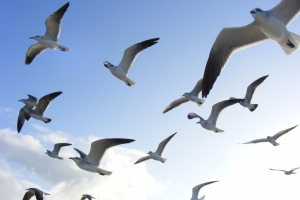
How many times have you heard this (or some variation)? “Have fun with your kids while they are young. One day they will be teenagers.” Is this a phase to be endured? Should we lock them up when at 14 and let them out when they are 21? Many parents dread and fear this stage of life–raising teenagers.
I’ve raised four adolescents (well, the fourth turns 17 this month so she’s on the downhill) and I have to say that this can be some of the most rewarding, exciting, fun times in your parenting. These kids have and appreciate a sophisticated sense of humor. You can share so many things (music, movies, gourmet food, literature and learning, travel, etc.). You get to know their friends and be a part of great activities. And you really get a glimpse of who they will be as adults. It’s awesome, really. Our job is to start letting go through those teenager years so they can become those responsible adults.
Kind of like birds, nests and learning how to fly. We’ve had ample opportunities since birth to feather the nest by teaching, training, modeling, reinforcing, praising and encouraging the values, behaviors and ideals we’d like our children to espouse. During the gradual letting-go years, it’s time for us to watch our baby birds grow up, exercise their wings and start to fly. Parents need to help their children gain emotional, physical, spiritual and social readiness to stand on their own and make mature decision we can be proud of when we aren’t there anymore.
One way we do this is through talking. When I say “talking,” I mean the parents should do less of the talking and more of the listening. Especially in the teen years. I admit…I’m a talker. I really need to work on letting my teenagers do more talking and me, the listening. We need to ask more of the open-ended “Wh” questions: Who…What…When…Where… We need to find when our teenagers are most emotionally available to open up to conversations. Some like talking in the car (turn off your cell phones, car radios and televisions!); some like to be taken out to lunch or shopping (girls especially, right?); some like to do something physical together (walking, hiking, biking, playing sports, etc); some open up late at night. When we get this right, it can be amazing.
I talked with my (soon-to-be) 17-year-old, Rachel, a few days ago and did it right by preparing her for that discussion. I told her ahead of time that at a certain time when she was free, I wanted to go over some goals in her life. Of course she rolled her eyes and resisted. But I persisted in a friendly and casual tone. We began by going over what was important to her and what God wanted her to do with her life (taking the “mom” part out of it). We discussed various standards for her life.
We were in the middle of discussing how to take care of our bodies and she rattled off all the correct answers. It was what she had been taught by her parents and other leaders. But what was important in that moment was to have Rachel find out what Rachel thought. So I asked, “Why do you believe what you’ve just said is true?” She quickly responded, “Because I only have one body and I don’t want to be stupid with it. If I ruin it with drug addiction or something else, it’s not like I can trade it in for another one. It’s all I’ve got.”
Wow. There’s no way in all the lessons on morality in the world that someone could distill truth better than what just came out of my daughter’s mouth. Best of all, she said it to herself. And believed it. She showed me a glimpse of that incredible, mature, independent-thinking adult she is becoming. I couldn’t have been more happy or more proud.
I think she’s ready to fly.
Gardeners, Seeds and Soil: Nourishing our child's potential

How often do you hear your child say, “I’m not good enough,” or “Why try? I always fail”? Where did she learn to put limits on herself? Why does he listen to the voice of doubt? I’d like you to consider the powerful impact we have on our children recognizing and acting on their abilities.
I have known enough people in my life and read enough inspiring personal accounts that I am convinced we are capable of achieving much more than we think. Our children are born with so much potential to be discovered and nurtured, just like a seed planted, waiting to burst through the soil.
Friedrich Froebel (1782 – 1852) was a great German educational scientist who recognized a child’s limitless abilities. He is the father of the modern Kindergarten. Froebel gave it that name to suggest a powerful image. The word “Kindergarten” is derived from two German words: “Kinter” (Children) and “Garten” (Garden). Thus, a classroom for young children was a child’s garden, a place for them to learn and grow. What a beautiful picture: a parent or teacher as the Gardener; the child as the Plant that is nourished by our hand.
So why is it some children do not thrive? Why do we put limits on ourselves? Is it because we allow shallow expectations to define who we are? Is it because our parents somehow made us feel less than capable? I saw the following YouTube video about a young man who told his parents he wanted to own a restaurant. No big deal, right? That’s a probable aspiration for a career. One small thing: this young man was born with Down Syndrome. Many parents in that situation would say, “That’s a nice idea, but it won’t work. Let’s try something more reasonable.” Instead, the parents of this young man saw a boy with a dream and made it happen. They saw the potential. They gave him the light, water, soil and nutrients for him to grow into a businessman. His diner bears his name: “Tim’s Place,” where he serves “breakfast, lunch and hugs.” Tim says, “The hugs are the best part.” I agree. His parents knew his strengths and accentuated the positive by putting those words right there on the diner marquee. I want a hug from Tim. It’s an inspiring story:
In my book, Parenting With Spiritual Power, I wrote a chapter on seeing the vison of what our children can become. It is a powerful concept. I suggested that our role as Gardener, “will improve as we cultivate acceptance of others wherever may be and have faith in whom they can become.” I’d like to finish with an except from the book that shares an experience of parents of children with Down Syndrome, like those in the video. It also illustrates how we should not define ourselves or our children by what we can’t do, but what we can. In chapter nine, it reads:
I taught a young lady at Utah Valley University years ago with Down Syndrome. She was a bright and cheerful student, very motivated to perform her best. I learned a little of her background during the semester. Her mother, along with another mother of a son with Down Syndrome, attended a national convention for Down Syndrome many years prior, when their children were young. Most parents were told in those days they would be lucky if their child could be taught to care for themselves. There was little prospect they could do much beyond that. The convention speaker asked the parents to imagine what their child could achieve in their lifetime. He told them to think high, to consider all possibilities. While they each silently thought—wished beyond hope—of what their child could achieve, he said, “Now I want you to double that. ”
My student’s mother shared this story as we toured the facility she and the other mother founded after they returned from that convention. There had been only one early intervention program for special needs children where they lived and the program’s philosophy was: “Love them, but don’t expect much.” Consequently, these two mothers resolved to begin a new center. They focused on the ability rather than the disability. Their facility now treats thousands of children and has helped thousands become more than previously realized. Because of these mothers’ changed vision of what their children could be, their son and daughter have achieved much, much more than they ever would have imagined. The son with Down Syndrome also attended the university, is a temple ordinance worker and has been in over 16 community theater productions. After his latest performance in “Fiddler on the Roof,” with a packed house every night, he came home and exclaimed, “Mom, it’s such a burden to be famous!”
I was at one of this young man’s performances. The stage became a garden with flowers of every kind swaying, growing, and reaching up toward the sun. These performers had been nurtured by caring gardeners, carefully tended and lovingly cherished.
And the hugs from children are the best part.
Sunbeam Lesson #8 "I Am Thankful for Water."
***Note: Please read the post called “10 Lesson Helps” found under “Primary Lesson Listings” before reviewing any of my Sunbeam lesson plan ideas.
“The Lord has a great work for each of us to do. You may wonder how this can be. You may feel that there is nothing special or superior about you or your ability…The Lord can do remarkable miracles with a person of ordinary ability who is humble, faithful, and diligent in serving the Lord and seeks to improve himself. This is because God is the ultimate source of power” (James E. Faust). Teaching, No Greater Call, p.21
Materials need: Put items in a sack or can: cup, toothbrush, soap, watering can, (or anything associated with water). A water bottle and large plastic cups. “Sink and float” items (i.e. pennies, a sponge cut up into pieces, a grape or raisin, a small toy, etc.). Straws. A rain stick if you have one. A picture of a child being baptized and one of the sacrament being passed to the congregation.
Take the children to the bathroom before going to class. Be sure to have them wash their hands. Teach correct hand washing procedures: Turn on the water, lather up with soap on both sides of the hands and in between fingers until they are covered in bubbles, rinse off while you sing the “ABC’s” song. Turn off water and dry hands. While they are washing ask, “How is water helpful in washing your hands?” “What did the water do to the bubbles and the dirt?” “Why do we wash our hands with soap and water?”
In class: Have a child pull an item out of the sack and say how they would use it. What else do you need to use it? Repeat with each child and each item.
Each of these things needs water. We are thankful to Heavenly Father for making water because we need it very much.
Where does water come from? (get responses: rain, rivers, lakes, oceans). Heavenly Father made all these things so we can grow and be healthy. Everything needs water, not just people. Plants, flowers, grass, trees too!
Tell the children how there are two very special kinds of water. Show pictures of a boy or girl getting baptized and the sacrament. Explain the importance of water in each picture. (Be sure that the children are taught appropriately that the water represents-or reminds us of-Jesus’ blood and the water at baptism reminds us that we can be clean when we repent).
Let’s sing a song about different things we do each day with water: (Variation from “Fun to Do” from Children’s Songbook, p. 253).
Brushing our teeth is fun to do…(Variations: Washing our face, washing our clothes, washing the dishes, watering the plants, taking a bath).
Have one child go out. Hide one of items from the sack around the room. Have the child come back in, find it and tell what we use it for. Sing the song again about the item they found (i.e “Washing our hands is fun do to…”). Repeat with each item with different children.
Stand up and sing with actions: (from the Children’s Songbook, p. 241)
Rain is falling all around (hands with fingers wiggling down)
On the housetop (arms up to a peak or triangle)
On the ground (touch the ground)
Rain is falling on my nose (touch nose)
On my head and hands and toes (touch body parts)
If you have the rainstick, tell them that you are going to make a raining sound. Close your eyes. Can you hear it? Keep your eyes closed and point to where I am making it rain (do it in different areas of the classroom). Sing the song again while you slowly make the rain sound. Let each child do it and repeat the song.
What would happen if we didn’t have water? We would all get very thirsty. All the plants might die. Tell the story about Moses getting water from the rock from Exodus 17:1-6.
Imagine your were one of the Children of Israel in the desert with Moses and it was hot and you didn’t have any water. How would you feel? Give a cup of water to each child to take a drink. How does it make our bodies feel when we drink water?
Share your testimony about how God made the earth with water so all things could grow. We couldn’t grow without water. Explain how blessed we are that we have clean water and can get it so easily but that we should be careful with it and not waste it.
Extension activity: Fill up the cups with water again and show a tray of the “sink or float” items. Ask the children about each one. Do they think it will sink in the water or stay floating on top. Have them guess at each one. Then hand them each the items, one at a time, and have them experiment. Give each child a straw to blow bubbles in their cup of water.
FYI: If I lived somewhere hot and sunny, we’d go outside and paint the sidewalk with paintbrushes dipped in the water cups. The water makes designs that quickly evaporate and is fun and easy to do. No mess or clean up!
Work-Life Balancing Act

I’m about to share with you one of my favorite YouTube videos. No, it’s not a cute baby saying something adorable. It’s not even one of those funny pet video clips. Spoiler alert: it’s serious and it’s seriously awesome.
Quite a few months ago, I watched a few presenters at the 2012 Aspen Ideas Festival, moderated by TV Anchorwoman, Katie Couric. The speaker who enthralled me by her eloquence, intelligence, and balanced parenting perspective was Anne-Marie Slaughter. She was featured after she wrote a piece for the Atlantic called, “Why Women Can’t Have It All,” which stirred up no small dust storm of controversy.
In this YouTube video, she explains her tug and pull of working for the US State Department while raising two teenage sons. She frankly discusses how she created a work-life balance which required sacrifice, commitment and following her maternal instincts.Gasp! Does anyone talk about that anymore? Do we acknowledge maternal or paternal instincts or are we just in a have-it-all, economy-driven society? When challenged on her choices and outspoken opinions, she granted that each parent should follow their own path, without judgment from others. But in her case, she examined her choices and eventually quit her high profile job because her sons needed her.Gasp, again.
Not everyone has a choice to work or not; that is indisputable. Many women have to earn a paycheck. Their children know it is for them that they make that sacrifice.They are united in purpose. Far too many parents, though, work far more than necessary to buy things that are far less than necessary. Those children also know what their parents value.
What is necessary, then? Another presenter at the conference, Lori Gottlieb, said her research and private practice with families has shown her something about what are the most cherish childhood memories. She revealed, “In my therapy practice, what people say is this: Their fondest memories are playing Scrabble before bed, stirring pancake batter on a Sunday morning, tossing a ball out front, hanging out in their pajamas until noon, and those silly inside family jokes that still make them laugh 20 years later.”
I know this balancing act. I’ve felt this rope of tug and pull. I’ve sometimes even found myself on the end of a frayed knot, hanging on for dear life. It was hard to be a good or responsive parent in these moments. What I want to share is this: whenever I’m faced with a proposition for paid employment outside (or even inside) the home, my children and husband’s needs come first. Our short- and long-term goals are always in view. The sacred stewardship of parenthood directs all our choices. We remember these wise words: “For where your treasure is, there will your heart be also” (Matthew 6:21).
I want my treasure chest to be filled with pancake batter, PJ’s and popcorn, Scrabble tiles, warm embraces and long Sunday walks with my children by my side. And chocolate wouldn’t be too bad either.
Fortune Telling, Early Literacy, and Mt. Everest

Did any of you play “fortune telling” when you were a kid? You’d look at your friend’s palm and see the creases and lines that forecasted wealth, love, a long life, or maybe forebode heartache and misery. It was all fun and games and no one took it seriously.
I’d like you to image that you are a palm reader today.How accurate will you be by looking at lines on a palm? You can’t really tell a person how their life will turn out just by a few wrinkles, right? Are you certain of your predictions? I have a formula that is fool proof (well, almost…but it sure beats a crystal ball). I will be a fortune teller today and tell you if your kids will likely have a long and happy life. It all depends on one thing. Reading.
In one of my favorite books called The Read Aloud Handbook (I read it while living in Chicago and it changed my life), Jim Trelease summarizes solid research that shows a high probability of a child’s later success in life is based on how often a parent read to them while they were growing up:
You read more, therefore…
You know more, therefore…
You’re smarter, therefore…
You stay in school, therefore…
You get more diplomas, therefore…
You have more stable employment, therefore…
You make more money, therefore…
Your kids will get good grades, therefore…
You’ll enjoy a longer and happier life! (Handbook, pp. xxiv, xxv).
It all starts with one book. For a child to have the foundational literacy skills to learn how to read in Kindergarten, their parents need to have read a minimum of 1000 books to their child before they enter school. One thousand books may seem like a lot, but if you break it down, it’s only about two books per day. But those one or two books add up and predict amazing results.
It reminds me of a keynote speaker I heard once at a conference. He had conquered the climb to Mt. Everest after experiencing harrowing, near-death experiences along the way. The final step on the summit was celebrated with a ceremonial flag-posting, pictures, and a brief breath-taking view. But he said something like this: “That last step on the top was not any more important than the first step at base camp. If I hadn’t taken that first step and all the other small but important steps along the way, I would never have taken that final step.” I think that has a lot of significance to many things in life, including the achievement of raising children.
I write this after reading the paper today. I’m so impressed that Utah County has initiated the “EveryDay Learners” reading program by encouraging local businesses to become active in early literacy activities. Today’s article highlighted Tom Hansen. He owns a 7-Eleven convenience store and took up the challenge by Bill Hulterstrom, president of United Way of Utah County, to help young children want to read. He installed two bookshelves in the front of his store, just the height for small children, and stocked them with children’s books. Hansen tells his young friends, “Take a book, read it, bring it back, report about the book to an employee and collect a treat from a variety of healthy snacks like a banana or apple, or have a Slurpee on the house” (http://www.heraldextra.com/news/local/central/provo/eleven-makes-reading-fun-rewards-efforts/article_cfb9536a-a9d4-5116-9f0d-3a93f20fe534.html).
My hat is off to you, Tom Hansen. You are the newest fortune teller in Utah County. You are creating the next generation of 7-Eleven shoppers who will more likely stay in school, get a diploma, secure more stable employment, earn more money, raise successful children, and have a happy life. Who knows, they may end up owning their own 7-Eleven store filled with a library of books for other young children.
High five to you. Palms and all.
 A Spoonful of Parenting