International Women’s Day and Gaslighting

Post script: I was interviewed in BYU radio about this topic so if you’d rather hear than read about it, here’s the link to stream it. 

Today, March 8th 2016, is International Women’s Day. Although we barely recognize it as a holiday in the U.S., apparently it is a big deal in other countries. My daughter is living in Russia, and she has been advised to stay off the streets yesterday and today to protect herself from all the drunken celebrations.

So, in my own way, I’d like to celebrate women (without the drunkenness). One of the best ways I can think of is to empower women who feel they have lost their voice. Who feel they are of no worth. Who are victims in domestic violence.

What happens in the home is the tutor for future generational relationships. There is a strong correlation in research between those who witness or experience abuse during childhood and subsequent violence toward children in adulthood.

Approximately 15.5 million American children living in a 2-parent household are exposed to partner violence within the past year.  Approximately 7 million of these children witness severe partner abuse such as being beat up, choked, burned, or life threatened with gun or knife. Women are more often the victims.

Today’s households more frequently consist of persons who are not related (such as a romantic partner) and these relationships tend to increase violent behavior. Not surprisingly, adults involved in interparental violence frequently have poor parenting skills.  Mothers are distracted by basic issues of safety and survival.

Today, I want to highlight “Gaslighting” or emotional manipulation, as one of the main types of domestic violence. It is often the overlooked one because it is not a tangible form of abuse. The term is based on the movie “Gaslight” with Ingrid Bergman who is brainwashed and manipulated by her husband and starts questioning her sanity. Men are more commonly the abuser, as depicted in this movie.

The spouse says, “You’re crazy. You’re worthless. You’re a terrible wife and a whore.” The victim may not believe that about herself to begin with, but after so much time, it becomes part of the picture of her self worth.  Physical abuse leaves scars that are evidence of abuse. But emotional abuse leaves scars that often never heal and don’t leave any proof that she is victimized.

So the victim starts to question reality. Her whole self concept comes from her spouse.

Robert Stern, from Yale Center of Emotional Intelligence, stated, “When the person you love persistently tries to redefine your reality and nothing you do or say makes a difference, you begin to see yourself through their eyes. Maybe I am forgetful. Maybe I am stupid. Maybe I am crazy. You start mistrusting or second-guessing yourself.”

Who would ever date, or even marry someone who is so despicable, you ask. Well, an abuser rarely starts that way. He or she is usually very charming. Very doting on the partner, buying her gifts and showering her with words and tokens of love. She begins to depend on these acts as “signs” of his love. He wants to know her every move, not out of anything manipulative, she thinks, but because he loves me so much and needs me every hour of the day.

Hogwash, I say. This is just behavior of a future stalker.

Anyone who says he can’t live without you needs to live without you.

And so the path to gaslighting starts with control and isolation, even while dating. He convinces his wife to quit her job or sabotages her so she has to quit or get fired. He often gets her to move away from family and friends or makes her choose between them and him. “Your mother never liked me. How can you stand to be around her when she disapproves of our relationship? You’re better off without her.”

An example of one husband is when he kept calling his wife when she’s out with friends with excuses like something was wrong with their daughter. She’d rush back and he’s say, “You’re home so early. Were you not having fun?” The wife said, “On one level, I knew I wasn’t crazy, but he wore me down. After a few years, I felt totally hopeless and worthless. He was literally destroying me. I started to feel like suicide was my only way out.”

Abusers use jealousy a LOT to control. They twist “love” by saying they don’t want their wife out with others because they love her so much and don’t want to lose her. He frequently texts and calls and demands to know where she is. During dating, she thought this was flattering because she was so important to him.

Now, it’s become a dependency chain he’s carefully wrapped around her throat.

Belongings and personal items start to disappear and the abuser will blame it on her absent mindedness or forgetfulness. He often brandishes weapons as a sign of intimidation and control. “You never know when I might need to use this.”  Or he keeps a weapon under his pillow so it’s nearby, always in her mind.

Often gaslighting is accompanied with physical and sexual abuse, but not always.

Why don’t women just leave, is the most common response by those on the “outside” looking in. The partner has so severely eroded his wife’s self esteem she feels she can no longer function outside the controlling abusive partner. It takes about 7 attempts to leave before an abused partner finally breaks free for good.

Women who don’t want to lose their children will stay in abusive relationships. Especially those who are only emotionally abused have no proof, not documentation, to show judge or lawyer and vindicate themselves. The abuser will threaten his wife by telling her if she ever leaves, he will take the children by showing she is mentally unfit to be a mother.

Or he’ll tell her if she ever leaves him, he will kill himself, her, or the kids. So she stays out of guilt and fear.

Another might be religion. Partners who attend organized religion stay together in abuse marriages longer. A husband may use religious dominance to justify his emotional control. “God gave you to me; you belong to me and you need to do as I say.” They tell the wife to stop seeing her family because the Bible says to “leave mother and father and cleave unto your spouse.” One wife admitted, “I was like his slave, sexually and physically. But I hid it because I was embarrassed and I didn’t want the marriage to fail.”

Finally, a big reason is money. He has controlled everything. Financial abuse is estimated to be in about 99% of emotional control cases. Some make their partner account for every penny, or only give them an “allowance” if they do some extraordinary act set up by the abuser (for example, she has to get on scale and lose a certain amount of weight) or they run down the wife’s credit rating so she is trapped.

Ginny Graves, author, of an article called “How I Broke Free” with stories of 6 survivors, shares 5 money tips to help protect the abused partner. So I’ll end with these tips to empower women everywhere in the world.

  1. Maintain full access to all credit cards, bank accounts, etc.
  2. Make all money decisions jointly.
  3. Get individual credit cards.
  4. Know S.S. and bank account numbers of you and your children.
  5. Be alert to emotional abuse signs regarding money matters.

Happy Women’s Day. And may it truly be a happy day for all women.

What to do with a crying baby

KSL.com, as well as many other syndicated online news outlets, picked up the article I wrote (below) on my website. It even got translated into Spanish. Que bueno! At the end of the article, KSL inserted a voting poll for which method worked wonders for your crying baby:

Infant massage
Swaddling
Rock/Walk/Dance
Stroller or Car ride
A special “Hold”
White noise

The article got a lot of comments and viewers (over 6,500 to date!) so I’m pleased people are talking about this important issue. Parenting a newborn can be stressful! Here’s the link if you want to see it published: http://www.ksl.com/?sid=38648774&nid=1009&title=what-to-do-with-a-crying-baby

I’d like to call attention to a little-known form of child abuse. Unlike other types of abuse, this one is usually not done intentionally or out of malicious intent. In fact, the abusing adult may be a caring, normal person like you or me. But in one moment, that can all change.

It happens when a baby cries uncontrollably and the caregiver becomes impatient and starts shaking the baby out of frustration.

What is SHAKEN BABY SYNDROME?

Shaken Baby Syndrome occurs when adults, frustrated and angry with an infant, shakes them violently. It is also known as “Abusive Head Trauma” and is the most common type of infant abuse. A caregiver momentarily succumbs to the frustration of responding to a crying baby by shaking.

It is important that parents and caregivers know the dangers of shaking. Let’s make others aware of this danger just like SIDS. They also need to tell everyone who cares for the baby, that it is NEVER okay to shake the baby.

Why Is Shaking a Baby A Danger?

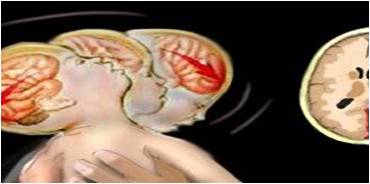
A baby’s neck is too weak to support their heavy head.Consequently, when shaken, their head flops back and forth, causing serious brain injury.

shaken

A baby’s brain and the blood vessels connecting the skull to the brain are fragile and immature.Therefore, when a baby is shaken, the brain ricochets about their skull, causing the blood vessels to tear away and blood to pool inside their skull causing irreparable damage to the brain or retinal detachment.

If found to be guilty, a the adult can be prosecuted for child abuse in the first degree and imprisoned.

So what do we do with a crying baby?

I’ve  taken care of my fair share of inconsolable infants. You have to wonder at a newborn with such tiny lungs who can produce so much sound! I raised five children and some were just fussier than others. Some, in particular, chose the evening and early morning hours to be the most colicky. Exactly the time when I was most exhausted, stressed, and frustrated. Those early morning hours can be the perfect storm for a parent to lose their patience. I’d like to offer a list of things to do when you can’t get the baby to calm down.

Take the baby for a walk outside in a stroller or for a ride in the car seat. When the baby is in another device and your hands are wrapped around the handle or a steering wheel, you are physically removed from holding/hurting the baby. It gives you distance, emotionally and physically. These two activities also have a calming effect because the purr of the engine or gentle rocking of the stroller.

Hold the baby against your chest and gently massage the baby. Massaging a baby has this calming effect on you because you are stroking yourself as well.

Rock, walk, or dance with the baby. Soft music can calm you and the infant.

Be patient; take a deep breath and count to ten. Or a hundred.

Call a friend or relative that you can trust to take over for a while, then get away, get some rest, take care of yourself.

Wrap up the baby tightly or give a warm bath.  Even if the baby doesn’t like to be bathed, I can almost guarantee that a properly swaddled infant will calm down.

Lower any surrounding noise and lights.

Hold the baby and breathe slowly and calmly; the baby may feel your calmness and become quiet. If you are agitated, most likely the baby will be too.

Sing or talk to the baby using soothing tones.

Record a sound, like a vacuum cleaner, or hair dryer and play it. White noise. There are even CDs and other audio players that play these sounds…even the “womb” noises.

See a doctor to check out physiological problems (i.e. acid reflux, lactose intolerance)

soothing-crying-baby_109501549).

That was my list. Now here is the 5 S’s that Dr. Harvey uses to effectively pacify a crying baby. He found a 98% success rate using these. They imitate babies’ experience inside the uterus.

1.Sucking (pacifier)

2.Swaddling (arms down, tightly fitted with a large receiving blanket)

3.Side/Stomach position (hold them, not put them down in this position)

4.Shushing (a loud, but controlled shushing sound in their ear)

5.Swinging (small quiver-like movements)

So next time your baby exercises her lungs tirelessly, try out these 5 steps and let me know how they work. Blessings to you all for doing your best during these sleep-deprived years.

Goodnight.


Gut flora, kid health, and boogers

This turned out to be a really lively (and a little gross) interview on the Matt Townsend show. It aired on Jan 26th. http://www.byuradio.org/episode/6e14c90d-9421-4a88-9420-9cb8a1e095e8?playhead=6693&autoplay=true

Here are some new vocabulary words you’ll learn by listening:

Gut Flora

Microorganism

Microbiome

Microflora

Probiotics

Ecosystem

And this is a quiz that you’ll know the answers to once it’s over (P.S. Matt gets them all correct!)

How many feet of intestinal tubing do we have?

a. 10 feet

b. 18 feet

c. 25 feet

c. 30 feet

We have this many microorganisms in our gut.

a. 150 billion

b. 75 trillion

c. 100 trillion

What is the ratio of microorganism to human cells?

a. 10-1

b. 20-1

c. 50-1

What percentage of serotonin is found in the gut?

a. 25%

b. 45%

c. 70%

d. 80%


“Read it again, Mom!”

I’ve been a professional educator for over 25 years, teaching Kindergarten, preschool, and students in the Education department at UVU. I’ve taught these delightful students how to foster reading and writing with children birth through 6. Here is some of my cumulative knowledge and experience in a KSL online news article.

http://www.ksl.com/?sid=37200737&nid=1009&title=read-it-again-mom-enhancing-the-parent-child-reading-experience&s_cid=queue-1

4 New Year’s Resolutions This Mom Can Keep

Parenting is hard. Keeping New Year’s resolutions is also hard and it’s one more thing to make me feel guilty about what I’m not doing. Resolutions about parenting usually involve not yelling so much at the kids or packing healthy school lunches rather than junk food. By January 14th, I’m losing my temper and sending the kiddos off to school with chips and cookies.

Rather than losing those 10 elusive pounds, here are five resolutions I can keep. It was published in For Every Mom on Wednesday, December 30, 2015

http://www.foreverymom.com/5-new-years-resolutions-moms-can-actually-keep/#.VoVzAWptp04.facebook

Better Relationships in 2016

I was interviewed for a Wall Street Journal article called “Look Ahead: 4 steps to better relationships in the new year” in the Tuesday, December 29, 2015 edition.

Here’s a link to the online version:

http://www.wsj.com/articles/look-ahead-four-steps-to-better-relationships-in-the-new-year-1451324689

How To Avoid the “Gimmies” at Christmas

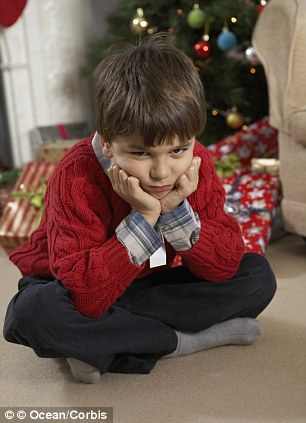
Have you ever heard these words after a child opens a thoughtfully-given present: “Is that all?” It’s time to raise children who are less selfish and less disgruntled with the gifts they receive. How can you raise generous, gracious children who think more of others than themselves? Tis the season to start and here’s an article to get you going.

This article was featured in For Every Mom. The byline was:

These 5 ways to avoid the “gimmes” with your kids this Christmas are spot-on sage advice.

http://www.foreverymom.com/5-ways-to-avoid-the-gimmies-at-your-house-this-christmas/

How To Talk To Your Child About Terrorism

Has anyone had to discuss the recent terrorist attacks with a child? Not easy! The world seems to be an increasingly unsafe place, whether it’s natural disasters, economic crisis, terrorism, relationship breakdown, or even the increase of bullying. No wonder children succumb to anxiety at times.

With new terrorism attacks in France, and frightening topics discussed in the news and around the dinner table, here is an article I wrote for Family Share with six tips for how to address your child’s fears.

http://familyshare.com/parenting/how-to-talk-to-your-child-about-terrorism

If you need a few more tips for addressing specific fears such as fears of the dark at bedtime, here is another article I wrote for ksl.com

https://www.ksl.com/?sid=28271581

UVU Conference on Family

I’ll be attending and/or presenting at two upcoming conferences on the family and you’re invited! The World Congress of Family IX has been hosted in major cities around the world, but never in the U.S…..until now. And I am proud to say it will be here, where I live, in Salt Lake City, Utah. The dates are October 27-30, 2015 and here is the website for more information: http://wcf9.org/

The second conference is even closer to home and much more local. I am a professor at Utah Valley University and every year the College of Humanities and Social Sciences hosts a Conference on the Family. It will be held on Nov. 6, 2015. Here is the website link and a flyer: http://www.uvu.edu/chss/family/

UVU Conference on Family 2015

UVU Conference on Family 2015

And here is how you order tickets (it’s free and no ticket required for UVU students)

http://www.eventbrite.com/e/uvu-conference-on-family-tickets-18098212240

I will be presenting and this is the class description. Please come! I’d love to see you there.

Flexible, Feisty and Fearful: 3 Main Temperament Styles in Children – Julie Nelson, professor and author 

Join Julie as she outlines each of the 3 main temperament styles in children. She will explore the strengths – and weaknesses – of each, and highlight how parents can adjust their own style to create a ‘goodness of fit’ to meet the needs of the child. Join her as she illustrates how understanding these temperament styles can help parents build healthy self-esteem within their children, and nurture a positive parent-child relationship. 

I’m so thrilled to live near and be a part of communities and a state that is pro-family. These conferences and organizations are lifting societies, families, and individuals to live a more meaningful, fulfilling life with the people they love.