Health

Teens=Wild Animals

Have you ever tried to approach a sullen teenager only to find yourself running for cover? You may need to duck before your head gets clobbered and avoid getting your metaphorical hand bitten off just because you dared touch their prickly shoulder. It’s a lot like working with a wild animal. They are slow to trust and quick to bolt or attack. Maybe you are one of the lucky ones who has an agreeable adolescent. If you are instead, a parent of an angsty teen, keep reading.

The world can be an unfriendly, threatening place for many teens. Much like a spook alley with an unknown danger lurking around each corner. In their minds, that threat could appear like a bully at school, fickle friends who change loyalty with the weather, tests and reports at school that fill them with anxiety, online age-inappropriate material they have to process, the fear of not performing up to expectations of a club or team, or social media and news reports that sound like the sky is falling. And so, it’s natural for them to be in perpetual “fight or flight” mode to deal with so many threats.

Can you walk with that reality for a moment to see the world standing in their shoes?

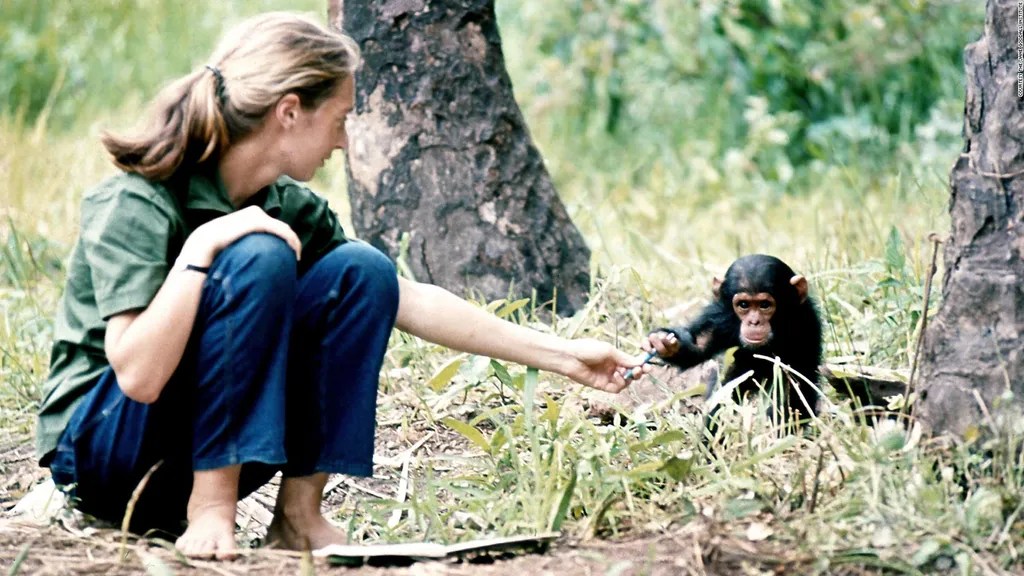
So how does a parent become an anthropologist in an unknown wilderness of hormones and undeveloped brains? If you’ve ever watched someone train a wild horse or gain the trust of an animal, it goes slowly and at the pace of the animal. Think Jane Goodall with the African gorillas. Nothing can be forced or rushed. You learn to speak and gesture in a new language. You learn how to slowly ease him in with jokes and personal touches, like someone who slowly eases a feral animal forward to begin trusting the human. And there are a lot of treats and reinforcement involved.

There a many, many resources to learn this new language and approach. Books like “How to Talk So Your Teen Will Listen & Listen So Your Teen Will Talk” could be useful. This article is one of many on the internet you could explore. I’d also suggest a medical examination from a professional to determine if mental health needs to be addressed.

From my experience, a recalcitrant teen does not want to be bothered by “irritating” questions, or scripted times to “talk.” They try to hurt the ones that love them the most to show how much they are hurting inside. The world is a painful place to them, and they express that pain where they feel the safest. So the trick is to be patient, sit with the teen in their habitat much like Jane Goodall did with the gorillas. She met them where they were at and didn’t demand.

That doesn’t mean there shouldn’t be boundaries. Teens are also testing the limits or rules and family values to see where the safe zone is. Even though it may seem they are pushing or rejecting those boundaries, don’t take it personally. For example, if a teen gets in your face with profane, hostile language, you calmly, yet firmly say, “That is not appropriate. I will listen when you are ready to speak respectfully” and turn and walk away. When they are ready, talk with them if they think a rule is unreasonable and be sure to listen without rushing to judgement. Be open to negotiation to show how this can work successfully when they have shown you respect and trust.

If you want some practical ways to try to connect and build trust, I have 8 tips below to tame that teen.

1. Parallel talk. Sit next to him and just have a side-by-side parallel connection. Teens often don’t like it when you sit across from them to maintain constant eye contact. Similiar to a wild animal, this feels challenging, threatening, and vulnerable. Don’t ask any “How are you doing?” or “How was school?” or “Where is your homework?” questions. If he’s playing a videogame, just watch and comment on the game. You are entering their “habitat” so tread softly. If you can play with him, even better. Keep it casual. Or watch a movie together.

2. If your teen is willing to do anything physical, that could be the key to connecting with him. Boys, especially, are prone to connecting through activities but girls enjoy the “treat” of doing something with you that they enjoy. Watching sports together, shooting hoops, working on a car, baking cookies, going for a drive or on a walk, etc. That way, their bodies are moving, their brains are distracted, and it’s easier to have a light conversation. A teenager reflected years later on his wise dad:

“During my teen years, my father told me after dinner each night that he needed to get out to exercise and would do it more often if he had company.  But I know it was for us. I had 45 min. of his time every night to talk to him about anything.”

3. Does your teen have any friends to invite over? Encourage your home to be a safe place where you support good friendships and social confidence. Host a pizza hangout or whatever he wants (within reason and being safe). You can be in the background, the observing anthropologist and silent supporter.

4. Ask him to help with something if he’s up for it. Can you get him to go for a ride to the hardware store to pick out materials for a project? Even if he resists, you can say you need his help deciding or to carry stuff to and from the car. Same thing with grocery shopping, gardening, or anything like that. Once a week just to be together. Again, don’t start asking deep questions. Keep it casual to let him know you are there and you love him. Say aloud, “I love you and appreciate how wonderful you are” each time. 

5. What does bedtime look like? Are you home around that time where you can go into his room when it’s dark to say goodnight? Darkness dissolves defenses. Typically, when teens are winding down to sleep, they are more relaxed and will at least listen to their parent without snarling. That’s maybe where you can sneak in, “What was the best or worst part of your day?” If they enjoy books, see if they will allow you to read aloud as often as possible.

6. Can you add a daily ritual as you send your teen into the wild world? As they leave for the day, can you tell him you need a hug, or at least say something each morning that can be your mantra. “I love you. You can do this!” or “You are good, now go and do good. I love you.” 

7. Be sure to never say anything that would be perceived as harsh judgement or criticism. Teens are like turtles who retreat into their shells. If they stick their heads out to test the temperature, they want to feel safe. So rather than, “I hope your friends aren’t doing drugs” say, “Teens can sometimes take drugs. What are your thoughts about drug use?” If you’re lucky enough to get an answer, respond with “Thank you for sharing. You matter so much to me. I want you to be safe and happy now, and when you are an adult.”  

8. I love anything by Dr. Dan Siegal and his hand model of the brain. His explanation helps us talk concretely with our teen about how they perceive their “fight and flight” limbic (animal) system. Use it to educate yourself and your teen to understand how you both can get emotionally charged or aroused, and how to self-regulate again. After all, we aren’t really wild animals. We can learn to engage our pre-frontal cortex, that amazing human side of our brains that help us problem solve, plan, and use higher-ordered reasoning.

So go wild with these ideas. I hope you find them helpful.

10 tips to non-medicated sleep (and not counting sheep)

If anyone is not feeling stressed right now, please raise your hand.

I didn’t think so.

This COVID-19 pandemic, earthquakes, economic downturn, social isolation, being home 24/7, trying to educate stir-crazy kids, constantly sanitizing and cleaning every surface and anything that moves, (and the list goes on), is wrecking havoc on our health. Mental, physical, social, and emotional health is taking a nose dive.

Some of the common symptoms in this uncommon time are irritability, lack of motivation, fear, frustration, anger, hopelessness, and insomnia. Lack of sleep just exacerbates all the others. I’ve had insomnia off and on my whole life, thanks to genetics and an overactive mind. Every time I lay down my head on pillow and try to fall asleep, thoughts pour into my head like a flowing faucet. Literally a river of thoughts that won’t turn off. I’ve tried counting sheep, but that doesn’t work.

Once I took a vacation to Puerto Rico and did not sleep for 5 days. And that was on vacation when I should have been the most relaxed!

However, during this pandemic, I have slept incredibly well. That’s because I have learned how to fall asleep without drugs or counting sheep. On rare occasions, I’ve taken a Tylenol P.M. or Melatonin, and it’s been years since I’ve taken Ambien. I’m handling the current situation better because I get a full-night’s sleep. I know there are some who need to take sleep medication, but for those who want to explore other options, I’d like to share 10 tips with you. I start with the most obvious, small ideas and work up to the most powerful, big ones.

Number 10. 

processed-junk-food

Eliminate any food and drink after 8:00 p.m. or earlier, if possible. No caffeinated drinks in the evening. Avoid drinking water right before bedtime so you don’t have to get up to go to the bathroom.

Number 9.

nap

No naps. Keep a regular daily schedule as much as possible. Sleep, or circadian rhythms, is your body’s patterns of knowing day from night. If you take a nap longer than 30 minutes, you disrupt that pattern by going too deep into sleep during daytime hours. If you must take a power nap, make it 5-10 minutes.

Number 8.

Mature African-American women in city, exercising

Regular exercise. Even with the COVID-19, we are (especially ) encouraged to get outside, drink in some Vitamin D, and move our bodies. This is true All. The. Time. not just during a pandemic. With gyms closed for the time being, you’ll have to get creative and more determined. Every day I try to do some gardening, exercise on the stationary bike, or walk for 30 minutes around the neighborhood.

Number 7.

phoneNight-

Do not take a device to bed with you or watch TV in the bedroom. If you have trouble like I do, it could be that you are inputting to much information for your brain to process. My mind is like 101 computer tabs open, holding me hostage. Use the few hours before bedtime to NOT watch a movie or scroll through social media, watch the news, or anything that would open another tab to deal with. There’s a lot of science that cautions us to not have the light from screens tricking our eyes to thinking it’s daytime.

Number 6.

Young woman practicing yoga, touching toes in apartment

Relax and stretch muscles. You can have a body massage if you’re lucky enough to have someone to do that for you every night. If not, I’d suggest taking a hot bath, a long hot shower, and stretching. Yes, that’s right, I said “stretching.” There are amazing benefits to stretching out our muscles. You may be doing this before or after a workout which is great! If you do it before bedtime, you’ll find that stretching out releases endorphins, a great “feel good” chemical to your brain. Static stretching increases activity in the parasympathetic nervous system, promoting relaxation. I can literally feel my body relaxing while I stretch. And when I wake up, I feel So. Good.

Number 5.

App-Store

Meditation apps. This tip is becoming rather popular now, with the Mindfulness Movement. I love that we are using our powerful minds to harness energy and direct it for good. Another similar idea is to have white noise to help soothe the mind.

Number 4.

191011_Gravity_Original_grey_1000x

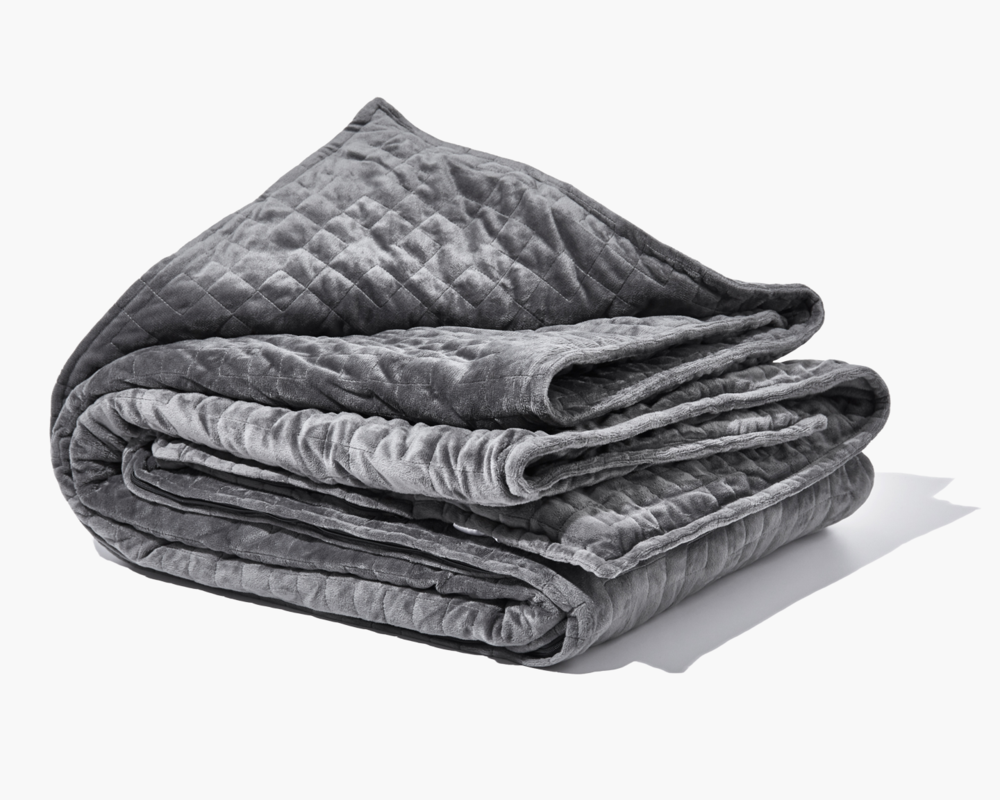
Insomnia is a by-product of anxiety for many people. Many people with anxiety and sleep disorders swear by weighted blankets. This may be the cure for you. Weighted blankets are filled with small objects like glass beads or metal pellets to make it heavy. The feeling of having something holding or hugging you close, like a blanket, is very calming. Research shows that weighted blankets are used in therapy known as “deep touch pressure stimulation” which aids in the production of sleep-help hormones

Number 3.

recorderYears ago, before cellphones, I was working full time in a very demanding job. My boss taught me a great trick to clear the mind at bedtime. She had a hand-held voice recorder with mini-cassette tapes inside. She kept it on her nightstand and when her faucet-thoughts started flowing, she reached for her recorder, and put those ideas on the tape. Once she could clear her mind by having something else keep her thoughts organized and safe, she could fall asleep. Today, we can use any app or “voice memo” or reminder on a cellphone. Some people prefer to get up and journal or write down their thoughts to have the paper remember it for them. Whatever you need, use it. 

Number 2.

breathing

Deep breathing. This has been a game changer for me. It came out of guided meditation practices. I don’t normally go through guided meditation these days, but I do the breathing that is so essential to relaxation. Like stretching (#6), deep breathing stimulates the parasympathetic nervous system and the supply of oxygen to your brain. Rather than counting sheep, I lay in bed and do the slow breathing in, counting 1-10, then hold, and release like slowing blowing through a straw, 1-5. Doing this helps me re-center, and focus on the breath. If my mind begins wandering, I bring it back to the breath. I don’t judge my wandering thoughts, or dwell on them, but gently guide them back with the breath. If you concentrate on this exercise, you will probably find, like me, that you have fallen asleep without even realizing it. It literally wears you out.

Drum roll….Number 1.

cartoon friends high fiving

Make friends with insomnia. This is something I discovered on my own, but it’s backed up by research. I had been fighting my insomnia like it was an enemy I took to bed each night. I wrestled with it, coaxed it, bribed it, bargained with it, resented it, and felt powerless by it. Insomnia was like a living presence that had control of me. I decided that the energy it took to fight it and the resentment I felt because of it was part of the problem. I decided that I needed to take back control. So I made friends with it. I didn’t judge it or myself anymore. Quite a few nights, I just lay there, at peace. I was in state of total relaxation all night and I didn’t let that upset me. The goal wasn’t to “get to sleep” anymore. I just enjoyed resting. I enjoyed the quiet. I began thinking of my blessings. I filled my mind with gratitude, and for the chance to spend just laying there. I welcomed it. When I did that, it changed my life. No longer did I feel a victim to insomnia. I fact, I never acknowledge I had insomnia anymore. Instead, I have a chance to lay in bed filled with gratitude.

These are the secret tips of a lifetime of trial and error. I feel compelled today to share them in the hopes it might help someone else who struggles with sleep disorder. Life is hard enough without being tired of the fight to sleep. I wish you all the best in your quest for rest.

Good luck, and good night.

Boogers, ABC Gum, and Gut Flora

My husband and I often took road trips with our children to distant places which meant we spent a lot of the time in the car together, eating Happy Meals at McDonald’s, and filling up at gas stations. My husband tried to plan our trips around the most sanitary pit stops and fast food restaurants with the best playgrounds. More than once, however, we needed to make an emergency stop because a small child couldn’t “hold it any longer.”

You know what that means.

You turn off the freeway and hope to find a toilet, quick. If not, at least a bush or deep ravine. This time we found a sketchy gas station that Time forgot. I think the Heath Department forgot it too. It had one of those unisex bathrooms you enter from the outside that you have to beg the cashier for the key to open. We all held our noses and took turns using it. We were lucky the toilet still flushed, but there was no hand soap. I reminded my kids to put toilet paper on the seat and at least to rinse their hands to drown the germs if we couldn’t kill them with Dial.

I crisscrossed over the maze of discarded toilet paper squares on the wet floor like I was in a mine field. I remember the overflowing garbage and the dilemma of deciding how to avoid touching the door handle to open it.

When we packed the kids back in the car, I noticed my toddler, Rachel, was chewing gum. I never give gum to my toddlers because they usually have no concept of chewing without swallowing. So I knew this was not something I had given her. I asked where she got it, but the look of alarm in my eyes must have warned her of danger. She refused to talk or divulge her sources.

We drove away with Rachel still chewing gleefully.

Miles later, a sibling wanted some gum too, and asked for some. It was after I said I didn’t have any that Rachel bragged, “I got mine in the bathroom.” The car jolted a bit from my husband stepping on the brake. As more information leaked out, we discovered she found the ABC gum in that germ-infested gas station bathroom. Toddlers are built low to the ground so they see things that we adults miss. I wanted to yank it out and spray Lysol inside her mouth, but realized the damage had been done.

What else can a parent do at that point?

Boogers

I’ve heard that every child needs to digest at least 10 lbs. of dirt by the time she is 8 years old to survive in this world. Besides, eating boogers may be the only GREEN food they’ll eat. It is organic, after all. So is poo.

Before you rush for the hand santizer, I have to report that Rachel is now 19 and arguably the healthiest of my 5 children. Was it heavy doses of germs early on that made her so robust? With each child, I became more relaxed in my antiseptic approach to parenting. With the first child, if the pacifier dropped on the floor, we boiled it for 5 minutes to de-germ it. By the fifth child, if the pacifier dropped and the dog licked it, I wiped if off on my pants and stuck it back in the baby’s mouth.

No harm done.

I recently listened to a radio interview with the co-author of “The Good Gut” which is all about how our bodies are made up of microflora in our digestive systems. We need good bacteria, like ABC gum and boogers, to help our bodies build immunity and fight the bad bacteria. Kind of like inoculating our children against measles. We give them little doses of bacteria every day when we let them play in the sand mixed with cat poo, make mud pies, and kiss the dog.

If we wonder why so many children are sensitive to foods, the air, and contact with plants, it could be answered by a scientist who studied the Yanomami people in the Amazon. He found that “the microbes from their skin and gut were 40% more diverse than those of modern, urbanised people…the more exposed a group was to modern life, the less diverse the microbiome.”

I’m all about diversity. And I’m all about microbiomes because they sound cool. Imagine a bunch of foreign germs, like Goodwill Ambassadors, from Angola, Tonga, Korea, Canada, and Slovenia meeting in your child’s gut, sharing drinks, swapping stories, eating Chex Mix, and playing Charades. When an intruder tries to crash the party, all these foreign friends band together and bar the door.

Speaking of cool, here’s a great NPR article and accompanying video called “The Human Microbiome.” It reports how gut flora wires our brains and alters our mood. Research done by Dr. Faith Dickerson suggests that introducing good flora in the microbiome “may contribute to an improvement of psychiatric symptoms.”

Of course that makes sense. If there’s a party happening in our gut, it’s going to make us feel better all over.

Pass the piña colada, please.