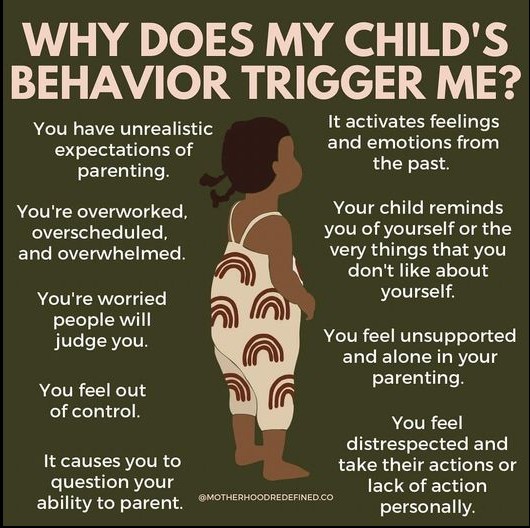
Why do we get so annoyed, irritated, or downright angry in reaction our children’s mistake, squabbles, and personal assaults? We call this “pushing our buttons.” When someone pushes a button, say with a vending machine, the machine has no choice but to give the user what it wants. But if you think about it…
We are not machines. Or robots.
But we do have invisible buttons. We often call them “triggers.” Unlike a machine, we are humans and can choose to give the user what they want…or not. We can choose to react…or not.
“It’s often not what your child has actually done, but what you feel about what they’ve done that can tip you into a strong emotional reaction.”
Motherhood Redefined
This idea goes along with one of my favorite quotes. It’s by Viktor E. Frankl who suffered unbelievable pain and inhumanity in WWII concentration camps. He had every reason to turn bitter and vindictive. He had many opportunities to react in rage or revenge. He did not. In fact, he remarked that in the worst place on earth, he saw some of the best of human nature. He realized that the Nazis could take everything from a man but his own dignity and ability to choose.
In his book, “Man Search for Meaning,” he made this profound observation about “triggers”:

What sets us apart as humans from robots or any other life form is that sacred “space.” In that space is our power to choose our response.
When a child talks back disrespectfully (stimulus), we can honor what happens next by pausing (the space) and saying, “I’ll wait for you to say that again using respectful words.” And then stay quiet (response).
When a child breaks a rule (stimulus), we can stop and consider our response (the space). If there is already a consequence you’ve both agreed on, you can say, “I love you and want to honor the agreement of X as the consequence.” If there isn’t a consequence and you are triggered, take a moment to breathe, step away for a minute, or take a walk (the space). When you are ready, you might say something like, “Let’s think about what would be an appropriate consequence so you can fix it, learn how to do better, and learn from your mistake.” (response).
That space.
Everything that follows depends upon it.
Therein lies our (and our children’s) growth and freedom.
 A Spoonful of Parenting